Wednesday, April 27, 2022

Assertive Submission: How to Balance Meekness and Boldness


Being a leader there are many philosophical concerns that I wrestle with: Where does my emphasis belong? How do I balance all my responsibilities? How do I balance evangelism and discipleship?

But recently, here is the question on my mind: What is the appropriate balance between speaking out and staying silent? What is the balance between submitting to leaders and taking a stand for truth?

There are two approaches that I find to be the most common, one is the career climber, second is the outspoken partisan. In my particular corner of leadership, I find the career climber much more common than the outspoken partisan, but they do both exist. 

Often I ask myself, which direction ought I to tend toward? I've found myself about 7 years back, more so along the lines of the outspoken partisan. 

I share my perspectives openly. I advocate for the viewpoints I hold. I don't hide much of what I believe, because I believe strongly in it. And at times I've taken it too far. Many know of the outspoken partisan, and it's a precarious position, it can lead toward outright rebelliousness, or self-expulsion.

There is also the climber. The climber is not as much of a believer. They say the right things to move up. They develop relationships for the purpose of using others toward gain. Their primary goal is, how can I fulfill my ambition to power? How can I prove my importance? They will take positions that are popular, refuse to make waves even when they ought to, and generally do whatever it takes to gain more authority. They are the ultimate every-person.

This same sort of dichotomy appears in politics, in both parties, you have politicians who are true believers, they really believe in the principles and policies of the platform, think of someone like Ted Cruz, or Bernie Sanders.  Similarly, you have politicians who are climbers, they are not as much believers as they are climbers, they will repeat whatever the public desires at the moment, think of someone like Nancy Pelosi or Mitt Romney. 

Which are you? A believer? Or a climber? There are also extremes, in both directions that I see. You've got the outright rebel, on the one end of the spectrum, we've all met this person, they are so opinionated, and so rebellious, they don't last long in any organization, they can't even survive in most small groups, their opinions and rebelliousness drive them out. They stand alone, in refusing everything because eventually they find someone or something that disagrees with them, so they rebel and flee out of whatever it was they were a part of. 

There is also the coward. The coward is the extreme climber, the do anything, and say anything, to get what they want. They won't speak up on any issue. They will agree with whatever their superiors say or do, no matter how wrong it is. They will even attack and attempt to destroy those who speak truth to power. They are zealots, not of the organization or the belief system, they are zealots to get what they want, and anything goes. They will destroy people, climb over people, step on people, and ruin people's careers to get what they want. Often times, this blows up in their faces as they fumble about trying for power, that they end up canned, or sent out somewhere remote to be left. They often end up just as alone as the rebel. 

So, thinking to myself, and my own beliefs, and my own adherence to leadership, and the principles of the organization, what does the perfect middle point look like?

What does a biblical Christian do to hit that perfect spot, between rebellion and cowardice? I don't want to be a climber, I don't want to be a partisan, what is the right balance here?

After much consideration, I believe the correct position of the mind is assertive submission. 

Contradiction? I don't think so.

The scriptures are littered with extremes that balance each other perfectly in the word: Grace and truth, Love and Justice, Assurance and Watchfulness, Mercy and Judgment, and so on and on it goes.

So, therefore, I must be assertive to speak up for the truth, but also submissive to my leaders and the organizational structure. I must be bold as a lion, and submissive as a soldier to his officer. This is the sacred balance to maintain. 

Consider the example of Christ in the garden. In Luke 22:42 Jesus said, “Father, if you are willing, remove this cup from me. Nevertheless, not my will, but yours, be done.”

Jesus submitted to the order of authority, even when it meant something that seemed completely unjust, that he would die for the sins of the world, sins he did not himself commit. But Jesus submitted to the Father's will, and so he won the victory. 

The chain of authority is very important to God, apparently. We see again in Hebrews 13:17  "Obey your leaders and submit to them, for they are keeping watch over your souls, as those who will have to give an account. Let them do this with joy and not with groaning, for that would be of no advantage to you."

Not only that, we see we are to be in submission to human authorities as well, not just Christian authorities. It says in,  1 Peter 2:13-14: "Be subject for the Lord's sake to every human institution, whether it be to the emperor as supreme, or to governors as sent by him to punish those who do evil and to praise those who do good."

This is radical submission, much more radical than we would expect. But there it is.  

On the other end, we see radical outspokenness. We see John and Peter before the Sanhedrin, Acts 4:18-20: "Then they called them in again and commanded them not to speak or teach at all in the name of Jesus. 19 But Peter and John replied, “Which is right in God’s eyes: to listen to you, or to him? You be the judges! 20 As for us, we cannot help speaking about what we have seen and heard.”"

These were their spiritual leaders. And they were respectful when spoke to them, but they politely refused to stop speaking about Jesus. 

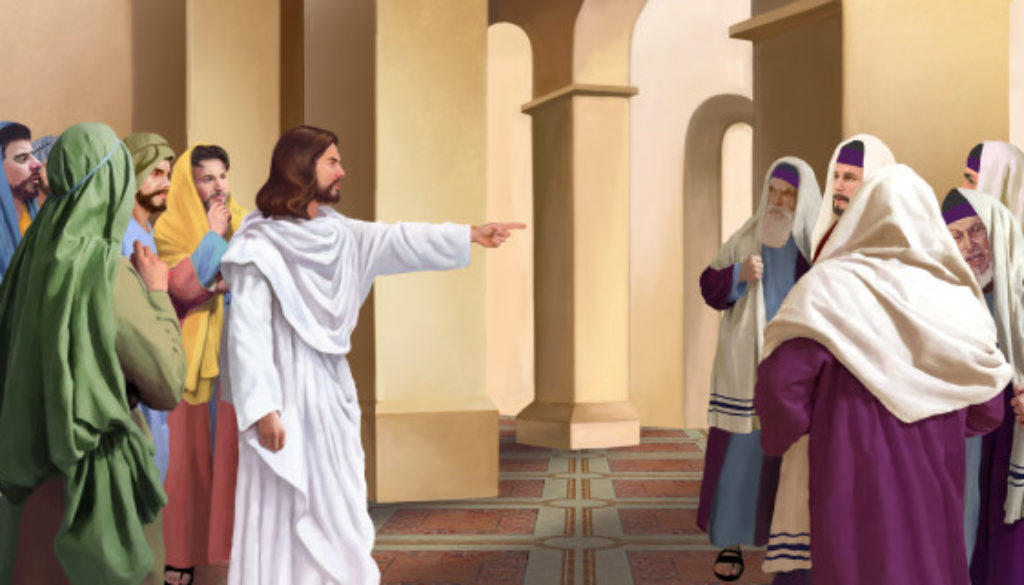
We see a dispute between two leaders in Galatians, and Paul speaks up boldly, to the man Jesus called the rock on which he would build his church, and the man he asked to "feed my sheep."  

From Galatians 2:11-14, "But when Cephas came to Antioch, I opposed him to his face, because he stood condemned. 12 For before certain men came from James, he was eating with the Gentiles; but when they came he drew back and separated himself, fearing the circumcision party. 13 And the rest of the Jews acted hypocritically along with him, so that even Barnabas was led astray by their hypocrisy. 14 But when I saw that their conduct was not in step with the truth of the gospel, I said to Cephas before them all, “If you, though a Jew, live like a Gentile and not like a Jew, how can you force the Gentiles to live like Jews?”

Paul was outspoken. He challenged a leader, in public. We are called to do the same, boldly, also with submission. 

That is the sacred balance, assertiveness and submission. 


Sunday, April 24, 2022

Hebrew Word Study: Mitspah, God our Watchtower

Do you know how many times the nation of Israel was attacked by Palestinian forces in 2021?

In the month of April 2021 alone, the following attacks occurred: "On 15 April, one rocket was fired from the Gaza Strip.[1]

On 23 April, 36 rockets were fired from the Gaza Strip, of which six were intercepted by Israel's Iron Dome defense system. Although there were no injuries, property was damaged in several communities in Israel. The Israeli military responded with military strikes.[2]

On 24 April, two rockets were fired from the Gaza Strip, of which one was intercepted by the Iron Dome, and the other fell in an open area near the border fence.[1]

On 25 April, five rockets were fired from the Gaza Strip, of which two was intercepted by the Iron Dome and the others fell either in uninhabited areas or inside the Gaza Strip.[1]"

Israel is under constant threat from surrounding nations in the middle east, but they have a defense system called the iron dome. The iron dome system protects the entire nation of Israel from rocket and artillery shell attacks by launching missiles called Tamir interceptor missiles that are able to lock onto fast moving targets and destroy them in mid-air. The system functions through a radar system able to detect targets within 70 kilometers of each iron dome battery.

Just as Israel is protected by this iron dome defense system, so we as Christians find ourselves protected by our own defense system, God almighty, who the Bible describes as our “watchtower” or our “strong tower.”

This brings us to our Hebrew word for today which is mitspah (mits-paw').

Mitspah means “watchtower” in Hebrew. It comes from the book of Genesis chapter 31 verse 49 which says, “It was also called Mizpah, because he said, “May the Lord keep watch between you and me when we are away from each other.”

So Mitspah is meant to indicate the concept that God will watch over us and protect us if we are indeed His people. Of course, if we are not his people, he does not promise to watch over us. But from the Hebrew word we see that this concept is really meant to be seen in the context of relationship.

Really, what you see here is even more deeply, a covenant agreement. The Israeli iron dome system was set up with certain costs and agreements and contracts and it was installed and is functional and active right now. In the arrangement the system protects Israel from danger.

We as Christians are in covenant relationship with God. It’s a sort of written contract, in which we’ve signed on the dotted line saying, yes I’m a follower of Jesus. I accept and receive Christ as my savior. And I agree to live by the commandments indicated in the New Testament for believers in that covenant.

We are part of it. And we’ve agreed to.

It’s somewhat like a marriage. You marry your wife, or your husband, and you’re making a binding agreement to love them, to share your finances with them, to not cheat on them, to discuss decisions you make with them, and so on and so forth. And marriages can fall apart, even leading to a contract cancellation, in which divorce takes place.

So when we enter the grace of Jesus Christ, God agrees to wipe away our past sins, and he becomes our Lord, and we become his servants. And God agrees to be our protectors, in which he watches over us, he becomes our Mitspah, our watchtower.

A watchtower in ancient times was a powerful defensive structure that was usually constructed from stone or blocks, and a soldier or several soldiers would be stationed inside of it, at the top, to watch for enemy troops or dangers. They could then fire their weapons from the tower, to protect their lands from the enemy.

Similarly, the Creator is our protector as Christians. He is our watch tower, watching our lives from above, protecting us, and watching our fields grow into beautiful harvests for Him.

How many times in your life have things worked out just as they should, even when it seemed unlikely that it could work out? How many times have you been in the right place at the right time to get just what you needed? That is God orchestrating our lives, by being a watch tower over our lives.

But it’s not just a weapons platform, or an iron dome protecting us from death or destruction, God instead is in covenanted relationship with us, covenant, agreement, written agreement with us, and it’s built on deep, love-rich relationship, like marriage, or family. But it’s also a contract, with stipulations and mutual agreements. God agrees to do this, we as his people agree to do this. That’s how it works. And in the context of Genesis 31 we see this playing out.

Here we see Jacob and Laban. Jacob works for Laban. Jacob married Leah his daughter. But the problem is Laban keeps cheating Jacob, over and over. So one day God says to Jacob, leave this place, and I’ll protect you.

But Jacob leaves without telling Laban he’s going. And his wife steals some of his stuff as they leave. So Laban finds out and he’s mad, and he chases after Jacob. But God spoke to Laban in a dream, telling him to deal fairly with Jacob.

So Laban and Jacob argued back and forth. But eventually they worked it out. And they decided to make an agreement between each other. They built a pillar of stones, as a written agreement to say that they were at peace, and that though they would be separate from each other, in different directions, they were swearing before God that they would stay true to each other in the agreement.

Much the same occurs when two businesses work together, they sign a contract, and agree to help each other. When I served in an internship with the salvation army St Louis treatment center, we had entered into a written agreement with local radio station K-love, to do a Christian rock concert together. It was great, it went really well. And the written agreement kept us both honest in our dealings with each other.

We Mitspah each other, we watched over each other. In a similar way, God watches over us, as a lover, guarding our hearts, to help keep our hearts true to Him. And God agrees to love us and guide us and be with us in the struggles of life.

Often we will see friends who have a heart necklace and one friend each takes half the heart on separate necklaces. And it’s a reminder of their friendship toward each other.

We are in relationship with God, and our faith in Jesus Christ makes us part of the written covenant, that if we follow Jesus by faith, God agrees to wash away our sins and give us eternal life with Him in paradise.

Then again, if we renounce Christ, and or are unfaithful to our commitments, and get drunk or commit sins and commit adultery, we violate the covenant, and it can also be cancelled by God, if we do not repent and return to Him.

So, in conclusion today, God is our Mitspah, our watch tower. He watches over us, if we obey Him. He agrees to lead us, guide us, love us, and grow us through our lives, all the way to eternal life with Christ in paradise, forever. Amen.

Wednesday, April 20, 2022

After Easter Encouragement: The Emmaus Road


We’ve all recently celebrated the glorious resurrection of Jesus Christ. He is in fact the savior who is alive, and present in our lives. As we reflected on the empty tomb, let us now reflect on some very mysterious moments that occurred afterward.

The disciples went into hiding during the crucifixion. All but John, who stayed with Jesus during the entire crucifixion. But now amid rumors that Christ was alive and had even appeared to Peter, two of the disciples were out walking on the Emmaus road, seven miles from Jerusalem.

They’re talking about everything that happened in amazement. And a 3rd person, a mysterious figure appeared and joined them on the road.

For the two disciples, Cleopas and his friend, this is a dark road. This is a rocky, miserable road, the word says their faces were downcast, they were sorrowful.

And they were reflecting on everything that had happened. It had been the craziest three years of their lives. They had walked day and night with Jesus, God in human form. What would it have been like? To even spend a few minutes with Jesus would be a dream beyond anything I could imagine. But they spent three years with him.

Have you ever had a time in your life where you felt like you were swept up into something bigger than yourself, something special? That is an incredible feeling, to know you were and are part of something special, important, bigger than yourself. And yet, at the same time, for the disciples it had been a hard time, it had been a time of constant controversy, as some accepted and some rejected the teachings of Jesus. 

I think many of us can relate to this situation on the Emmaus road. We’ve been through the COVID-19 pandemic, and so much more in the past few years. And we were not passive participants, no, we were engaged in the battle, day and night, serving as part of God’s army, the Salvation Army.

In the wake of all that, we’ve been left with wounds and battle scars, we’ve been left with unresolved traumatic stress, and I bet some of you can relate to how I’ve felt at times; just a bit downcast, a bit melancholy, a bit reflective, sitting back, wondering at everything that happened.

Can you relate to this mindset? Do you now find yourself in ponderous self reflection? After everything, we often drift off in quiet moments and think about what it all meant.

So one might say, we are all together, walking on this road, the Emmaus road, through the cool air, the trees and branches, the rocks, and shoals, wondering to ourselves, what just happened? 

Very often we are left wondering as Christians. When a question pops into our heads, Jesus doesn’t suddenly pop up and answer the question does he? No, we’re often left wondering. What was all this about? What did it mean? Why did it happen like this?

The disciples are walking along, and a third person joins them. They don’t know who it is. But this person speaks to them about Jesus. And points to all these different scriptures from the Torah, from the prophets, which reminds the disciples of what it’s really all about.

Sometimes we forget. Sometimes we don’t understand. Sometimes we get a bit fuzzy, and we lose touch with what really matters.

This man tells the two disciples: “Remember, this is what was supposed to happen.” God planned it out this way. It had to happen this way. If Jesus hadn’t died, there would be no forgiveness for sin. And death wasn’t the end. 

“This isn’t the end guys,” is what this mysterious figure seems to say, as they walked that dry craggy road.

It says their hearts were burning within them. Their hearts began to blaze with the truth. This 3rd figure is igniting something inside them. From the cold ashes of a once blazing fire, fresh logs fall, leaves and dust cover, and sparks turn to open flame.

No matter how close we are to God, no matter how effective our prayer life, how deep our study of scripture, we often forget, and drift, and lose heart. We end up a little depressed, a little cynical, walking that long road, thinking to ourselves: Well, I guess it’s just too late. Well, it didn’t go my way. Well, the Lord is missing, where is He?

Jesus might say to us today: “How foolish you are, and how slow to believe all that the prophets have spoken! Did not the Messiah have to suffer these things and then enter his glory?”

So they listen to him, on the road, and at the end of the road, they invite this stranger to eat dinner with them. The man breaks bread for them and they eat, their eyes are opened and they realize, it’s Jesus.

He is with us in the battles we face. As we patiently follow the savior, he inevitably comes to us on the road and encourages us, and gives us new hope. Our sorrow is turned to joy and excitement. Our timidity turns to boldness.

This is the mystery of divine personality, the mystery of how God communicates with us. The mystery of who He is. He is the God who turns sorrow to joy.

In this life we will face trouble, battles, dark times, difficulties, but we must continue to believe that God will come to us, in the most unexpected ways, to help us, heal us, encourage us, and bring us through. He has not abandoned us. He is still with us. Even when it seems like everything is out of control, God is in control.

After this encounter on the Emmaus road, the two disciples gathered with the others and told them about meeting Jesus, and suddenly Jesus appeared in their midst, and he encouraged them to believe that He was really alive.

Then it says at the conclusion of Luke’s gospel: “When he had led them out to the vicinity of Bethany, he lifted up his hands and blessed them. While he was blessing them, he left them and was taken up into heaven. Then they worshiped him and returned to Jerusalem with great joy. And they stayed continually at the temple, praising God.” -Luke 24:51-53

Reflect right now on the fact that you can trust God with your life. You can trust God to come to you. You can trust God to be with you always on the rough road. He has not left you alone. And you will find new hope, new encouragement, and strength to carry on through the ups and downs of life.

He will turn your confusion and even your sorrow, into rejoicing. Great joy. The fire within that burns with passion for the risen Christ may have dwindled down, but seek the Lord, and He will stoke your fire with fresh kindling and your heart will burn brightly within once again. 

Pray now. Talk to God right now. Reaffirm complete trust in His will and plan, even when it’s hard. Invite him to heal you right now. Talk to God, and let Him speak to you.  

Sunday, April 17, 2022

The Parable of the Prodigal Son: The Resurrected Son


“Well over three hundred verses are concerned with the subject of Jesus' resurrection in the New Testament. We are told that this event is a sign for unbelievers (Matthew 12:38-40); cf. John 20:24-29) as well as the answer for the believer's doubt (Luke 24:38-43). It serves as the guarantee that Jesus' teachings are true (Acts 2:22-24; 1 Corinthians 15:12-20) and is the center of the gospel itself (Romans 4:24-25, 10:9; 1 Corinthians 15:1-4). Further, the resurrection is the impetus for evangelism (Matt. 28:18-20; Acts 10:39-43), the key indication of the believer's daily power to live the Christian life (Rom. 6:4-14, 8:9-11; Phil. 3:10) and the reason for the total commitment of our lives (Rom. 7:4; 1 Cor. 15:57-58). The resurrection even addresses the fear of death (John 11:25; 1 Cor. 15:54-58; cf. Hebrews 2:14-15) and is related to the second coming of Jesus (Acts 1:11; Revelation 1:7). Lastly, this event is a model of the Christian's resurrection from the dead (Acts 4:2; 1 Cor. 6:14; 1 Thessalonians 4:13-18) and provides a foretaste of heaven for the believer (Philippians 3:20-21; 1 Peter 1:3-5).” -Gary R. Habermas & J.P. Moreland, Immortality - The Other Side of Death, Thomas Nelson Publishers, 1992, p. 245.

Happy Resurrection Sunday brothers and sisters, He Is Risen! Jesus Christ is alive right now. He is present in this room. He is alive in our hearts. He is alive in heaven right now. He is currently present at hundreds of thousands of church services around the world right now. He is our Living Lord and King.

The Resurrection is central to everything we believe as followers of the Messiah. It is the truth about God, ourselves, and the world around us. Christ is resurrected, and in a similar way, each of us has been resurrected from sin and the flesh, and are now burning brightly with an inner light of the Spirit that is leading us ever closer each day toward the kingdom of God eternal.

Today we are resurrection people. And so I think it’s fitting that today we study a parable about death and new life, the parable of the prodigal son.

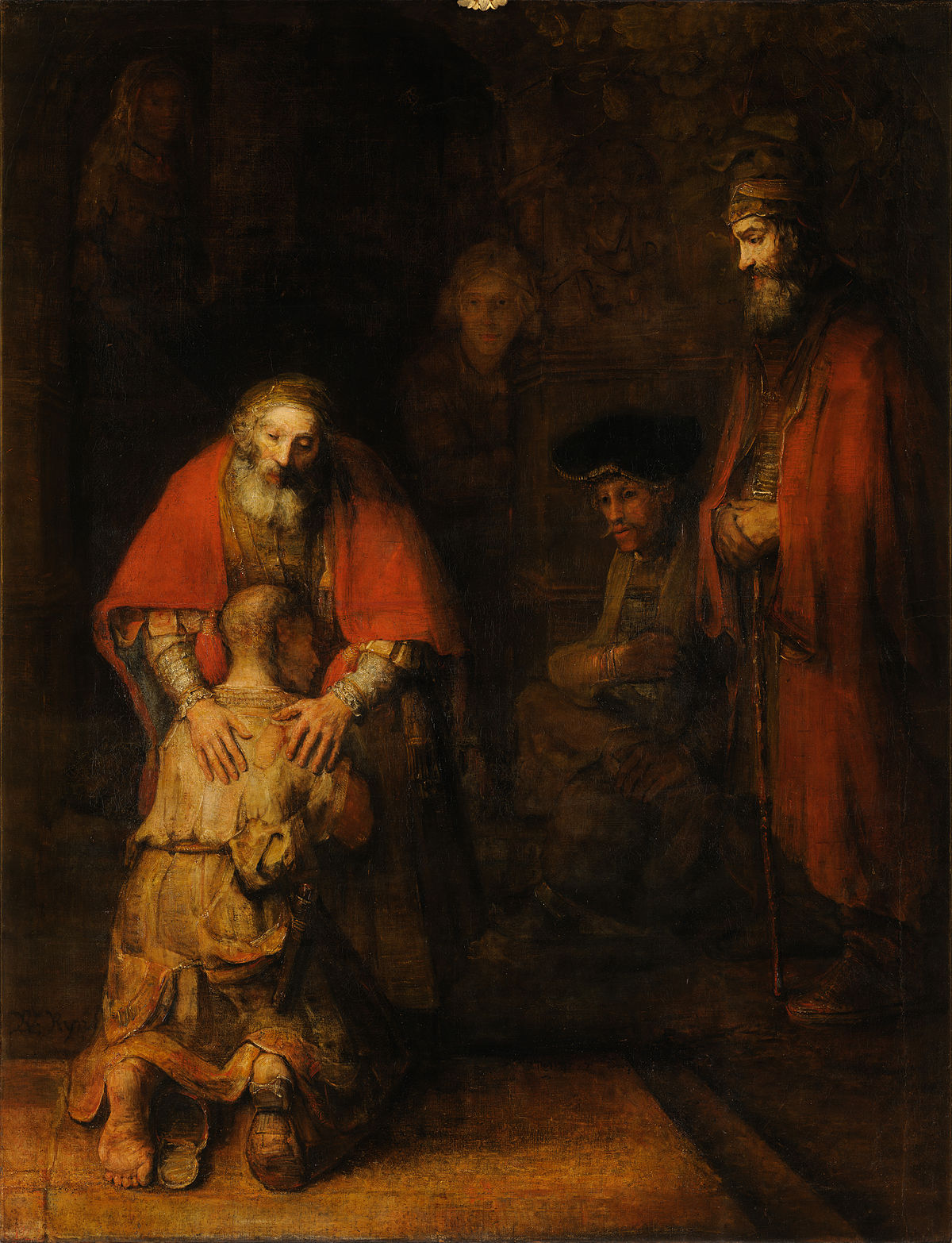
This is probably the most famous and most well known of all the parables. I’ve listened to many sermons about it. I’ve viewed paintings depicting the moments within it. I even once saw a play called “A Long Way Off” and the entire story was of the parable of the prodigal son.

One might call it the resurrected son. Since today is a day in which we celebrate the most important of Christian holidays, the Resurrection of Jesus Christ, we ought to consider two truths today: 1, the resurrection of the prodigal son. And 2, the resurrection of Christ.

We were once all fleeing, prodigal, but, Christ resurrected, and this made a way for our own resurrection. That is wonderful beyond words.

One more thing, last week we talked about the parable of the lost sheep and the parable of the lost coin, and it’s important to note that in scripture, in Luke’s gospel, we see the prodigal son parable immediately after these two. They are definitely all linked together with a common thread of truth. But it’s also interesting to note that the prodigal son parable is only listed in Luke, it doesn’t appear in any of the other gospels.

The Parable begins like this, from Luke 15:11-13: “There was a man who had two sons. 12 The younger one said to his father, ‘Father, give me my share of the estate.’ So he divided his property between them.

13 “Not long after that, the younger son got together all he had, set off for a distant country and there squandered his wealth in wild living.”

He’s headed out. He’s taking his inheritance early, and off he goes. It’s a fairly common theme in our society. One gains great wealth, and that person squanders it with bad decisions. Did you know that most people who win the lottery end up losing everything? That’s right, about 70% of lottery winners, according to readers digest, will spend it all within 5 years. Many will end up in debt, lose everything, with broken marriages, and become addicted to drugs.

God often does us a great service by not giving us everything we want.

Wealth goes beyond paper money though. Our wealth is our health, our relationships, our friendships, our job, our skills, and abilities. These are all gifts from God. And how many of us, squandered those gifts, that wealth, before we knew Christ. We spent it on foolish things. We used our gifts to build our own stuff, instead of what God wanted us to use it for. Let’s continue.

It says, “14 After he had spent everything, there was a severe famine in that whole country, and he began to be in need. 15 So he went and hired himself out to a citizen of that country, who sent him to his fields to feed pigs. 16 He longed to fill his stomach with the pods that the pigs were eating, but no one gave him anything.”

Similar to the younger son, each of us came to a point of desperation in our lives. The self-way of life did not work. It did not function properly. It was a failure. And we ended up in a dark spot, a dark spot mentally, a dark spot spiritually, a dark spot emotionally, and we needed something different.

Pause for a minute. What if the father had been sending him checks in the mail this whole time? What if he had been bailing him out of jail over and over again? What if he had been sending him money so he could buy more prostitutes and booze? How could he ever reach a point of desperation? We can’t always try to rescue our prodigals. There’s a balance there, I think.

It says in verses 17-20: “17 “When he came to his senses, he said, ‘How many of my father’s hired servants have food to spare, and here I am starving to death! 18 I will set out and go back to my father and say to him: Father, I have sinned against heaven and against you. 19 I am no longer worthy to be called your son; make me like one of your hired servants.’ 20 So he got up and went to his father.”

He came to his senses. God helps us to come to our senses as well, that we need Him. We tried life with ourselves as god and master, and it didn’t work. We ended up alone and desperate and miserable. So we have a spiritual awakening, we realize we can still go home. We realize there is a better way, the way of Jesus.

We figure, we’ll go back and God will let us work in a field somewhere for him, do hard labor. But instead we see something very special happen. It says in verses 20b-24: “But while he was still a long way off, his father saw him and was filled with compassion for him; he ran to his son, threw his arms around him and kissed him.

21 “The son said to him, ‘Father, I have sinned against heaven and against you. I am no longer worthy to be called your son.’

22 “But the father said to his servants, ‘Quick! Bring the best robe and put it on him. Put a ring on his finger and sandals on his feet. 23 Bring the fattened calf and kill it. Let’s have a feast and celebrate. 24 For this son of mine was dead and is alive again; he was lost and is found.’ So they began to celebrate.”

The same is true for those of us who came humbly back to God seeking His mercy, admitting were a sinner, and asking for His mercy. We receive His mercy certainly. But we receive much more than that, we receive new life, we receive adoption to sonship. We receive the promises of God, which are all yes in Christ. We receive resurrection from the dead.

Interesting how the Father says it in the parable, “This son of mine was dead and is alive again, he was lost and is found.” Resurrection from the dead. That is what we receive in Christ.

But the parable doesn’t end there. It includes an additional warning, in regard to the older son, it says, verses 25-32:

25 “Meanwhile, the older son was in the field. When he came near the house, he heard music and dancing. 26 So he called one of the servants and asked him what was going on. 27 ‘Your brother has come,’ he replied, ‘and your father has killed the fattened calf because he has him back safe and sound.’

28 “The older brother became angry and refused to go in. So his father went out and pleaded with him. 29 But he answered his father, ‘Look! All these years I’ve been slaving for you and never disobeyed your orders. Yet you never gave me even a young goat so I could celebrate with my friends. 30 But when this son of yours who has squandered your property with prostitutes comes home, you kill the fattened calf for him!’

31 “‘My son,’ the father said, ‘you are always with me, and everything I have is yours. 32 But we had to celebrate and be glad, because this brother of yours was dead and is alive again; he was lost and is found.’”

We see at the end of the parable that the older brother is refusing to go in. He’s angry because he’s been faithful all these years and now he’s jealous of his brother getting a big party. It’s a good reminder that when a terrible sinner comes into the church and receives God’s mercy we shouldn’t be jealous or angry. We should celebrate. Because it’s open to anyone, and it doesn’t matter if it’s moments before their death in old age or when they’re young. It’s a huge blessing.

I think this also references Jews and Gentiles, the Gentiles being awful sinners are going in after wicked living and the Jews who practiced rigorous adherence to the 10 commandments and the OT law are refusing to go in and provoked to jealousy. It’s interesting the parable ends without telling us if the older brother goes in or not.

All this should inevitably point us to Jesus Christ. Jesus never sinned, yet he was put to death, and was crucified. But Jesus didn’t stay dead. Jesus resurrected from the dead. And that’s what we celebrate today.

We understand and know that Jesus is alive today. But what if Jesus isn’t really alive? What would that mean? Well, we would be fools for being here.

Thankfully… Jesus Christ is alive. And we have good evidence to believe. Along those lines, to close today, I’d like to share a powerful quotation from Kurt E. DeHaan: “Why We Believe Jesus Rose from the Dead: If Jesus did not rise from the dead, the Christian faith is a foolish fantasy. However, if the resurrection of Christ did occur, it confirms His life, message, and atoning work. It is the basis of our hope of life beyond the grave. Christ is alive, and the evidence is overwhelming. Here are some of the reasons we can be so sure.

1. Jesus predicted His resurrection (Matt 16:21; Mark 9:9-10; John 2:18-22).

2. The Old Testament prophesied it (Psalm 16:10; compare Acts 2:25-31; 13:33-37).

3. The tomb was empty and the grave clothes vacant. if those who opposed Christ wished to silence His disciples, all they had to do was produce a body, but they could not (John 20:3-9).

4. Many people saw the resurrected Christ. They looked on His face, touched Him, heard His voice, and saw Him eat (Matt. 28:16-20; Luke 24:13-39; John 20:11-29; John 21:1-9; Acts 1:6-11; 1 Cor. 15:3-8).

5. The lives of the disciples were revolutionized. Though they fled and even denied Christ at the time of His arrest, they later feared no one in their proclamation of the risen Christ (Matt 26:56, 69-75).6. The resurrection was the central message of the early church. The church grew with an unwavering conviction that Christ had risen and was the Lord of the church (Acts 4:33; 5:30-32; Rom. 5:24).

6. Men and women today testify that the power of the risen Christ has transformed their lives. We know that Jesus is alive not only because of the historical and biblical evidence but also because He has miraculously touched our lives.”

We only have the option of the path of the prodigal son, because Jesus our messiah was crucified and resurrected from the dead. He is alive. And He is our only hope for salvation. We can all be prodigals who were dead, and now live again, because of Jesus resurrection.