

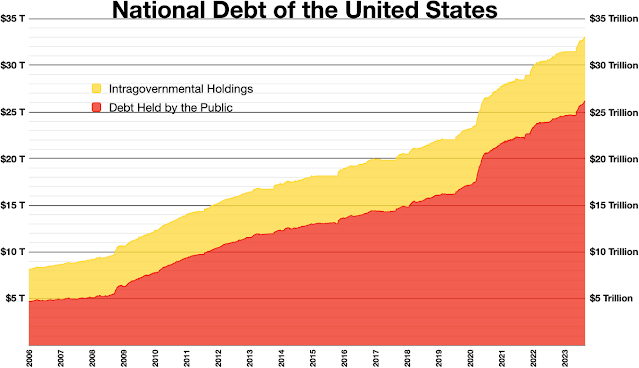
In the year 2022, according to the CBO, the United States government raised 4.9 trillion dollars in tax income. About half came from individual income taxes. It’s a massive amount of money that we’re talking about, but despite that, the U.S. government is currently 33.1 trillion dollars in debt, due to excessive spending, which has led to inflation, which hurts the poorest income earners the worst.
So knowing that the U.S. government apparently is somewhat reckless in how it spends money, should we still pay our taxes faithfully? Or should we try to get around our taxes? Or maybe we should cheat just a little bit on our taxes? Let’s consider that topic today, as we look at the words of Jesus around this topic of paying taxes to the government authorities.
We’re also going to look at a question raised about marriage, and what life will be like in heaven. So we’re going to look today at human government, and the heavenly government.
Today we’re looking at Mark 12:13-27, and we’re seeing Jesus at the pinnacle of his ministry. He is in Jerusalem, capital of Israel, capital of planet Earth, if you really think about it, and he’s dealing directly with the most powerful groups in the nation, the Pharisees, the chief priests, the elders, the Herodians, the Sadducees, Jesus is dealing directly with the social elites, and at that the same time he’s teaching his disciples, and the crowds. He’s bringing the word of God to every segment of society, from the poorest blue collar workers, to the most powerful elites.
During this time in Jerusalem we keep seeing the elites attempting to ask Jesus questions to cause him to trip himself up. It reminds me of how the news media will often ask questions to politicians in Washington D.C. with the hope of getting them to say something that will harm them. They don’t really want an answer to their question, they are simply trying to trip up the speaker, and get them to say something that will get them cancelled by the public. It’s a nasty game in politics and power, and we see the same happening to Jesus.
In verses 13-14 we see a group of elites approach Jesus hoping to cause him harm. Here is what it says, “Later they sent some of the Pharisees and Herodians to Jesus to catch him in his words. They came to him and said, “Teacher, we know that you are a man of integrity. You aren’t swayed by others, because you pay no attention to who they are; but you teach the way of God in accordance with the truth. Is it right to pay the imperial tax to Caesar or not? Should we pay or shouldn’t we?”
Here is what they are hoping, they are thinking, if Jesus says “yes you should pay taxes” then the people will turn against him because the people hate the oppressive taxes of the Roman empire. And if Jesus says “no you shouldn’t” then they can tell the romans that Jesus is telling people not to pay taxes, so they can have Jesus arrested. They are trying to trap Jesus in his words.
It reminds me of Christian pastors who are interviewed by the news media. The first question the news media always asks is, “Do you support gay marriage?” Why do they ask that? Because, if the pastor says yes, they’ve gotten the pastor to go against the Bible. If they say no, then the pastor can easily be labeled as a bigoted hater, and someone no one should listen to. It’s all about cornering the person in their words.
But Jesus is too smart for this little game they are playing with him.
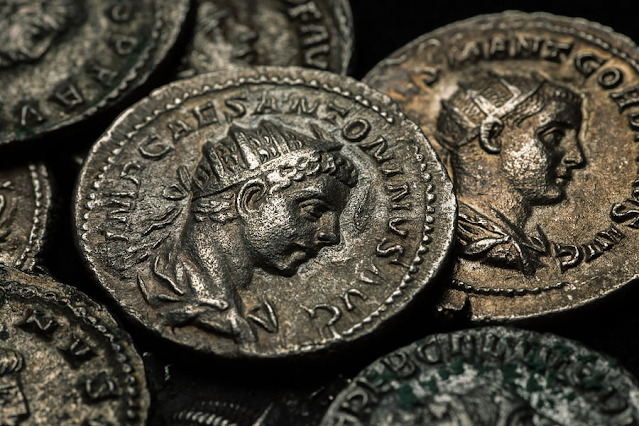
It says in verses 15-16: But Jesus knew their hypocrisy. “Why are you trying to trap me?” he asked. “Bring me a denarius and let me look at it.” 16 They brought the coin, and he asked them, “Whose image is this? And whose inscription?”
“Caesar’s,” they replied.
Then Jesus said to them, “Give back to Caesar what is Caesar’s and to God what is God’s.”
And they were amazed at him.”
Jesus knew they were trying to trap him in his words. Why are you trying to trap me? He asked them. So he takes a coin, and the coin has a picture of Caesar on it.
Give to Caesar what belongs to Caesar, and give to God what belongs to God.
Many people even today I think don’t like the answer that Jesus gave. Because it commits us to paying taxes faithfully and being honest citizens of the nation where we live.
But what about the fact that the government often wastes money?
According to the Heritage Foundation, here are some ways tax payer funds are wasted in the U.S. Government:
1. Federal agencies are delinquent on nearly 20 percent of employee travel charge cards, costing taxpayers hundreds of millions of dollars annually.[9]
2. The Securities and Exchange Commission spent $3.9 million rearranging desks and offices at its Washington, D.C., headquarters.[10]
3. The Pentagon recently spent $998,798 shipping two 19-cent washers from South Carolina to Texas and $293,451 sending an 89-cent washer from South Carolina to Florida.[11]
4. Over half of all farm subsidies go to commercial farms, which report average household incomes of $200,000.[12]
5. Health care fraud is estimated to cost taxpayers more than $60 billion annually.[13]
6. A GAO audit found that 95 Pentagon weapons systems suffered from a combined $295 billion in cost overruns.[14]
7. The refusal of many federal employees to fly coach costs taxpayers $146 million annually in flight upgrades.[15]
But, does that matter when we consider if we should pay our taxes? The answer is no. It does not matter. Even if I paid my taxes and the U.S. government took the money, and set it on fire in front of me, it wouldn’t matter, it’s still my job to pay my taxes faithfully.
If I give a homeless person five dollars, does it matter what he or she spends it on? If they spend it on food, great, if they buy a bottle with it, it doesn’t matter. What God looks at is my heart in the matter. I gave with a heart of love and in faith, and what the man does with the money is his responsibility.
It’s the same with government. My job is to pay my taxes faithfully. What the government does with it, that’s between our leaders and God. And rest assured that God will hold our leaders accountable for how they spend our tax money.
But what if I did cheat on my taxes? Lied on the forms? Well, I’ve now sinned by lying and by stealing.
And I’ll tell you in the past, I’ve been tempted to want to cheat on my taxes. To fudge the numbers a little bit. But I don’t do that anymore. I know that it’s my responsibility before God to be honest in how I use my money.
This doesn’t just apply to paying taxes. It applies to how we use our money in general. We should be tithing at least 10% to our local church. Otherwise we’re stealing from God by not giving those tithes and offerings unto the Lord. We should also support other charities as we feel led to by God. We should also help others with money in general, with food, with clothing, with time, and so on and so forth.
A.W. Tozer reminds us: "Money often comes between men and God. Someone has said that you can take two small ten-cent pieces, just two dimes, and shut out the view of a panoramic landscape. Go to the mountains and just hold two coins closely in front of your eyes--the mountains are still there, but you cannot see them at all because there is a dime shutting off the vision in each eye."
It doesn't take large quantities of money to come between us and God; just a little, placed in the wrong position, will effectively obscure our view." -Cedric Gowler.
If you want to make sure that money never has a foothold in your heart, then commit to tithe 10% to your local church, and to give another 5-10% to other charities and those in need. When you give your first fruits to God, you ensure that money will never control you.
So OK, we find that placed properly now. Resist the temptation to cheat. Also understand that if you make some money on the side, it’s probably not a big deal either, but if it’s large amounts of money, well, we should be prayerful. We should seek God. We should also know the law and how it all fits together in the rule books for our country. But simply be honest, and do obey the tax laws.
But there’s a second issue here, and we see that we should pay our taxes to our government, but we should make sure our heart belongs to God.
Jesus said, “Give to God what belongs to God.” What belongs to God? We do. Our heart does. Keep God first in your heart. Have no idols before him. Money can be an idol. But many other things can be as well.
Secondarily today, we see another group of elites approach Jesus to ask him a question. A group called the Sadducees confront Jesus.
And I think the Sadducees are again not genuine in wanting to know the answer. The Sadducees did not believe that humans would live after death. They thought you simply die and then that’s it. No heaven, no hell, just nothing, a blank screen. You no longer exist. I think they're trying to prove a point here with this scenario they bring up to Jesus.
Let’s take a look, verses 18-23: “Then the Sadducees, who say there is no resurrection, came to him with a question. “Teacher,” they said, “Moses wrote for us that if a man’s brother dies and leaves a wife but no children, the man must marry the widow and raise up offspring for his brother. Now there were seven brothers. The first one married and died without leaving any children. The second one married the widow, but he also died, leaving no child. It was the same with the third. In fact, none of the seven left any children. Last of all, the woman died too. At the resurrection whose wife will she be, since the seven were married to her?”
We see the scenario here, a woman is married to seven different men, in a good way, because the men she was married to kept dying. All seven men die one after another, and then she dies.
And they ask, at the resurrection, (they don’t believe in any resurrection) who will she be married to?
This reminds me of the scenario atheists will bring up to me, “Who made God?” Well, you don’t believe in God at all, so why are you asking me who made God? The Sadducees don’t believe in an afterlife but they’re asking Jesus who this woman would be married to in the afterlife.
I get the feeling they are just trying to make the point that there is no after life. But of course they are wrong.
Then we see Jesus’ reply in verses 24-27: "Jesus replied, “Are you not in error because you do not know the Scriptures or the power of God? When the dead rise, they will neither marry nor be given in marriage; they will be like the angels in heaven. Now about the dead rising—have you not read in the Book of Moses, in the account of the burning bush, how God said to him, ‘I am the God of Abraham, the God of Isaac, and the God of Jacob’? He is not the God of the dead, but of the living. You are badly mistaken!”
In verse 24 they’ve made two errors: They don’t understand the scriptures properly, and they don’t understand God’s power.
In verse 25, it says, "when the dead rise", so Jesus affirms that the dead will not stay dead, they will rise to life after death.
And Jesus continues and says that in the after life, men and women will not be married, they will not be making love and having children, they will instead be similar to angels.
Now I think it’s still valid to say that in the after life, people who were married will most likely live in the same mansion in heaven. They are companions I’m sure after death, for all time. Then again, we don’t know exactly what that will look like in paradise.
Then Jesus quotes from the book of Exodus, which he calls the book of Moses, so Jesus affirms that Moses did in fact write the Torah, which is fascinating. But he quotes what God the Father said from the burning bush, that he is the God of Abraham, Isaac, and Jacob. And I think Jesus was saying, Abraham, Isaac, and Jacob, even at the time of the burning bush, were alive, they were alive with God in heaven. Period. Because God is the God of the living, not the dead. And if we endure to the end, one day we will meet them face to face and talk with them!
So we see today the values of two kingdoms, the kingdom of men, and the kingdom of God.
The kingdom of men charges us taxes of various kinds, and we should pay them without deceit or trickery. We should also pay our tithes and offerings unto the Lord and provide for the needs of his people.
But in the end, our goal is to join the kingdom of God, in heaven, a place of the living, not the dead. Our heart should be first for the kingdom of God, not for the kingdom of men. But we should be faithful examples of God’s truth and honesty and faithfulness in this world. And then people will be drawn to partake of the kingdom of God, and put God first in their lives.
But let me leave you with this: Don’t let money get between you and God.
"Money will buy a bed but not sleep; books but not brains; food but not appetite; finery but not beauty; a house but not a home; medicine but not health; luxuries but not culture; amusements but not happiness; religion but not salvation; a passport to everywhere but heaven." -The Voice In the Wilderness, quoted in Discipleship Journal, Issue 53, 1989, p. 21.
Submit your finances to God, and they will never control you or become your master! That’s not easy. I get that. But pray. Ask God for help. He will help you. And you’ll honor him with your money. Then your heart will be ready for the kingdom of God, with God first in your heart, sovereign and in total control. Praise the Lord!


"In 1928 a group of the world's most successful financiers met at the Edgewater Beach Hotel in Chicago. The following were present: The president of the largest utility company, The greatest wheat speculator, The president of the New York Stock Exchange, A member of the President's Cabinet, The greatest "bear" in Wall Street, The president of the Bank of International Settlements, The head of the world's greatest monopoly. Collectively, these tycoons controlled more wealth than there was in the U.S. Treasury, and for years newspapers and magazines had been printing their success stories and urging the youth of the nation to follow their examples. Twenty-five years later, this is what had happened to these men:
The president of the largest independent steel company, Charles Schwab, lived on borrowed money the last five years of his life and died broke.
The greatest wheat speculator, Arthur Cutten, died abroad, insolvent.
The president of the New York Stock Exchange, Richard Whitney, served a term in Sing Sing Prison.
The member of the President's Cabinet, Albert Fall, was pardoned from prison so he could die at home.
The greatest "bear" in Wall Street, Jesse Livermore, committed suicide.
The president of the Bank of International Settlements, Leon Fraser, committed suicide.
The head of the world's greatest monopoly, Ivar Drueger, committed suicide.
All of these men had learned how to make money, but not one of them had learned how to live."
-Source Unknown.
Money isn’t everything. In fact here are some of the things the wealthiest people in history have said about their wealth…
“I have made many millions, but they have brought me no happiness” -John W. Rockefeller
"I have had no real gratification or enjoyment of any sort more than my neighbor on the next block who is worth only half a million.” –W.H. Vanderbilt
“Money has never made man happy, nor will it, there is nothing in its nature to produce happiness. The more of it one has the more one wants.”– Benjamin Franklin
“I was happier when doing a mechanic's job” -Henry Ford
“Millionaires seldom smile” -Andrew Carnegie
-Source Unknown.
Here today we examine one of the most famous events in the entire Bible, the historical encounter between a wealthy young man and Jesus Christ the savior of the universe.
It says this in verse 17, “17 As Jesus started on his way, a man ran up to him and fell on his knees before him. “Good teacher,” he asked, “what must I do to inherit eternal life?”
The young man falls on his knees before Jesus. He is overcome by his presence, he is amazed, and excited to meet Jesus, this God-man who is changing everything. And he asks him a very, very, very important question: How do I get eternal life?
He calls Jesus the good teacher. And asks him, what do I gotta do to get saved?
Here’s how Jesus responds:
18 “Why do you call me good?” Jesus answered. “No one is good—except God alone. 19 You know the commandments: ‘You shall not murder, you shall not commit adultery, you shall not steal, you shall not give false testimony, you shall not defraud, honor your father and mother.’”
Jesus cites 5 of the ten commandments here. Do not murder is #6, do not commit adultery is #7, do not steal is #8, do not bear false witness is #9, you shall not defraud is not one of the ten commandments, and honor your father and mother is #5.
So this is kind of odd. Jesus cites 6 through 9. Then adds one that isn’t on the list, skips #10 and goes back and mentions #5. Additionally, he doesn’t mention 1 through 4 at all. And he adds one, do not defraud.
Jesus is setting up the young man, because Jesus knows all things. He already knows what is going on in the young man’s heart.
#10 is do not covet. Do not lust after things you can’t have. Don’t greatly desire what someone else has. Don’t desire whats out there in general. And my guess is, perhaps in his mind, the rich young man had switched that with “do not defraud” he loved his money, he coveted it, but, maybe he justified it in his mind by saying “don’t defraud someone is good enough.”
That’s just a guess, I don’t know for certain.
It’s also interesting that Jesus rebukes him for calling him good. Surely if anyone in the universe deserves to be called good it’s Jesus right? But I again, I’m speculating, maybe the rich young man thought to himself that if I just try hard enough, I can be as good as Jesus. And perhaps Jesus is correcting him to say no one can “try to be good” and be good enough. Only God is good and only God can make us good. No one can obtain it by their own actions or by trying harder.
Here's how the young man responds: (verse 20)
20 “Teacher,” he declared, “all these I have kept since I was a boy.”
The young man says perfect I’ve done all that. I’m sure Jesus knew that those commandments the young man had kept perfectly since he was young. But he only listed half of them, five out of ten.
Next in verse 21: Jesus looked at him and loved him. “One thing you lack,” he said. “Go, sell everything you have and give to the poor, and you will have treasure in heaven. Then come, follow me.”
Now, does this mean that every person who wants to become a Christian has to give away every penny they own, sell all their properties, stocks and bonds, their vehicles, everything they own, in order to follow Jesus? No.
In fact, Jesus doesn’t tell anyone else that. In another incident in Luke’s gospel, chapter 19 verse 10, it says “But Zacchaeus stood up and said to the Lord, “Look, Lord! Here and now I give half of my possessions to the poor, and if I have cheated anybody out of anything, I will pay back four times the amount.” And Jesus responding by saying salvation has come to this house! Zaccheus the tax collector only gave away half but the rich young man had to give it all away?
No, not necessarily. What Jesus was saying to the rich young ruler was, your money is more important to you than God. Your money is more important to you than me.
Yet Jesus loved him at the same time.
Now, does Jesus say well, you can just kinda keep me and my gospel off to the side in your life, you can keep money on the throne of your heart, you can worship money, and you can still follow me? Does Jesus say that? No. Because it’s simply not possible. Jesus must be first. He won’t take second place to anything.
The rich young ruler goes from excited and engaged, to angry and disappointed, maybe ashamed.
In verse 22, “At this the man’s face fell. He went away sad, because he had great wealth.”
His face fell! He went away sad, disappointed, angry, upset, because he had a lot of money. The Greek word there signifies sadness, or gloominess, it pictures clouds coming over the sky.
The rich young man had money and didn’t want to give it up. Or maybe, the money had him. Just like many of those millionaires and billionaires, they don’t really have the money, the money has them. And they feel no joy in trying to protect it and horde it and keep it to themselves.
For this man, God was not first, he was not obeying the commandments, to keep God first, to not covet, to have no idols, he was not in line with God’s will. Money was first. Yet, Jesus loved him. But the young man leaves. He can’t give up what has him.
Then Jesus spoke. In verse 23: Jesus looked around and said to his disciples, “How hard it is for the rich to enter the kingdom of God!”
It says the disciples were amazed. Stunned. Shocked. So Jesus continues… verses 24-25
24 The disciples were amazed at his words. But Jesus said again, “Children, how hard it is to enter the kingdom of God! 25 It is easier for a camel to go through the eye of a needle than for someone who is rich to enter the kingdom of God.”
I’m sure for many in the crowd this felt like a door slamming shut in their faces. I’m sure they felt afraid and disturbed by this saying.
How can a camel go through the eye of a needle? It certainly never could. Too much baggage. Too many things. It’s hard therefore for the wealthy to go in. Indeed, it is impossible.
Next the disciples ask the question every person on planet Earth, or at least every American right now is wondering, in verse 26:
26 The disciples were even more amazed, and said to each other, “Who then can be saved?”
The disciples, the people, are all looking beyond money, they are looking to the basic issue of salvation: How can anyone be saved if it’s so difficult even for the wealthy?
But Jesus gives a hopeful answer. He says in verse 27: Jesus looked at them and said, “With man this is impossible, but not with God; all things are possible with God.”
Salvation, eternal life, deliverance from hell, from punishment for our sins, can only be gained through faith in Jesus Christ. It can’t be gained by trying harder. It can’t be gained by working harder. It can’t be gained by being a good person. It can’t be gained by doing good things in your life. It can’t be gained by measuring your good deeds against your bad deeds.
You have to set all that aside, and receive Jesus Christ as your savior. You have to make Him number one in your life. The King of your heart. Head over your life. In charge. Then we can humbly receive salvation by faith.
But it won’t do to keep God second place. It won’t do to let anything rule over you but Him. That’s the point Jesus makes to the rich young ruler. Your wealth controls you. Get rid of it, and come follow me. And many go away sadly. They aren’t willing to do that.
I’ve seen many go away sadly when I shared the gospel with them. Something inside tells them that it’s true, but at least at that point in their life, they aren’t willing to receive it. They have other priorities. Other things they want. So they refuse it.
So one group of people will leave Jesus sad because they don’t want to give up what they’re focused on in life.
A second group I think is the true disciple. And true disciple, you, me, many others, get very nervous and think, well, did I give up everything and follow Jesus for nothing? Jesus seems to be saying that it’s just impossible, or very hard. So the true disciple gets nervous. And Peter next asks a question and Jesus now addresses the true disciples in the room.
In verses 28-31:
28 Then Peter spoke up, “We have left everything to follow you!”
29 “Truly I tell you,” Jesus replied, “no one who has left home or brothers or sisters or mother or father or children or fields for me and the gospel 30 will fail to receive a hundred times as much in this present age: homes, brothers, sisters, mothers, children and fields—along with persecutions—and in the age to come eternal life. 31 But many who are first will be last, and the last first.”
This is a very, very, very positive message that Jesus gives for people who have given up everything, and made Him first in their life. It’s super, super encouraging. And it’s needed I think, we all were hanging over the cliff of hell when Jesus said how hard it was for rich people to enter paradise. But now he reminds us that we’re in the green pasture talked about in Psalm 23.

He says no one, not one person, who has left behind a great deal, family, friends, property, and all that, for the gospel, will fail to receive a hundred times as much now, in this present time, not after death, but in this life.
And I’ll tell you that’s true. I left my home town to go after Jesus and the gospel, and I’ve found so much, so many people I consider family, in town here, mothers, brothers, sisters, children, all of it, through my church family, and people in town here who I consider friends, and brothers and sisters in Christ.
But Jesus also adds in there “along with persecutions.” Meaning there will also be difficulties, persecutions, people who are against us, financial problems, and so on.
And of course, most importantly, in the age to come, eternal life, paradise. I will dwell in the house of the Lord, forever.
But, Jesus adds, many who seem to be first in this life, will be last in the kingdom to come, and many who appear to be poppers, poor, miserable, will be first in the kingdom to come. Good reminder as well, of how God’s kingdom system works.
Lastly, in verses 32-34 it says this:
32 They were on their way up to Jerusalem, with Jesus leading the way, and the disciples were astonished, while those who followed were afraid. Again he took the Twelve aside and told them what was going to happen to him. 33 “We are going up to Jerusalem,” he said, “and the Son of Man will be delivered over to the chief priests and the teachers of the law. They will condemn him to death and will hand him over to the Gentiles, 34 who will mock him and spit on him, flog him and kill him. Three days later he will rise.”
The disciples are just shocked and amazed by what God has shared with them. The crowds are afraid. And Jesus now tells his disciples for the third time, the plan going forward.
The plan is Jesus Christ is going to Jerusalem to speak the truth in the capital city. Then, he would be captured, turned over to the romans, executed, he would die, then, three days later, he would suddenly be raised from the dead, and would be alive again. And that this mysterious event would secure salvation, the salvation that appeared to be impossible. God, would make it possible through providing a way through the brutal death of Jesus. Jesus would die for our sins, to pay our way to paradise.
So in conclusion today, it may seem impossible, a camel cannot go through the eye of a needle. But, with God, he can make a way where there seems to be no way. Jesus leads the way. And we follow. Perhaps you feel afraid, like the crowds. Perhaps you feel concerned. You should. You really should, if you don’t know Christ as your savior, you should be concerned. Because you’re in danger. But, there is a way. You can be saved, through the sacrifice of Jesus. We can’t be good enough. We can’t cover our own sins. But, if we give our lives to Christ, he will forgive us, and if we follow him, he’ll lead us home to paradise.
Will you follow Jesus through that path? It’s a tough one. It leads like psalm 23 says, through the valley of the shadow of death. It goes through the gate of physical death itself. But, Jesus promises to carry us through to the otherside if we really rely on him, not ourselves, not our money, but on Him, then we will dwell in the house of the Lord forever, like the psalmist wrote:
The Lord is my shepherd, I lack nothing.
He makes me lie down in green pastures,
he leads me beside quiet waters,
he refreshes my soul.
He guides me along the right paths
for his name’s sake.
Even though I walk
through the darkest valley,
I will fear no evil,
for you are with me;
your rod and your staff,
they comfort me.
You prepare a table before me
in the presence of my enemies.
You anoint my head with oil;
my cup overflows.
Surely your goodness and love will follow me
all the days of my life,
and I will dwell in the house of the Lord
forever. -Psalm 23


