Showing posts with label science. Show all posts

Sunday, July 10, 2022

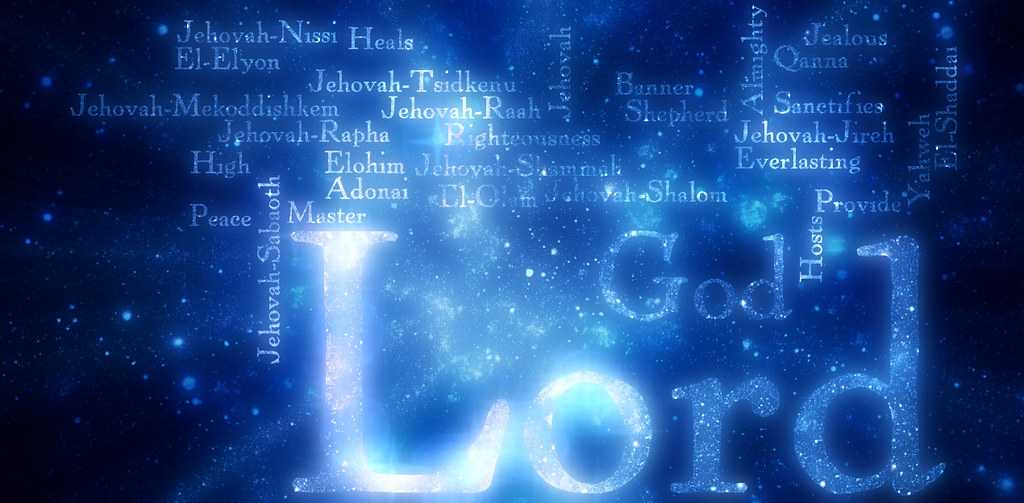
Elohim: The God of DNA, Galaxies, Nature, & the Higgs-Boson Particle


Throughout the scriptures God invites us to inquire of Him and learn about Him. That is really the main goal of God on Earth, is that we would turn to Him, and be curious about Him, and seek to know Him, and then understand how to know Him, then to enter into His presence, and receive a new identity in the Christ he provided to make us ready for heaven. And He invites us to enter into that covenant marriage with Him, and become one with Him, and begin to live differently, proceed down a road of trials and triumphs, challenges and victories, dark nights of the soul and high mountain top experiences, as he prepares us for heaven. The end goal being, after we physically die, we are resurrected, with new bodies, as new people, to dwell with God for all eternity on a new perfect Earth, to always delight in Him and follow Him wherever he leads us, into a future so bright we can’t possibly imagine.

We grow into maturity, as we seek God more and more deeply. That is the goal with this new series, is that you would wonder at who God is. The goal is that you would come to know the unimaginably powerful God of all the universe intimately. That you would have a deep, rich daily intimacy with God, and that you would live as a set apart, special chosen possession of God, in a fallen world, where you will shine ever more brightly in the increasing darkness of these difficult last days.

There are twelve names of God we will address over this series. Today we address the name of God most commonly used in the first two chapters of Genesis, Elohim. This is the name God gives to himself throughout his creative works in Genesis 1 and into Genesis 2. The name Elohim is used 35 times in those opening chapters of the Bible.

In the beginning Elohim created the heavens and the earth. 2 Now the earth was formless and empty, darkness was over the surface of the deep, and the Spirit of Elohim was hovering over the waters.

3 And Elohim said, “Let there be light,” and there was light. 4 Elohim saw that the light was good, and he separated the light from the darkness. 5 Elohim called the light “day,” and the darkness he called “night.” And there was evening, and there was morning—the first day.”

Elohim tells us God is infinitely creative. In our Elohim, we find an infinitely complex creative genius mind. He is infinitely creative. We can see this from the planet Earth. And the our solar system. The sun. The asteroid belt. The sun shining through the trees. Waters rushing along a river bed. Lake Michigan, Lake Superior, and all the great lakes.

Elohim implies God’s glorious creative majesty. Nathan Stone, author of “Names of God” says it this way: “It is most appropriate that by this name God should reveal Himself- bringing cosmos out of chaos, light out of darkness, habitation out of desolation, and life in His image.”

It’s just so much to even fathom. There was nothing there 6000 years ago when God made the universe. There was nothing. There was no human race. There were no planets, no stars, no galaxies. Nothing existed. Nothing aside from God, in a heavenly reality he created, along with his creations, this creatures called angels who serve Him and worship Him. Then Elohim declared, and His power being infinite, piece by piece the universe came into being, all calculated perfectly mathematically, every equation setup just right, endless streams of data, and information, universal constants, and equations like gravity, mass, and particles like the higgs boson that hold the universe together. Higgs boson fields exist all around us. They are tiny particles that appear and disappear, and they literally hold reality together. And if they didn’t exist, all reality would disintegrate and we would no longer exist. They were nicknamed the God particle, because they hold reality together.

He calculated it all out in his infinite mind, using the coding system of DNA to program and establish all the animals, plants, and creatures across the planet. Did you know all living creatures from animals to plants are programmed with the same DNA code? One might think that implies that God used a unique code, DNA, to program all life by one system.

It's kind of like how humans created binary code for computers. Binary code is simply a 0 or a 1. Everything in a computer as far as coding can all be broken down to ones and zeros.

In the DNA coding system, Each gene's code uses four nucleotide bases of DNA: adenine (A), cytosine (C), guanine (G) and thymine (T). And they are arranged in DNA into 3 letter codons, which are arranged into 64 different codons to write human, animal, and plant DNA. It’s a complex coding system. But much, much more complex than binary.

The most sophisticated system we could come up with for coding was binary. But inside our bodies is a system infinitely more complex.

I parked by the river yesterday morning eating my breakfast that I got from the fast food drive through and looked at the beautiful trees, the sun shining into the river, the ducks and Canadian geese by the water, the food, the roads, the music playing, and it is just astonishing all that God has made on planet Earth. He is truly Elohim, God the creator.

Even in my mind at those moments I knew he was putting the thoughts in my mind, or at least inspiring those thoughts and emotions, so that I would later write them down and share them with you. This happens frequently as a pastor. Life becomes a living parable through which he has me share things with others. It’s fascinating and also sometimes terrifying.

Our respond to God’s creative genius is important. That’s one thing I want to emphasize in this series. Let’s take it always like this: Here is God’s name, here is what it means first, then second, how do we respond? The point is that we respond. That is God’s desire that we should reach out for Him, as we learn about Him. If not, why even bother studying it?

Our response should be awe, wonder, and amazement. We should let the amazement fill us up inside. We should see nature with different eyes. We should see animals with different eyes. We should see ourselves with different eyes. We should see these things as special, as made by God, as gifts from God, as something that overwhelms us with joy, excitement, wonder, and amazement. And our response should be worship, to say wow God, look at this, you made it and it’s wonderful, this must mean you are wonderful God.

So our respond is to declare God you are amazing. Say it with me: God you are amazing! That is worship. So when you enjoy nature, when you enjoy fellowship with friends, when you enjoy time with your pets or you see a wild animal, take a moment to be amazed. And to thank God.

Yet though we see how beautiful nature is, we also see reality is fundamentally fallen. It’s dangerous. Wild animals can be dangerous. Storms and tornadoes and hurricanes can destroy and harm people and their property. Humans spread trash around the city, landfills form, human bodies become old and frail, we see the carcass of a dead animal on the side of the road and we’re horrified.

What God has made is so beautiful, sublime, pristine, yet it’s also horribly mangled.

It says in Romans 8, “19 For all creation is waiting eagerly for that future day when God will reveal who his children really are. 20 Against its will, all creation was subjected to God’s curse. But with eager hope, 21 the creation looks forward to the day when it will join God’s children in glorious freedom from death and decay. 22 For we know that all creation has been groaning as in the pains of childbirth right up to the present time.”

All the Earth, and the universe was cursed when Adam and Eve sinned against God. They were deceived and turned away from God, and hid from him. And as a result of this, all reality became cursed with sin. Sin is so destructive isn’t it? It destroys everything. Sin spreads through people, sin spreads everywhere. So we see a fallen natural world. We see how animals feed on each other, we see storms and earthquakes, and diseases, and cold winters, and swarms of mosquitos, and we see our planet is fallen. We see loved ones grow old and die. In fact we see every person ever born will one day die.

Our response to this should be fearful reverence for God. To be tremble before a holy God. And to receive Jesus Christ as our savior, so that we do not remain cursed like the rest of the world is. We want to make sure we believe in Jesus, everyday, and we repent of our sins, and live the most pure and set apart life in the power of the Holy Spirit who helps us.

Then we will be fit and ready, pure, holy, spotless, and blameless on the day that Jesus Christ returns to establish his millennial reign upon the Earth. We will become part of the New Earth, in a new universe, in which all the stains of the curse are removed, and every calculation of the universe is set right.

There will be no more decay or death in human DNA, or animal or plants. There will be no more destructive variances in the equations that govern gravity, time, space, matter, energy, the atmospheric systems of Earth, and so on. There will be no more limits on systems of food, water, wealth, and shelter. God will rewrite all these systems to conform to a new perfect system of reality, a paradigm shift he calls the New Heavens and New Earth, and in particular a city called the New Jerusalem where the redeemed and cleaned humanity will dwell with or king Jesus Christ, and our Lord God Elohim forever and ever.

That’s my goal on this fallen, yet beautiful Earth. To love, honor, and fear the Lord Elohim, and to respond to His creative genius with shouting joy, reverence, praise, amazement, and worship. Make that your goal as well. See reality through new eyes, see it as the glorious design of an infinite God, who loves you, yet also calls you to holiness in Christ. Amen.


Wednesday, November 17, 2021

The Best Evidence-Based Presentations on the Existence of God

I've been scammed a few times in life. Well, more than a few times. Have you ever received a cryptic invite to a mysterious event, only to discover that you've been hornswoggled into a pyramid scheme? Have you ever seen an appealing offer on television or in a magazine and signed up, only to realize you should've read the fine print? Yes, consumerist society has turned us all into skeptics. If someone comes to me and has suddenly decided they want to be my friend and be the one to initiate interactions, unfortunately, my first thought is, what are they going to try to sell me? Is it tupperware or essential oils?

Given this grim reality, I want facts, evidence, and reason when it comes to the things I believe. The same is true of my spiritual life. When I consider, who is God, what religion is real, and who is Jesus, and so on, I want to see the evidence. Show me the facts and then I can make an informed decision. Show me the fine print.  So, I submit for your inspection seven presentations giving reason, evidence, historical inquiry, and science in regard to God's existence, particularly in reference to Christianity's exposition of who God is. 


1. Prof. William Lane Craig - Why Should I Believe God Exists?


2. Prof. William Lane Craig - The Absurdity of Life without God


3. Prof. John Lennox - Cosmic Chemistry: Do Science and God Mix?


4. Prof. Frank Turek - Why would God make me a Lesbian?


5. Prof. Stephen Meyer - What is Intelligent Design?

6. Dr. Nabeel Qureshi - Jesus in Islam vs. Jesus in Christianity

7. Ken Ham - Science confirms the Bible

Wednesday, September 8, 2021

Must Watch for Christian Thinkers: Add a Depth to your Faith through Reason

There is one resource that every single solitary Christian on the planet ought to view immediately, it's called "The Truth Project" created by Del Tackett. It's simply the most important resource you can view. View it immediately. Spend as much money as you possibly can to get it immediately. Watch it over and over and memorize it if you can.  

Here are some other resources to check out as soon as possible:

1. Francis Schaeffer's "How shall we then Live?" DVD Series

Available on Youtube free, click here


2. Icons of Evolution by Jonathan Wells DVD Documentary


3. Is Genesis History? with Del Tackett


4. William Lane Craig on the Ben Shapiro Show


5. Lee Strobel's The Case for Christ, The Case for Faith, and The Case for a Creator DVD documentaries


6. The God Who Speaks by various 2018


Saturday, May 15, 2021

Could God actually be Real?


Hubble Revisits the Veil Nebula
I was raised in a Catholic household, and growing up I considered the possibility of a God. But once into school, studying science and so on, I rejected the God hypothesis as a backward remnant of a bygone era. Perhaps your experience was similar to mine? Perhaps you also jettisoned the concept of God, as one which ought to be rejected along with the Easter bunny and the tooth fairy?

If so, I'm glad you are here. We are all communicated information in various forms, by our parents, in school, and by the culture and media of our world. What often emerges in our mindsets are prevailing narratives about what reality is and isn't. These narratives in my upbringing included ideas like post-modernism, the idea that nothing is objectively true, the idea of science's conquest over religion, the rejection of all religion as myth, and so on and so forth.

This was my worldview. This was the direction of my life, and I lived out the entailments of such ideologies through promiscuity, wayward living, addiction, and endless pondering. But in the pondering and in the emptiness I began a journey of exploration. I began to explore the concept of spirituality. I began to explore the idea of God.

Jump forward to today, and I look back and realize that the various cultural narratives I had believed, that science was burying God, that Jesus maybe never even existed, that Christianity was the same as the tooth fairy, had all been bills of goods I'd been sold very carefully, through catch-phrases and one-liners. And as I explored the real evidence, the narratives that had been hidden, I began to realize the truth. As you embark on a similar journey, I would encourage you: Ruthlessly seek out the truth. Allow no bias. And you may just find that the bill of goods sold to you, was indeed, not all that it claimed to be.

“The Bible encourages people to put their faith in God. Unfortunately, many people equate faith with a blind leap in the dark or wishful thinking. But the faith that the Bible requires is intelligent faith. It is neither blind nor irrational. Biblical faith is a committing trust with an object (God) who is worthy of our faith. No one is asked to sacrifice his intellect when he puts his faith in the God of the Bible.” –Don Stewart, The Ten Wonders of the Bible, 1990, p. 13.

“The Christian faith does not call for us to put our minds on the shelf, to fly in the face of common sense and history, or to make a leap of faith into the dark. The rational person, fully apprised of the evidence, can confidently believe.” –William Lane Craig

“There is a principle which is a bar against all information, which is proof against all arguments and which cannot fail to keep a man in everlasting ignorance—that principle is contempt prior to investigation.” -Herbert Spencer

Christianity: The Facts

A: Does God exist? The existence of God is not 100% provable. But one does not necessarily need absolute evidence. In a court of law, evidence beyond a reasonable doubt is acceptable when considering a verdict. In the same way, when considering a first cause one may view all the evidence and make a reasonable conclusion that God does indeed exist. There are many compelling arguments, such as the cosmological argumentmoral argumentontological argument, and teleological argument lays out in clear terms: Anything that has a beginning has a cause. That's certainly true. Second, the universe began to exist. Given the evidence, the red shift observed by Hubble in the early 1900s, that seems quite likely. Since the universe needs a cause, that cause must be immaterial, beyond space and time, and infinitely powerful. In other words, God. Can one prove evolution 100%? Absolutely not. Naturalism is a presupposition, or a worldview based on an interpretation of the available evidence. So is Christianity. Though evolution and Christianity are not necessarily at odds. Dr. Francis Collins a noted scientist has done lectures and wrote a book called "
The Language of God" which lays out excellent arguments along those lines. In addition, Dr. Stephen Meyer has written several books on "Intelligent Design Theory" the view that an architect of the universe is supported by perceived design in cellular biology. Check out his books as well, most notably: "Signature in the Cell" and "Darwin's Doubt."

B: Did Jesus really exist historically? The evidence indicates that yes, Jesus Christ of Nazareth did exist. He was a real person in the history of the middle east. History is gleaned by manuscript evidence, historical account by witnesses cross referenced with official documents of governments and empires. The manuscript evidence for the historical existence of a man named Jesus Christ of Nazareth is better than for most historical persons.

But was Jesus Christ really God come to Earth? Now that is the point of real questioning. There have been several notable books on this topic, most notably "The Case for Christ" by Lee Strobel. And if Jesus Christ was really who he claimed to be, did he really rise? The point of contention is: Did Jesus Christ rise from the dead? The evidence of the powerful witness of the apostles, the early church, and the willingness of all the early disciples save one being willing to die for their faith indicates that yes it is likely Jesus is risen from the grave. Watch the presentation below by Gary Habermas to learn more about this line of inquiry.

“Do you believe in the existence of Socrates? Alexander the Great? Julius Caesar? If historicity is established by written records in multiple copies that date originally from near contemporaneous sources, there is far more proof for Christ’s existence than for any of theirs.” –Dinesh D’Souza, What’s So Great About Christianity, p. 296.

“It may be stated categorically that no archaeological discovery has ever controverted a Biblical reference. Scores of archaeological findings have been made which confirm in clear outline or exact detail historical statements in the Bible. And, by the same token, proper evaluation of Biblical descriptions has often led to amazing discoveries.” –Nelson Glueck

The Bible when compared with recorded history is 99.7% accurate. Archaeology and historical records support the events of the Bible as described in books of the Old and New Testament. This is an important beginning in establishing the credibility of the historical Jesus and the manuscripts of the Christian Bible.

C: The Philosophy and truth within Christianity can withstand the most powerful intellectual probing. I would recom
mend "Mere Christianity" by C.S. Lewis which walks the reader step by step through the issues of the idea of belief in God. I would also highly recommend "Orthodoxy" by G.K. Chesterton a man who converted to Christianity after reading all the arguments for the atheist worldview and being thoroughly unimpressed, began to search out belief in a higher power, arriving eventually at the cross of Christ Jesus. If you're a highly analytical individual, William Lane Craig has done some excellent writing and speaking on the reason for God. Check out "Reasonable Faith" by William Lane Craig. Two more books I would recommend are "Beyond Opinion" and "I don't have enough faith to be an Atheist." Others of notable mention are Frank Turek, Norm Geisler, Hugh Ross, Lee Strobel and Tim Keller.

Expert Testimony
We the people of western civilization tend to prefer to get our information from the experts. We look to authoritative individuals and groups to help us understand life and existence. Many of the greatest minds of human history have been dedicated Christians. The following links lead to quotations from great thinkers surrounding the topic of Christianity, science, math, worldview, and many others.
  1. Expert Testimony: The Existence of God, the Problem of Evil
  2. Expert Testimony: The Anthropic Principle, Anthropology
  3. Expert Testimony: Intelligent Design, Archaeology 
  4. Expert Testimony: the Demise of Evolution, Complex in DNA

Websites for further Study of the Christian Worldview
  1. Cross Examined
  2. Reasonable Faith
  3. Evolution News
  4. Stand to Reason
  5. Answers in Genesis
  6. The Poached Egg
  7. The Veritas Forum
  8. Socrates in the City
  9. Always Be Ready

Sunday, December 3, 2017

Does God Exist? Sex Scandals, Scientific Inquiry, and the Search for True Fulfillment


“Has anyone provided proof of God’s inexistence? Not even close. Has quantum cosmology explained the emergence of the universe or why it is here? Not even close. Have our sciences explained why our universe seems to be fine-tuned to allow for the existence of life? Not even close. Are physicists and biologists willing to believe in anything so long as it is not religious thought? Close enough. Has rationalism and moral thought provided us with an understanding of what is good, what is right, and what is moral? Not close enough. Has secularism in the terrible 20th century been a force for good? Not even close, to being close. Is there a narrow and oppressive orthodoxy in the sciences? Close enough. Does anything in the sciences or their philosophy justify the claim that religious belief is irrational? Not even in the ball park. Is scientific atheism a frivolous exercise in intellectual contempt? Dead on.”
― David Berlinski, The Devil's Delusion: Atheism and Its Scientific Pretensions (By an agnostic scientist)

I was bell ringing yesterday, for the Salvation Army, at the red kettle, and a guy walked past me and said, "Who wrote the Bible?" And then he walked inside. I couldn't help but think of Pontius Pilate when he was talking to Jesus. And Pontius Pilate asked Jesus the question: "What is truth?" An amazing question, asked to Jesus himself. But Pilate didn't wait for the answer, he simply walked away. He didn't really want an answer. I could answer the question, who wrote the Bible, the answer is that God inspired many authors over thousands of years to bring the Bible together, but one must desire an answer.

Some are looking for a real answer.  Others are looking for an excuse to set aside the question.  We want what we want you see.  I'm not excluded from this.  I've fell to temptations and I'm sure I'll fall again.  Thankfully I'm also able to stand afterward.  

We want what we want.  And we don't want a God to get in the way, isn't it true?  I think it's true.  It seems true to me.  After all this world is full of so many temptations and so many pleasurable exercises.  And if a God exists, and this God is concerned with morality, then it follows that we are then morally accountable to this being.  And if we're accountable, then we'd have to act differently, and resist temptations.  But that's difficult, and it goes against our own nature, to indulge in these pleasures.  Thus it's easier to ignore and suppress this sense of God, and turn away from the question and enjoy the sensualities even if they offer only momentary pleasure. 

Naked and afraid? Yes, yes indeed.

We'd rather masturbate in a closet, or pop pills, or slam beers at the seedy pub, or take a new harlot home with us each night.  We're so afraid.  We're so dissatisfied.  I see it on their faces. They've found no lasting pleasure in those places, those twenty-something men, they look angry, lost, and perpetually dissatisfied with the boring affects of lust and evil.  So weary, and so sad. 

"We are half-hearted creatures, fooling about with drink and sex and ambition when infinite joy is offered us, like an ignorant child who wants to go on making mud pies in a slum because he cannot imagine what is meant by the offer of a holiday at the sea. We are far too easily pleased."
C. S. Lewis, The Weight of Glory

It brings to mind the recent string of exposed sex scandals in Hollywood, politics and the news media. Let's see here... Harvey Weinstein, Andy Signore, Roy Price (Amazon), Chris Savino (director and writer), Lockhart Steele (Vox), Robert Scoble, John Besh (TV personality), James Toback (director), Terry Richardson, Ken Baker (E! news), Mark Helprin, Kevin Spacey (actor), Kirt Webster, Andy Dick, Jeff Hoover, David Gilad, Ed Westwick, Jeffrey Tambor (actor), Louis CK, Roy Moore, Eddie Berganza, Ben Affleck, Al Franken, Charlie Rose, Glenn Thrush (New York Times journalist), Matt Lauer (NBC Reporter), Garrison Keillor, and John Conyers (List source via Steve Deace Show, CR TV). 

Very interesting, don't you think?  Many of these men are very important leaders, in government, in media, and in entertainment.  And then it's discovered what the truth is about the human heart.  The human heart hasn't changed.  The sexual revolution has consequences.  Of course we ought to look to our own conduct first.  Do we at least attempt to live up to the Christian standard?  Or do we live double lives, as many of these men did? 

All of this to ask ourselves: Do we really care if God exists?  If so, then we ought to agree to one standard: We're on a search for the truth.  Both a Christian and an atheist ought to be able to agree on that.  What we want is the real truth, nothing less, nothing more.  We have to go where the truth takes us.  And it was the famous atheist Antony Flew, who eventually realized, based on his own scientific inquiry, that if he is really following the truth wherever it goes, then he had to admit, that atheism was no longer tenable for him.  He realized science itself showed that to believe in God was reasonable.  He didn't become a Christian, but he renounced atheism.  

Let's talk about reality.  As I walking to the van this morning, to drive to St. Charles for church, in the midst of boys town, the LGBTQ neighborhood of Chicago, I stopped in my tracks as a big plump bunny rabbit stood there looking at me.  And I was amazed.  I can't help it, I really can't.  I just can't believe something like a rabbit even exists.  It's always somewhat astonishing to me, when I saw a flight of geese, or a squirrel, or a cat or dog.  These creatures are absolutely insane.  They're insanely complicated anatomically.  Their bodies store insanely complex systems that all work in conjunction to build life and sustain life.  It's madness in a part of my mind still caught in the naturalistic materialist evolutionary view I was indoctrinated into in public school and government funded college education.  Because by all appearances, from this natural worldview, it's just completely impossible for such a complex being to exist and have come together through random chance.  It's just not possible given all we've learned about the complexity of DNA, the systems of the body, and all of the unified complexity that relies on pre-built systems operating in conjunction to sustain itself.  Time and chance destroys, and breaks down systems, it doesn't build complexity.  If I passed a book into your hands, The Time Machine by H.G. Wells and I said,"This book evolved from trees and branches and time and chance adjustments over billions of years." You'd look at me flatly and reply, "Your a liar."  Which would be true.  We know a book didn't evolve.  It was written by an author, and published by a printing house.  Why then, when we see a rabbit, or even more so a thinking, feeling, speaking human being, which is a thousand times more complex than the book, came about from random chance, from an explosion from nothing, at the beginning of time, that caused planets to be formed, and life to climb from the pond scum, to think, write books, and build cities.  It's madness.  

The human eye itself, and the feathers of a peacock, caused Darwin to shutter. Because he knew within, that such incredible complexity, with the human eye's ability to focus based on distance, to see and perceive color and light, and words on the page, that the idea that such came about through random chance was absurd in the extreme. 

A day before, while I was bell ringing for my overlords at the Salvation Army, I was at a supermarket next to a small wooded area.  And I watched an owl fly across the area and land on a tree hooting as it flied.  And once again, I was entranced by the beauty and splendor of the natural world.  I felt like God was communicating with me, in His own subtle way, given the importance of the owl to my own spiritual journey. Not a massive profound moment, just a little nod in the back drop. It was an encouraging moment.  But at the same time it was frustrating to me: Why does God communicate so subtly?  Why won't he come out and show himself?  Why won't he speak more directly to me?  These are real issues, and I wrestle with them.  But I had never thought this way before.  I had never really engaged with even the possibility of God!  

But we've been indoctrinated haven't we?  We've been sold a bill of goods, evolutionary biology, materialism, and the American good life.  But what is education anyway?  Perhaps it's more of a fraud than we realize, at least in our day and age.  And not only education, but news, television, internet, and other forms of media.

"Education, the great mumbo-jumbo and fraud of the age, purports to equip us to live and is prescribed as a universal remedy for everything from juvenile delinquency to premature senility. For the most part it only serves to enlarge stupidity, inflate conceit, enhance credulity and put those subjected to it at the mercy of brain-washers with printing presses, radio and TV at their disposal." Malcolm Muggeridge, in the "Observer", 1966


I looked at that rabbit in awe this morning... and another part of my mind, indoctrinated into naturalism, was set free from the chains of the spirit of the age, and flew up with the birds, seeing the obvious and apparent truth: God made the universe, the Earth, the animals, and the human soul.

Six years ago it was hummingbirds, watching their beaks dip into the tulips and flowers cross-pollinating the plants, and numerous walks in the depths of night listening to the most beautiful human composed music and staring in awe at the stars in the night sky, the full moon, and the trees and deer prancing through the night mists... All of these things shook my worldview to the core. And I think of Jupiter the cosmic vacuum that protects the Earth from being pummeled by meteors.  The fact that life could not exist on Earth if it weren't for lightning and earthquakes.  It's so very amazing.  How many millions of balancing equations must we see before we're willing to admit the self-evident truth?  God, an intelligent free agent of incredible power designed this universe, the Earth, the natural systems, the animals, and the human race to live in it and perceive it all.   

If you're still questioning these things, read some books, read the best atheists, read the best Christians, the best scientists, and authors, don't be afraid to go anywhere.  But I think you'll find, if you use your plain reason, that this God is real, has created the universe, and has spoken through history in the words of the Bible.  I'd encourage you to engage in that journey.  View this website, do some Google searches, read some books, and watch some documentaries.  If you want some suggestions for viewing or reading check out the section titled "Must Watch / Books." 

In conclusion, we are complex beings, with complex thoughts and complex bodies that keep us going.  We have so many desires that cause us to want to flee from God and ignore God and shun God.  Why?  Because we want what we want.  But perhaps you'd come to realize that something much greater than these 2-dimensional sexual pleasures and physical pleasures and drug-induced pleasures is waiting for you.  All of these sensual pleasures leave us empty.  We need God.  It's such an annoying little phrase, but it just seems to be true.   I was the last one who wanted to embrace this fact.  But I eventually did.  

And let me tell you something:  I still wrestle with God daily.  I still struggle with complex issues like evil and suffering, and the infinite nature of God, and God in relation to time, and how there can be an infinite God with nothing before it, and what that says about the nature of the universe and the nature of God, and the nature of humanity, and how God reveals himself and why God doesn't just come out and show himself, and all these teachings in the Bible.  I still wrestle with it!  And I struggle with sin, and desiring sexual contact while being a single male in my early thirties.  It's tough!  But I'm a Christian today.  And it's OK to be a Christian and struggle with deep questions and real life struggles.  Some Christians will pretend they are perfect, but it's just not true.  We all struggle.  And I'm OK with admitting that.  So it's OK to wrestle with these issues.  Do it.  Wrestle with God.  Argue with God. Talk to God. Read his word and ask for answers.  Ask for Jesus to reveal himself to you.  Seek him. And ask the big questions. 

Do it.  Just do it.  It's worth it.  It's an incredible journey that opens up into a beautiful glowing underground cavern of mystery and beauty and intrigue and wonder.  It's worth it.  You come.  


Related Posts:
  1. A Rational Inquiry of the Bible: Is it reliable? Is it the Word of God?
  2. Does man need God in Western Civilization: Young People are Hungry for the Truth!
  3. Real Christianity: Clothing, Buildings, Money, & Extravagance
  4. The Information Age & the Christian Worldview: Is God Real? Or is he a Delusion? 
  5. Expert Testimony: The Existence of God, the Problem of Evil
  6. Christianity in the Public Square: The Apologetics & Philosophy Renaissance
  7. The Paradox of Victory through Surrender: Rise Above
  8. Expert Testimony: the Demise of Evolution, Complexity in DNA
  9. Expert Testimony: Intelligent Design, Archaeology
  10. Christian Activism: Can Christianity survive the new cultural attitudes?

Tuesday, February 28, 2017

Seven Honest Questions Regarding Christianity: A Challenge


Recently I challenged my friends and acquaintances, those who are skeptics, agnostics, non-religious and so on to raise their best questions regarding the Christian faith. I asked them to raise honest questions, questions that if answered would possibly clear the road for them to believe.

I indicated that I would attempt to the best of my ability to answer those questions from the Christian worldview. These are the questions raised, and the answers provided by this one Christian. Don't expect perfection, I don't know everything, but I've done my best to provide answers that will be intellectually satisfying and philosophically meaningful.

I'd like to thank everyone that participated. I was very pleased with the thoughtful questions given.


Question One:
If God made us who made God?
Question raised by Mark W.

This is an age old question, debated by skeptics, theologians and philosophers. Everything has a cause. Everything we know of, seems to have been made by something else. I was born because of my parents. A tree grows because an acorn falls from another tree, digs into the dirt, and begins to grow up. But the answer to this question is simple: There has to be something at the very beginning of time, space, and reality without a cause. Or whose cause is within itself. Many scientists hoped and believed that perhaps the universe itself could be the past-eternal uncaused reality. But scientists have since discovered that the universe most certainly did begin to exist in the finite past (the big bang theory.)

A Christian would say "God is the eternal first cause." That is not an intellectually satisfying answer it seems. But the truth is, that isn't an answer off the top of anybody's head. It's been in the Bible for over two thousand years. Even before man had considered the necessity of a single infinite eternal first cause, the Bible had already said that God was the eternal first cause. "He is from everlasting to everlasting" (Psalm 90:2).

Are we willing to admit that something like eternity is beyond our full ability to comprehend? We must certainly admit that there are some things in life that will be beyond us.

Ultimately, the question "Who made God?" is a fallacy, because it assumes God could have a cause. If God could be caused by something else, say a greater god, or a greater force, then God wouldn't be God. God is by definition, timeless, omnipotent, and eternal.

In conclusion, I would simply say that we cannot have an infinite regression regarding a first cause. There must be a single, uncaused first cause, and it will either be God or the universe. Since science has shown that the universe is finite in the past, having come into existence at the moment of the big bang, this shows that the most likely uncaused first cause is God. I hope that helps.


Additional Responses by leading Christian Apologists:


Question Two:
I was a Christian my whole life until about 3 years ago. I got more and more into science which made me question faith. One question I can't figure out is why people pray? If God has a master plan for everyone, what good is praying for someone as that would only seem to be trying to change God's mind regarding his divine plan?
Question raised by Paul S.

Science and faith is an interesting topic. Though many modern scientists like Richard Dawkins, Stephen Hawking, and Lawrence Krauss tend to be more atheistic, it's interesting that many great scientists from the history of the discipline were actually Christians. Or at least deists (believe in some sort of God). Some of the notable believers include Galileo, Newton, Pascal, Bacon, Einstein, and today people like Francis Collins and Michael Behe. Or as Francis Bacon said, the first sip of the glass of science may lead to atheism, but at the bottom of the cup God is waiting for you. The more scientists study earth, nature, and the universe the more they discover the grand order and design behind it all. This order and design tends to lend evidence toward an intelligent designer, and diminish the possibility of random evolutionary processes, given the 2nd law of thermodynamics (entropy).

As far as the question of prayer; it's a good question. Given the fact that God foreordains the future, and he knows and plans all of reality, why should prayer be necessary? Why pray about anything when God has already foreordained all things?

I think the answer to that question is choice. From my perspective, God may have set up the rules and regulations of the system, but he gives us the freedom to choose. I tend to believe that God foreknows my future free actions (an Armenian perspective) while some would say that God foreordains all future actions, and therefore there is no choice (a Calvinist perspective). I think that freedom and choice are taught constantly in the scripture. God asks us to choose now whom we will serve and what we will do. God may foreknow my future actions. But that doesn't really matter. Ultimately I still make the choice whether I'm going to pray or not. And if I pray, God responds in the now. Even if God already knew that He would in the future respond to my prayer, and perhaps that was already part of his plan, from my perspective, I've made the free choice to pray and in the now, He has answered (or not answered.) Ultimately my prayers do matter then. Maybe God knew I would pray. But it doesn't really matter from my perspective. From my perspective, I prayed, and God answered. From my view it looks like he changed his sovereign plan to accommodate my prayer. But maybe from His view, he knew what I would do. Either way, my prayer has made a real difference.


Additional Responses by leading Christian Apologists:

Question Three:
How is it (Christianity) any different than the myths before?
Question raised by Chris H.

That is an excellent question. Before I became a Christian, especially during my upbringing as a rebellious Catholic I argued with my priest at the time making this very case. How is Christianity any different than ancient Greek gods? How is it any different than ancient Norse religions or native american beliefs? Why shouldn't we simply reject Christianity as a bygone mythos?

Well I would say that Christianity is fundamentally different than Greek myths, pagan gods, or other ancient myths. Why? For three reasons: The Bible is a historically reliable book. Meaning, the Bible matches with historical records. The Bible says there was a nation called Babylon, historians discovered that was true. The Bible says the Roman empire controlled Israel during the time of Jesus, and that's also true. The Bible talks about philistines, Greece, Macedonia, Persia, Media, Asia minor, and all these regions and civilizations that historians have discovered did exist. In addition, the Bible has constantly been supported by archaeological discoveries. Just to name a few examples, Pontius Pilate the Bible says was in charge of Jerusalem at the time of Jesus' crucifixion, archaeologists found evidence of this. The emperor at that time, Augustus, mentioned in the Bible, archaeologists found a bust of him in the sea. I have a book at home called Lost Treasures of the Bible that cites hundreds of archaeological finds that correlate to the biblical narrative. In addition, we know that Jesus Christ certainly existed. He was no myth. People argue whether he was God, but he certainly existed. In fact the Encyclopedia Britannica 15th edition devotes 20,000 words to the life and works of Jesus Christ and never once suggests that he didn't exist.

Past myths have died out because they were just that, myths. The Bible and Christian faith are fundamentally different, which is why they endure to this day, and the Bible is the single top selling book in human history, and secondly, the Pilgrim's Progress a book about living the Christian life. I firmly believe all this skepticism is thrown up at the Bible because it challenges us as humans to live radically differently from how we desire. Yet the Bible has stood the test of time and logical inquiry. I hope that helps!


Additional Responses by Leading Christian Apologists:

Question Four:
Every Christian must accept Jesus' sacrifice on the cross in order to go to heaven. What about those people who have never heard of Jesus?
Question raised by Denise H.

This is a very, very good question. In fact it's one I've pondered about a great deal. I know of two responses given by two sides of a theological debate (Armenian-leaning and Calvinist) The Calvinist would say that if someone never hears of Jesus, the fundamental issue is still sin. They aren't judged because they never of Jesus, but because of their sin. But they would also probably add, that if there are people out there in tribes in the wilderness, who would be able to believe in Jesus, then somehow a missionary, or a Bible would find their way into that persons hands and heart. Essentially, if there are people out there who can believe in Jesus, and would choose to, then God would find a way to reach them. More Armenian leaning theologians would say that it's most likely that if someone never hears the gospel and is never offered the chance of salvation, then after they did, there would be an intermediate moment where Jesus would come to them, after death, and offer them eternal salvation through him. So a post-death interview of sorts with Jesus, to see if they want salvation (of course they would still have the option of rejecting that gift).

But it's interesting that in the middle-east right now there is a sort of revolution taking place. In many of those Muslim-majority countries, the gospel can't get in, Bibles are banned, and what you see happening more and more is these Muslims have dreams where they see Jesus, and Jesus tells them to go to a certain place, and be there at a certain time. And when they arrive, a Christian meets them there. I'm not making that up, this is being documented more and more. Google it.

So the best answer I can give is, that God finds a way. But I think another good answer is this, when Ted Cruz's father came to a pastor and argued with him and asked him "What about those in tribes in the jungle who never heard about Jesus?" And the pastor wisely responded: "I don't know about the tribal person in the jungles, but you've heard about Jesus. What's your excuse?" We have heard. What will we do?


Additional Responses by Leading Christian Apologists:

Question Five:
What about those dinosaurs? Seems to me that it would take a pretty sick sense of humor to stick a bunch of animal bones into the ground that "never existed."

Why can't science and Christianity coincide? Isn't it possible that human error occurred in the writing of, rewriting of or translation of the original texts when speaking of creation and the age of the world? Religion has always had political affiliations so isn't it possible in the rewritings that the original message had been perverted or changed entirely to suit the needs of that government?
Question rasied by Holly N.

Very good questions. I would simply submit that I don’t know any Christians that think dinosaurs didn’t exist. The Bible doesn’t specifically mention dinosaurs. But it doesn’t mention, many insects, plants, or animals. It’s not a book of science, but a historical, prophetical book regarding God’s plan of salvation and redemption for humanity.

I think science and Christianity do coincide quite well. The media and secular world tends to push this narrative of “science vs. religion.” But I think it’s a false dichotomy. Science and religion walk hand in hand. Science helps us analyze the physical world, religion helps us understand the spiritual world. The physical world requires a spiritual world. The spiritual world requires a physical world. They function quite well together. In fact the first scientists were Christians, Galileo, Newton, and Bacon to name a few. Einstein believed in a deistic god. Only in the last fifty years have many scientists turned to atheism. Though even today many scientists are Christians, like Dr. Francis Collins.

Your next question had to do with the possible rewriting of the scriptures, that they may have been changed. And you asked about the age of the earth and creation, and the idea that the word could’ve been changed due to political affiliations. Well there is a lot there to answer. But I’d begin by saying that originally the Bible, the Old Testament and New Testament were recorded in Hebrew (OT) and ancient Greek (NT). Hebrew was the language of Israel, Greek the language of the middle-east region during the time of the Roman occupation of Jerusalem. We have OT and NT documents dated all the way back to within 50 years of the actual events. And we have documents recorded and re-recorded throughout human history of the Bible. How we know that the biblical manuscripts haven’t been changed is that we compare the ancient documents to one another, the original copies, to the later copies, to the recordings of the church fathers, and on the recordings of the bishops during the Roman empire, on and on, to know that the documents have not been changed. An incredible discovery also was that of the dead sea scrolls recently. They contained biblical documents from the ancient era, and historians compared those dead sea scrolls, untouched for thousands of years, to the documents we have today, and they matched.

As far as the age of the earth, there is a debate within modern Christianity about the age of the Earth. People like William Lane Craig, Frank Turek, John Lennox, and Hugh Ross would defend the common view today that the Earth is about 4.543 billion years old. They would suggest that God perhaps created the lower lifeforms at the event scientists called “the Cambrian explosion.” Or they might suggest that God used evolutionary processes to bring about the human form (guided evolution.) Others like Ken Ham, Albert Mohler, David DeWitt, and Henry Morris would say that the scientific evidence supports a young earth view. They would defend the view of the age of the Earth being about 6,000 years old. Either way, I think there is good evidence for both positions. Both positions rely on presuppositions, one on uniformitarianism and the other on catastrophism. There really isn’t any way to know which view of earth history is correct. Ultimately, I don’t think it matters too much. But it’s certainly quite fascinating.

And finally, your question that couldn’t political affiliations caused the original documents to be changed. Well it is true that after 313 A.D. Emperor Constantine legalized Christianity within the Roman empire and became the official state religion. This led to a great deal of corruption with the bishops and eventually the popes.

But what’s interesting as far as what happened was this: Your exactly right, the message was corrupted for government means and more so, for means of enriching the popes and pontiffs. But we have to ask ourselves how did they do that? They made it illegal for common people to read the Bible! And they wrote up all these doctrines and teachings that were not supported by the Bible. At the height of this practice the Roman catholic church would sell “indulgences” to the people and in return the people would pay for these indulgences and have their sins and the sins of their dead relatives paid for! What a disturbing practice! But the thing is, that isn’t in the Bible.

And what happened was eventually one man came along named Martin Luther. He was struggling monk, who couldn’t understand God’s love and forgiveness. But then he actually read the Bible. And he did something terrible to the prevailing leaders. He translated the Bible into German! And he nailed the 95 Theses to the church doors in Wittenberg. Essentially Martin Luther was saying that indulgences were wrong, there is no purgatory, and the Bible should be the only means of understanding God’s word, not the doctrines and teachings of men and popes. This caused a massive reformation, which spawned the protestant movement worldwide. I’m a protestant today. Today there are Catholics and Protestants. Catholics still require today that their church members may not read the Bible. Protestants constantly encourage their members to read the word, and so be saved.

In conclusion I think we can trust the original biblical documents because for the first 300 years of their distribution in the Roman empire they were illegal. Christians were persecuted and martyred in the Roman empire for many years. Many of us have heard of Emperor Nero, fiddling as Rome burned, and then blaming it on the Christians. The original biblical documents were a revolutionary, counter-cultural movement that made governments angry. But the danger is always there for a government or entity to pervert the Bible and use it for personal gain or to control people. But what’s interesting today is that as often as people suggest that the Bible is the “opiate of the masses” there are actually about 50 countries where it is illegal to possess a Bible. I hope that helps. But read the Bible for yourself, trust it, and test the words of others, preachers included, against the word of God!


Additional Responses by Leading Christian Apologists:

Question Six:
Why are some Christians hypocrites? They claim to go by Jesus's saying "Judge not, Lest you be Judged" but then they turn around and start judging and condemning people like homosexuals saying they're going to hell and all that stuff. I don't agree with homosexuality, but I don't like those "hypocritical Christians" telling me not to associate with them. I'm not gay but I have a lot of gay friends and I don't want to give up their friendship.
Question raised by Michaela R.

The short answer to this question is that you should continue to befriend and have relationship with non-believers, including those who practice homosexuality. I would simply caution you to be careful to not slip into temptation as well. Jesus Christ did indeed teach us not to judge and condemn our neighbors. But we are called to discern and use wisdom to understand the times.

I believe that the Bible teaches that the practice of homosexuality is sinful. That is a fundamental, basic teaching of the Bible (Romans 1:26-27, 1st Corinthians 6:9, Leviticus 18:22). But I can still love the person who practices it. I can still be friends with a person who practices it. I can still support and encourage someone who practices it. I’ve had and do have friends who are homosexual. They know I don’t support the practice. But I still love them. We can disagree, and still love one another.

So in conclusion, don’t give up those friendships. But be wise in where you go and what you do. Use wisdom to discern the times, but don’t condemn others. Relationship and friendship is vital. Many would repent and turn to Christ if we would simply love them and support them. I participated in a church that had a storefront right next to a gay bar. It was awesome, on Saturday nights the people from the gay bar would come over and have coffee, and we would talk to them and love them. Many of them ended up joining the church and giving up homosexuality all together. It was a blessing. As far as Christians being hypocrites, there will always be hypocrites in the church. God allows the wheat and the weeds to grow together for now (Matthew 13:24-30). We shouldn’t try to uproot the weeds, because we may also accidently uproot the wheat. The wheat are the true Christians, the weeds are the false. I’d encourage you to always look to Jesus Christ. He is the only perfect one. The church is a hospital for sinners not a club for saints. If you look to other Christians you’ll be disappointed, if you look to Jesus you’ll be filled with joy. Thank you, great question.


Additional Responses by Leading Christian Apologists:

Question Seven:
How do you deal with hypocrisy within Christianity itself without becoming disillusioned or cynical?
Question raised by Janet H.


Excellent question. I’ve personally struggled with this issue myself. When I first got saved and joined the churches in my area I was expecting to find an army of saints marching into the community serving those in need and carrying the gospel. What I found was quite different. There were some who did just that, but it seemed like so many other struggled with sin, judged and condemned others, didn’t really believe the message, and others outright just pretended to be Christians but were really just serving themselves. To make matters worse I turned on television to see preachers preaching prosperity gospel, other preachers marching around stage hitting people with jackets, and still others bubbling from the mouth and wreathing on the ground “smitten by the spirit” or some such nonsense. I saw many dead churches. I saw youth groups full of sexual sin. I saw people not practicing what they preached. I saw arrogance and conceit in the pulpit and by worship leaders. I saw many “Christian rock” bands which seemed to be all about vague, corny songs and seemed to be all about making money, not Jesus. I saw conferences, but not much disciplemaking, I saw flawed people, and I saw burn out on a mass scale. It was so tough at first.

Honestly today I see myself as a man on a mission. I had to make up my mind to ignore the failings of others, and walk my mission of carrying the gospel of Jesus Christ. I don’t look to other Christians or Christian leaders for perfection anymore. I know they are redeemed sinners just like me. When I get discouraged, I turn to the Bible, and I look to the life of Jesus Christ. I look to God, not other people. But it’s still tough to see so many who are getting wrong, and abusing the message. Part of you wants to grab them by the scruff of the neck and shake them until they repent. But we all know that wouldn’t do any good. People have free choices to make, and so do I. Honestly, I make mistakes all the time. I’m sure some have looked to me and seen hypocrisy. Very early on as a Christian I still smoked cigarettes! Can you imagine seeing a guy professing to be a Christian puffing on smokes in his car before the bible study? But you know what, early on in my first year I was recovering from alcoholism and drug addiction. So I took it one thing at a time. But a year later, I quit smoking too. Others might’ve seen me and been discouraged, but God knew that he was orchestrating a mighty victory in my life, one step at a time. So we shouldn’t try to judge or condemn others Christians. We can discern what they’re doing, and lead people to the true message. But the Christian message has always been a message coming from the outskirts, from the rejects, from the least of these, today in America we have to be the John the Baptist’s proclaiming the true message in the wild. When other Christians fall short, look to Jesus.

And even in ministry, where I serve, I was hoping for something so grand in my life, seeing hundreds of lives changed, seeing great awakenings and revivals. But that hasn’t been my story so far. And I let that discourage me at times. But the truth is we serve where God wants us, and we leave the results to him. And the truth is many of the greats had to prove themselves, that they could serve for years in small communities before they had the opportunity to cause wide-scale changes. Billy Graham started in one small church. And honestly, even if I never do huge, great things, or lead great revivals, it doesn’t matter, as long as I’m trustworthy and continue to do ministry, to preach the gospel through my whole life, then I’ve done what’s been asked of me. So I look to Jesus, not others, recognize my own shortcomings, keep my hope in God’s eternity, serve in and out of season, and leave the results to God’s Spirit. I hope that helps, thanks!


Additional Responses by Leading Christian Apologists:

Final Words:
In closing I would like to encourage everyone to keep asking the hard questions. But also recognize that no one person is going to have all the answers. But I really do believe that there are good answers to the questions we raise. I would encourage those reading to continue to explore resources, books, Youtube sermons and college speakers.

I know I was discouraged from asking questions by those in ministry. Well from one who is in ministry now, I encourage you: Keep asking questions! Keep seeking this mysterious God! Keep inquiring. I encourage you to continue in your search and journey with these topics. Here are some great organizations to check out further:

Related Posts:
1. How do I become a Christian?
2. What is the Gospel?
3. Does man need God in Western Civilization
4. Seven Objections to the Bible and Seven Reasonable Responses
5. 10 Answers to Common Questions Raised by Skeptics
6. Secular Views vs. Christian Truth
7. The Power of Love in Western Culture
8. Outlook for a Revived American Christianity
9. Questions on Salvation and God
10. Processing the Past and Being Restored