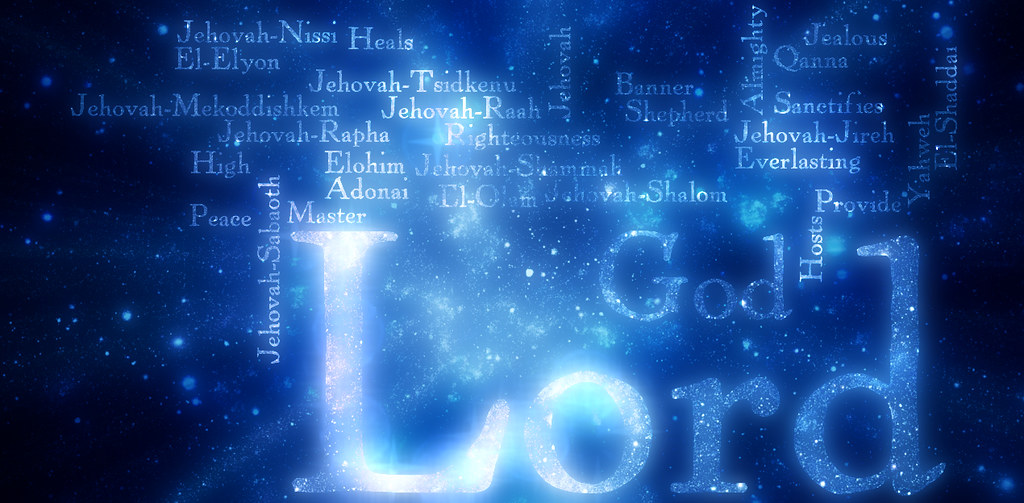
Today we talk about the name of God found most often in the Old Testament, that is the name Jehovah.
There is a lot of rich meaning within the name of God Jehovah. The Hebrew word for Jehovah derives from the Hebrew word for “being” or “to be.” It’s also virtually identical to the Hebrew word for “life” or “to live.”
God is fundamentally self-existent, that’s the first thing we learn from this name of God. Everything in the universe, from you, to plants to animals, to products, buildings, everything has a parent, or a builder, or something that it came from. This goes all the way back to the first cat, the first pine tree, the first human. I was born from my parents. My cat came from two other cats. The tree in my front yard came from an acorn that fell in the ground or was placed there 50 years ago.
But it’s logical to think that if we go back in time, to the beginning of the universe, the beginning of all things, there has to be one supreme being who made all things, out of nothing.
There has to be an uncaused first cause. That is who we believe our God is, an infinite being, a self-existent being, infinite, with no start, no end, outside time, outside space, beyond everything tangible. The self-existent one who says, I am who I am.
Exodus 3:13-15 says, “Moses said to God, ‘Suppose I go to the Israelites and say to them, “The God of your fathers has sent me to you,” and they ask me, “What is his name?” Then what shall I tell them?’
14 God said to Moses, ‘I am who I am. This is what you are to say to the Israelites: “I am has sent me to you.”’
15 God also said to Moses, ‘Say to the Israelites, “The Lord, the God of your fathers – the God of Abraham, the God of Isaac and the God of Jacob – has sent me to you.” ‘This is my name for ever, the name you shall call me from generation to generation.”
He’s in total control. That’s very comforting. It’s also scary for me. When I was writing this message I found myself afraid. God is real. He controls everything. He has total power. If he wants to toss me into hell, there’s not a single thing I can do about it. If he wants to guide me into heaven, I can’t stop him from bringing me there when I die. God has total infinite power.
This brings us to our second concept of what the name Jehovah means. God is the righteous moral judge of us. He is always observing, every choice we make, every thought we think, and every word we speak. And he will judge us righteously, either through the perfect righteousness of Christ, or based on your own deeds and your own sins.
Psalm 89:13-15 You have a mighty arm; strong is your hand, high your right hand. Righteousness and justice are the foundation of your throne; steadfast love and faithfulness go before you. Blessed are the people who know the festal shout, who walk, O Lord, in the light of your face
The name Jehovah tells us that God loves us, but it also reminds us God’s love is conditioned on his moral nature. God is the judge of the universe. And we are accountable to Him for how we live our lives.
If we steal something, that breaks God’s moral order. If we lie, or hurt someone, we break God’s moral order. If we sin, we find ourselves justly exposed to the wrath of God. Which is hell. And hell is permanent.
One famous preacher said it like this in his sermon title, We’re sinners in the hands of an angry God. It’s a very dangerous situation. Because sin has to be removed from everything. God is going to make everything good again. He’s going to fix Earth.
And we can either join in on that, or we can get thrown out with the rest of the sin of the world. If you want to remain in your sin, there is a place for you, it’s called hell. It’s the only place where sin can exist. Under God’s eternal wrath.
Jehovah is the God of the moral order. He is the God who is the righteous judge. And if we one day stand before in sin, after we die, when he judges us guilty, we will declare in response, in complete agreement, “amen.”
That’s why we should fear the Lord. We should fear Jehovah. We should respect Jehovah. We should remember Jehovah will judge us, and live innocent in Christ Jesus our savior, all our days on the Earth. God made everything. God made us. He owns us. And he can do with us as we he desires. But God is perfectly holy and right, his judgments will be right. And if we’re found guilty, and sent to hell, we’ll know in our hearts that his judgment was right.
That’s why it’s so important to repent of our sins and put our faith in Jesus. Are you practicing sin in your life? Are you stealing? Are you living sexually immoral? Are you watching porn? Are you manipulating friends and family? Are you thinking wicked thoughts? Are you hating others? Are you refusing to forgive people who have hurt you? Repent now. Repent means to change. To turn away from something. Turn away from those sins now. Ask God for forgiveness in christ and begin to live differently. Pray right now, he will forgive you and then tell him I repent, He then forgives us, and we start living differently.
Jehovah is the righteous judge of all people. Moses said, “Just and right is he” and “Shall not the judge of all the earth do right?” said Abraham to the Lord.
And it says in Leviticus 19:2 “You shall be holy; for I Jehovah your Elohim, am holy.”
The angels and living creatures always cry out before God: “Holy, holy, holy, Lord God Almighty, who was, and is, and is to come!”
Nathan Stone, author of Names of God says it this way, “It is this righteousness of Jehovah against which man sins. And a righteous Jehovah whose holiness is thus violated and outraged must condemn unrighteousness and punish it. It is Jehovah who sends man forth from the garden, for Jehovah is of purer eyes than to behold evil (Hab 1:13). Jehovah “created man to enjoy and to exhibit His righteousness.” So He demands righteousness and justice and holiness from the creatures made in His image. It is as Jehovah that He looks upon a wicked and corrupt earth and says, “I will destroy.” It is as Jehovah that He rains fire and brimstone upon an iniquitous Sodom and Gomorrah. It is as Jehovah that He is angered so often again a sinning, wicked Israel. It is Jehovah who says to Moses: “Whoever hath sinned against me, him will I blot out of my book (Exodus 32:33).
But as Jehovah he is also love. His love makes Him grieve and suffer for the sins and sorrows of His creatures. “I have loved thee with an everlasting love,” says Jeremiah of Jehovah (31:3). In the Book of Judges, we forsook Jehovah and served the elohim of the peoples about them, Jehovah’s anger brought grievous punishment upon them, Jehovah’s anger brought grievous punishment upon them; but of the same Jehovah it is said: “His soul was grieved for the misery of Israel” (Judges 10:16). “in all their afflictions he was afflicted” says Isaiah 63:9 in a context full of the love and pity of Jehovah… But while as Jehovah His holiness must condemn, He is also Love, and His love redeems; and He seeks to bring man back into fellowship with Himself. So, as one writer says, “Wherever the name ‘Jehovah’ appears, after man has fallen from original righteousness, what see we-but that God is ever seeking the restoration of man.”
Jehovah though he is a God of perfect righteousness, self-existent and terrifying, He is also God who finds a way to remove our sins. We stand guilty, and so God comes himself to pay off our debt, as Jesus Christ, God with us, lived perfectly in a sinful world, and suffered and died on the cross to pay our penalty, and give us new life.
So repent of your sins, and put your faith hope and allegiance in Christ. Serve Him all your days. And you can be free from sin, and you’ll be righteous in Christ, and then you’ll be ready for paradise, the new life. The new eternal life. That’s Jehovah, he makes a way for us. Most people still reject that way, they choose hell by rejecting Christ. Don’t let that be you. Choose eternal life with Christ. Then you’ll be free forever, from sin and death. No hell for you, instead, eternal life.
Jehovah is eternal, all powerful, a just judge, and a merciful God, who offers us a way to get back to paradise. Choose Jehovah today, and live. Or, reject Jehovah, and choose death. It’s before you. Make your choice.
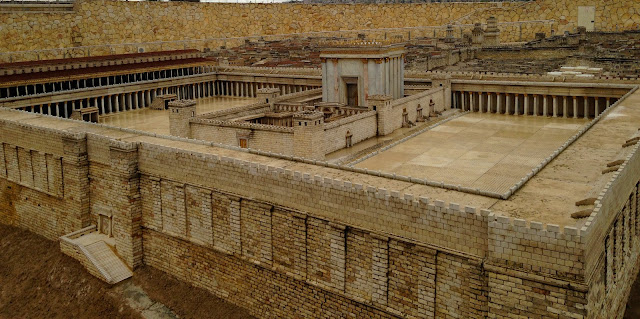

It was AD 70, 40 years after the crucifixion of Jesus Christ, and the walls of Jerusalem, the capital of Israel were surrounded by Roman soldiers numbering over 60,000. The walls were crumbling, the Romans were advancing, thousands had already died when various cities in the north and eastern regions had been destroyed by the Romans.
Four years early several different Jewish sects had led radical rebellions against the occupying romans, and scored several victories, overthrowing the Romans and restoring Jewish control over the nation of Israel. But as soon as the news had reached the ears of Nero the emperor of Rome, he dispatched a Roman army to retake the hotly disputed territory.
The Roman force defeated an army of 10,000 Jewish troops which fled in the face of their overwhelming numbers. Now the Roman army had surrounded Jerusalem itself, the holy city, defended by three layers of walls. The Jews made the Romans pay dearly, attacking their soldiers building the siege works. And they made them pay dearly for every inch of ground. When the Roman army attacked through the second level of defenses, the Jews built a tunnel under their siege ramps and set them on fire, bringing them tumbling down.
But finally the Romans had breached all 3 walls, and attacked the last fortress of Jerusalem, the Antonia fortress, built by Herod to protect and control the temple. They breached the Antonia, and they surrounded the Jew’s sacred temple. At this moment Jews, not just soldiers, but men, women, and child, took anything they could use as weapons, and defended the temple, the most sacred symbol of Judaism. But the Romans could not be stopped. They slaughtered the mobs, and burned the temple to the ground, smashing it to pieces.
And ever since then the Jews had lived as exiles among the nations.
All of this chaos and destruction, Jesus knew about long before, 40 years earlier, in a conversation from Luke 21, 5 and 6 which says, “5 Some of his disciples were remarking about how the temple was adorned with beautiful stones and with gifts dedicated to God. But Jesus said, 6 ‘As for what you see here, the time will come when not one stone will be left on another; every one of them will be thrown down.’”
Jesus the son of God, knew 40 years ahead of time, that the nation of Israel would reject Him as their messiah. He knew what they really wanted, when he came, they wanted a political leader to help them overthrow the roman empire. But that wasn’t the reason that Jesus came. Jesus came to save us not from political powers, but from our own sins, and the penalty for them. The Jews did not recognize the coming of their messiah. Which is why Jesus when he saw Jerusalem, he wept for the city, because they did not recognize his coming.
All of this today, connects with our parable today, from the book of Luke, chapter 21, the parable of the budding fig tree.
It’s a very brief parable, only 3 verses. Yet it’s important enough to be included in Mark, Matthew, and Luke’s gospel. But before we get into it, let’s take a look at the context of the parable, from Luke 21.
So Jesus tells his disciples that the temple will be destroyed, so don’t be too impressed by it’s beauty. Then it says, “ ‘Teacher,’ they asked, ‘when will these things happen? And what will be the sign that they are about to take place?
8 He replied: ‘Watch out that you are not deceived. For many will come in my name, claiming, “I am he,” and, “The time is near.” Do not follow them. 9 When you hear of wars and uprisings, do not be frightened. These things must happen first, but the end will not come right away.’”
Here we see Jesus beginning to teach about events that will take place after he is crucified and the early church will face persecution and false teachers. This is also a teaching about the last days of Christians. Then Jesus addresses what will take place for the disciples…
Then he said to them: ‘Nation will rise against nation, and kingdom against kingdom. 11 There will be great earthquakes, famines and pestilences in various places, and fearful events and great signs from heaven.
12 ‘But before all this, they will seize you and persecute you. They will hand you over to synagogues and put you in prison, and you will be brought before kings and governors, and all on account of my name. 13 And so you will bear testimony to me. 14 But make up your mind not to worry beforehand how you will defend yourselves. 15 For I will give you words and wisdom that none of your adversaries will be able to resist or contradict. 16 You will be betrayed even by parents, brothers and sisters, relatives and friends, and they will put some of you to death. 17 Everyone will hate you because of me. 18 But not a hair of your head will perish. 19 Stand firm, and you will win life.
Notice he says, “before this” they will persecute you. Notice that all of these things being described by Jesus are things that happened to people like Peter and Paul in the book of Acts, which documents the activities of the early church.
And he reminds them, I will protect you, to the point that not a hair on your head will perish, yet, God will also make it clear when it’s your time, and some of you will be put to death. Are those two statements in contradiction?
No, I don’t think so. He’s saying that not a hair on your head will perish. Yet he also says some will be put to death. That is how it works in the kingdom of God. Not a single hair on my head can be touched until it’s the appropriate time for me to go. Only until then. Not before. Only when God says.
Next we see Jesus talking about the destruction of Jerusalem, when he says, “When you see Jerusalem being surrounded by armies, you will know that its desolation is near. 21 Then let those who are in Judea flee to the mountains, let those in the city get out, and let those in the country not enter the city. 22 For this is the time of punishment in fulfilment of all that has been written. 23 How dreadful it will be in those days for pregnant women and nursing mothers! There will be great distress in the land and wrath against this people. 24 They will fall by the sword and will be taken as prisoners to all the nations. Jerusalem will be trampled on by the Gentiles until the times of the Gentiles are fulfilled."
Stop at verse 24, and that is speaking about the destruction of the temple in 70 AD. Then, the times of the gentiles would begin, that us. From AD 70 until now, the gospel has spread through the gentile nations.
Then in verses 25-28 Jesus talks about the last days, which are times still ahead of us. He says, ‘There will be signs in the sun, moon and stars. On the earth, nations will be in anguish and perplexity at the roaring and tossing of the sea. 26 People will faint from terror, apprehensive of what is coming on the world, for the heavenly bodies will be shaken. 27 At that time they will see the Son of Man coming in a cloud with power and great glory. 28 When these things begin to take place, stand up and lift up your heads, because your redemption is drawing near.’
So Jesus tells us there will be all these things happening in the last days, in a time we call the great tribulation during the end times. There will be hurricanes, people will be full of terror. The heavenly bodies will be shaken, so stays in the sky, constellations will change and shift and people will be terrified. During those times, then Jesus will come with power and glory.
Then, Jesus tells our parable today, fitting it into the context of observing the seasons and times that we’re in carefully, and he says, “He told them this parable: ‘Look at the fig-tree and all the trees. 30 When they sprout leaves, you can see for yourselves and know that summer is near. 31 Even so, when you see these things happening, you know that the kingdom of God is near.”
It’s a very simple, and brief parable. What does it look like on the trees after winter? They are completely bare. They look very empty. You just see cold, wet branches. Every year it shocks me and I think, look at how barren those trees look. They could never sprout green leaves again, look at them, they’re dead. And then to our surprise every year they produce leaves, and grow thick and green and weighed down again. And we know then that spring has come. And we’re excited.
In the same way, we should observe the times we’re in and watch carefully for the signs of the times. Just like back when Jesus told this parable, they could remember the words of Jesus, and say oh yes, Jesus said Jerusalem would be surrounded by armies. And we should try to escape.
Pretty simple, know the times your in. Have discernment in regard to things going on in the world. I can watch for certain indications that Christ is returning soon. I’ll give you a few examples.
1. Knowledge has increased, in the book of Daniel we’re told that knowledge would increase across the planet before the end times. Today we have the internet and knowledge is available at our fingertips 24/7
2. Stirrings of one world government. According to Revelation the anti-Christ will have power over the entire world, so it’s wise to watch for stirrings of one world government. We see certain alliances, like European Union, the United Nations, and other alliances. We’re not there yet though
3. We’re told in Revelation that in the tribulation people will be forced to take a ‘mark’ to show their submission to the anti-Christ. We see increasing ways for people to be marked, whether by a tattoo or a microchip implant
4. Israel became a nation again after WWII, the Bible prophesied that this would happen and in the 1950s it did.
These are just some examples of things to watch for in the world, to discern the times and seasons we’re in.
Jesus then tells his disciples, “‘Truly I tell you, this generation will certainly not pass away until all these things have happened. 33 Heaven and earth will pass away, but my words will never pass away.”
And all the things he mentions there, that he says will happen, did happen. The temple was destroyed, Israel was taken prisoner and spread to the nations, historians call that the diaspora. That’s why the Nazi’s were so easily able to target and exterminate Jews. They were spread throughout Germany, Poland, Austria, France, Belgium, and all the European nations, and were also viewed with distrust, because though they lived in foreign nations they always held onto their Jewish identity.
Many get confused and say “Jesus said all these things will take place before this generation passes.” Doesn’t that mean he should’ve returned? But Jesus was talking about the things he said would happen in their time, he also talked about the future there, about after the times of the gentiles were over. So no, he was only referring to those things he said would happen presently, not the things mentioned for the distant future.
Then we get one final warning from Jesus here, he says, “34 ‘Be careful, or your hearts will be weighed down with carousing, drunkenness and the anxieties of life, and that day will close on you suddenly like a trap. 35 For it will come on all those who live on the face of the whole earth. 36 Be always on the watch, and pray that you may be able to escape all that is about to happen, and that you may be able to stand before the Son of Man.’”
This was probably mainly a warning for the Jews living at this time, that they should be prepared for very difficult times after he left them.
But I think it’s also an important warning for us as well.
Be careful, each of us here, be careful that we don’t become complacent, lazy, weighed down with “carousing” that sexually acting out, or drunkenness, where we’re always eating and getting drunk, and not focused or sober, and of course the anxieties of life can weigh us down, and then we get focused on worldly things instead of focused on Jesus.
Make sure you’re ready and on watch.
Because he says in verse 35 difficult times will come to all residents of the Earth, not just us, not just the Jews, but to everyone, difficult times come. Make sure you’re on watch, and praying.
Make sure you’re ready for Christ’s return. It will happen sooner than you think. It could be in your life time.
And I’m worried that many in the body of Christ don’t really fear God. They don’t really reverence him. And they won’t be ready. They won’t be ready to stand before Jesus without shame. Because they’re doing shameful things in the shadows and thinking well I have plenty of time to repent later. And then Jesus may just come, and they’ll be ashamed on that day, because Christ will find them in sin, and assign them a place with the unbelievers, where there is weeping and gnashing of teeth. We think well that couldn’t happen to me. Well, we better be wise and cautious and sober, and praying, fearing and loving God, so we’re ready and able to stand without shame before Christ on the last day. Because he may come sooner than we think.


Throughout the scriptures God invites us to inquire of Him and learn about Him. That is really the main goal of God on Earth, is that we would turn to Him, and be curious about Him, and seek to know Him, and then understand how to know Him, then to enter into His presence, and receive a new identity in the Christ he provided to make us ready for heaven. And He invites us to enter into that covenant marriage with Him, and become one with Him, and begin to live differently, proceed down a road of trials and triumphs, challenges and victories, dark nights of the soul and high mountain top experiences, as he prepares us for heaven. The end goal being, after we physically die, we are resurrected, with new bodies, as new people, to dwell with God for all eternity on a new perfect Earth, to always delight in Him and follow Him wherever he leads us, into a future so bright we can’t possibly imagine.
We grow into maturity, as we seek God more and more deeply. That is the goal with this new series, is that you would wonder at who God is. The goal is that you would come to know the unimaginably powerful God of all the universe intimately. That you would have a deep, rich daily intimacy with God, and that you would live as a set apart, special chosen possession of God, in a fallen world, where you will shine ever more brightly in the increasing darkness of these difficult last days.
There are twelve names of God we will address over this series. Today we address the name of God most commonly used in the first two chapters of Genesis, Elohim. This is the name God gives to himself throughout his creative works in Genesis 1 and into Genesis 2. The name Elohim is used 35 times in those opening chapters of the Bible.
In the beginning Elohim created the heavens and the earth. 2 Now the earth was formless and empty, darkness was over the surface of the deep, and the Spirit of Elohim was hovering over the waters.
3 And Elohim said, “Let there be light,” and there was light. 4 Elohim saw that the light was good, and he separated the light from the darkness. 5 Elohim called the light “day,” and the darkness he called “night.” And there was evening, and there was morning—the first day.”
Elohim tells us God is infinitely creative. In our Elohim, we find an infinitely complex creative genius mind. He is infinitely creative. We can see this from the planet Earth. And the our solar system. The sun. The asteroid belt. The sun shining through the trees. Waters rushing along a river bed. Lake Michigan, Lake Superior, and all the great lakes.
Elohim implies God’s glorious creative majesty. Nathan Stone, author of “Names of God” says it this way: “It is most appropriate that by this name God should reveal Himself- bringing cosmos out of chaos, light out of darkness, habitation out of desolation, and life in His image.”
It’s just so much to even fathom. There was nothing there 6000 years ago when God made the universe. There was nothing. There was no human race. There were no planets, no stars, no galaxies. Nothing existed. Nothing aside from God, in a heavenly reality he created, along with his creations, this creatures called angels who serve Him and worship Him. Then Elohim declared, and His power being infinite, piece by piece the universe came into being, all calculated perfectly mathematically, every equation setup just right, endless streams of data, and information, universal constants, and equations like gravity, mass, and particles like the higgs boson that hold the universe together. Higgs boson fields exist all around us. They are tiny particles that appear and disappear, and they literally hold reality together. And if they didn’t exist, all reality would disintegrate and we would no longer exist. They were nicknamed the God particle, because they hold reality together.
He calculated it all out in his infinite mind, using the coding system of DNA to program and establish all the animals, plants, and creatures across the planet. Did you know all living creatures from animals to plants are programmed with the same DNA code? One might think that implies that God used a unique code, DNA, to program all life by one system.
It's kind of like how humans created binary code for computers. Binary code is simply a 0 or a 1. Everything in a computer as far as coding can all be broken down to ones and zeros.
In the DNA coding system, Each gene's code uses four nucleotide bases of DNA: adenine (A), cytosine (C), guanine (G) and thymine (T). And they are arranged in DNA into 3 letter codons, which are arranged into 64 different codons to write human, animal, and plant DNA. It’s a complex coding system. But much, much more complex than binary.
The most sophisticated system we could come up with for coding was binary. But inside our bodies is a system infinitely more complex.
I parked by the river yesterday morning eating my breakfast that I got from the fast food drive through and looked at the beautiful trees, the sun shining into the river, the ducks and Canadian geese by the water, the food, the roads, the music playing, and it is just astonishing all that God has made on planet Earth. He is truly Elohim, God the creator.
Even in my mind at those moments I knew he was putting the thoughts in my mind, or at least inspiring those thoughts and emotions, so that I would later write them down and share them with you. This happens frequently as a pastor. Life becomes a living parable through which he has me share things with others. It’s fascinating and also sometimes terrifying.
Our respond to God’s creative genius is important. That’s one thing I want to emphasize in this series. Let’s take it always like this: Here is God’s name, here is what it means first, then second, how do we respond? The point is that we respond. That is God’s desire that we should reach out for Him, as we learn about Him. If not, why even bother studying it?
Our response should be awe, wonder, and amazement. We should let the amazement fill us up inside. We should see nature with different eyes. We should see animals with different eyes. We should see ourselves with different eyes. We should see these things as special, as made by God, as gifts from God, as something that overwhelms us with joy, excitement, wonder, and amazement. And our response should be worship, to say wow God, look at this, you made it and it’s wonderful, this must mean you are wonderful God.
So our respond is to declare God you are amazing. Say it with me: God you are amazing! That is worship. So when you enjoy nature, when you enjoy fellowship with friends, when you enjoy time with your pets or you see a wild animal, take a moment to be amazed. And to thank God.
Yet though we see how beautiful nature is, we also see reality is fundamentally fallen. It’s dangerous. Wild animals can be dangerous. Storms and tornadoes and hurricanes can destroy and harm people and their property. Humans spread trash around the city, landfills form, human bodies become old and frail, we see the carcass of a dead animal on the side of the road and we’re horrified.
What God has made is so beautiful, sublime, pristine, yet it’s also horribly mangled.
It says in Romans 8, “19 For all creation is waiting eagerly for that future day when God will reveal who his children really are. 20 Against its will, all creation was subjected to God’s curse. But with eager hope, 21 the creation looks forward to the day when it will join God’s children in glorious freedom from death and decay. 22 For we know that all creation has been groaning as in the pains of childbirth right up to the present time.”
All the Earth, and the universe was cursed when Adam and Eve sinned against God. They were deceived and turned away from God, and hid from him. And as a result of this, all reality became cursed with sin. Sin is so destructive isn’t it? It destroys everything. Sin spreads through people, sin spreads everywhere. So we see a fallen natural world. We see how animals feed on each other, we see storms and earthquakes, and diseases, and cold winters, and swarms of mosquitos, and we see our planet is fallen. We see loved ones grow old and die. In fact we see every person ever born will one day die.
Our response to this should be fearful reverence for God. To be tremble before a holy God. And to receive Jesus Christ as our savior, so that we do not remain cursed like the rest of the world is. We want to make sure we believe in Jesus, everyday, and we repent of our sins, and live the most pure and set apart life in the power of the Holy Spirit who helps us.
Then we will be fit and ready, pure, holy, spotless, and blameless on the day that Jesus Christ returns to establish his millennial reign upon the Earth. We will become part of the New Earth, in a new universe, in which all the stains of the curse are removed, and every calculation of the universe is set right.
There will be no more decay or death in human DNA, or animal or plants. There will be no more destructive variances in the equations that govern gravity, time, space, matter, energy, the atmospheric systems of Earth, and so on. There will be no more limits on systems of food, water, wealth, and shelter. God will rewrite all these systems to conform to a new perfect system of reality, a paradigm shift he calls the New Heavens and New Earth, and in particular a city called the New Jerusalem where the redeemed and cleaned humanity will dwell with or king Jesus Christ, and our Lord God Elohim forever and ever.
That’s my goal on this fallen, yet beautiful Earth. To love, honor, and fear the Lord Elohim, and to respond to His creative genius with shouting joy, reverence, praise, amazement, and worship. Make that your goal as well. See reality through new eyes, see it as the glorious design of an infinite God, who loves you, yet also calls you to holiness in Christ. Amen.

"Charles Francis Adams, 19th century political figure and diplomat, kept a diary. One day he entered: "Went fishing with my son today--a day wasted." His son, Brook Adams, also kept a diary, which is still in existence. On that same day, Brook Adams made this entry: "Went fishing with my father--the most wonderful day of my life!" The father thought he was wasting his time while fishing with his son, but his son saw it as an investment of time. The only way to tell the difference between wasting and investing is to know one's ultimate purpose in life and to judge accordingly." -Silas Shotwell, Homemade, September, 1987.
How do you invest your time? How do you invest your money? What is of value to you? What do you consider pointless? What is your goal? What is the mission statement of your life?
In our illustration today Charles Francis Adams, son to John Quincy Adams, and grandson to John Adams spends a day with his son fishing. And he regarded it as a waste.
But his son Brook Adams considered it the greatest day of his life.
Charles was a famous diplomat, a historian, he served in the military, he wrote important works. Yet for his son, the most important day of his life was when dad went fishing with him.
Sometimes we can get so focused on big concepts, big ideas, big missions, that we may miss the details. We may miss the moments that individual people will never forget, because we spent time with them.
Or we can so focused on details, on fun trips, on quality time, on cards, and gifts, and fun things, that we lose focus on kingdom matters, big things, the gospel, discipleship, salvation and spiritual growth.
Growing up I was surrounded by people living out modernism, living the American good life. Working long hours, working on the car, attending public school, watching television, attending concerts, going on family trips, the latest toys, reading the newspaper, buying a nice house, marriage and children, picnics and cookouts, sports games, and videogames, family outings, and music recitals, and Disneyworld and doctors appointments, vitamins and proper exercise, politics and finance, business building, winning friends and influencing people, fine cooking, lavish meals, shopping trips, wine tasting, touring old buildings, visiting museums, and in all that, there was little room for God. But we even went to Catholic mass on Sundays, almost always, and we even attended Wednesday CCD classes. But during the week we didn’t practically make it part of our lives. We weren’t at work for the things of God, our money, our time, and our talents went to worldly pursuits. And in so doing, we were destroying ourselves with smiles on our faces.
Keep this in mind today: “Am I using my wealth, time & talents toward Kingdom pursuits?” Or are you living the American good life?
Which brings us to our parable today, the Parable of the Unjust Steward, or also commonly referred to as the Parable of the Shrewd Manager.
This parable is located in Luke chapter 16, and just prior to this parable in Luke 15, Jesus told the parables of the lost sheep, the lost coin, and the prodigal son. Particularly, the context in the prodigal son is that the son has taken his father’s wealth and squandered it on wild living, but when the son returns the Father welcomes him with open arms.
Then right after the unjust steward parable in Luke 16 we see the parable of the rich man and Lazarus. So we see Jesus outlining several different themes in regard to the kingdom of God that we’ll compare later. First, let’s look at our parable today, from Luke 16:1-13 says, “Jesus told his disciples: “There was a rich man whose manager was accused of wasting his possessions. 2 So he called him in and asked him, ‘What is this I hear about you? Give an account of your management, because you cannot be manager any longer.’”
3 “The manager said to himself, ‘What shall I do now? My master is taking away my job. I’m not strong enough to dig, and I’m ashamed to beg— 4 I know what I’ll do so that, when I lose my job here, people will welcome me into their houses.’
The manager has been dishonest and he’s in trouble. The master is done with him, he’s out of here. So he’s going to hatch a plan to improve his future prospects. He’s already going to be fired. So he’s got a plan. It continues…
5 “So he called in each one of his master’s debtors. He asked the first, ‘How much do you owe my master?’
6 “‘Nine hundred gallons of olive oil,’ he replied.
“The manager told him, ‘Take your bill, sit down quickly, and make it four hundred and fifty.’
7 “Then he asked the second, ‘And how much do you owe?’
“‘A thousand bushels of wheat,’ he replied.
“He told him, ‘Take your bill and make it eight hundred.’”
So we see the dishonest manager is making friends for himself by cutting people’s debts and making them better deals. Then he’ll have some friends later when he’s on the streets and in need of money. This is what troubles many theologians who are confused by what happens next. Let’s take a look:
8 “The master commended the dishonest manager because he had acted shrewdly. For the people of this world are more shrewd in dealing with their own kind than are the people of the light. 9 I tell you, use worldly wealth to gain friends for yourselves, so that when it is gone, you will be welcomed into eternal dwellings.”
The master in this parable represents God, and the shrewd manager represents you and me. And the master actually commends the dishonest manager. It’s surprising, because the manager basically cheated him out of money he was owed. Some theologians have tried to explain this by indicating that in ancient times, a manager or a tax collector would add on an amount above the cost the master was charging, and that’s how they made money. Like a tax collector would see that you owe $3,000 in taxes and would make it $3,500 so he could keep the extra $500. That’s why tax collectors were almost universally hated. I’m a bit skeptical of this explanation because you can see from the amounts that the manager is cutting off the bills, especially for the first, he cuts the bill from 900 gallons to 450. Some theologians think well, the manager was just removing his own markup on the products so he wasn’t actually stealing from the master. That’s how they resolve it ethically. I’m skeptical of that, are you telling me his mark up was 100%? He’s charging twice what the master wants? Hard to say, I suppose it’s possible. But I don’t think we necessarily need to resolve that aspect of the parable. The parable is really teaching us what comes next in verses 10-13.
It says, 10 “Whoever can be trusted with very little can also be trusted with much, and whoever is dishonest with very little will also be dishonest with much. 11 So if you have not been trustworthy in handling worldly wealth, who will trust you with true riches? 12 And if you have not been trustworthy with someone else’s property, who will give you property of your own?
13 “No one can serve two masters. Either you will hate the one and love the other, or you will be devoted to the one and despise the other. You cannot serve both God and money.”
So in the conclusion of the parable, we see that the shrewd manager is commended, because he was wise in planning for his future prospects. And this points us toward an interesting truth: people of the world are very clever in amassing wealth and shrewd in their business deals, and so they win many friends and influence many people, and get their products and services around the world. And the Lord Jesus is telling us through this, that people of the light, he says, aren’t even as shrewd or interesting in using their wealth to build the kingdom of God, as worldly people are in building their own influence.
And isn’t that true even today? We see many billions and millionaires who influence millions with their products and services, but do we see many Christians with that kind of power and influence? Not as many as we’d like I think.
So, several take-aways here.
First, even if you have very little in this life, be trustworthy with it before God. Because if God sees that you’re trustworthy with a little, he’s going to entrust more to you. But if he sees he can’t even trust you with a little bit, well, then why should he give you more responsibility, or more wealth, or more influence?
Second, it’s interesting that Jesus notes here that we can’t serve two masters. We can’t serve both God and money. One will become dominant always. So use your wealth to serve and honor God. Don’t let your devotion to God become secondary to your worldly wealth. It won’t ever work that way.
So think again about our question for today: Am I using my wealth, time & talents toward Kingdom pursuits? Who do you serve?
Are you taking everything in your life, your finances, your abilities, your family, your time, your creative abilities, and applying it all to winning people to Christ? Then when you arrive in paradise, you’ll have many friends surrounding you there.
I always imagine one day when I get there. It’ll be a big celebration, because another saint made it home safely. And I think to myself, maybe all the people who I helped win to Christ will be there. And they’ll come up to me and say hey, thank you for giving me that gospel tract, thank you for posting that sermon online, thank you for talking to me at the store that day, and I’ll realize that all those little things I did actually did make a difference for God’s kingdom. And we’ll give all the glory to God. But I wonder, will they be there, when we arrive in paradise, the people we helped win to Christ? That would be a really special moment.
Imagine if every person here today, was as shrewd as the dishonest manager in winning friends to Christ? Imagine if they worked with the kind of effort that people in the business world do, working day and night 40, 50, 60 hours a week, putting every effort they possibly can into gaining wealth for their company, and setting up good deals, and cornering the market, and developing new products, imagine if we took all that effort and zeal and drive and passion and applied it spreading the word of God.
We could spread the gospel around the world in no time. But too many Christians set their desires before the kingdom of God. They are shrewd in trying to get what they want, trying to get money, trying to get pleasure, trying to get entertainment, trying to get romance, but the goals of God’s kingdom always seem to come in a distant second.
Well it shouldn’t be that way. So let’s make some changes in our lives. Let’s be like the shrewd manager who the master commended because he used his wealth to develop connections.
But this parable is interesting, isn’t it, because it fits right in with several other parables in Luke. First in Luke 15, the parables of the lost sheep, the lost coin and the prodigal son. The value of the person to God, God seeking after the lost and rescuing them. Then the parable of the shrewd manager. Be shrewd about God’s kingdom, but don’t love money either. Then the parable of the rich man and Lazarus, the people of God often find themselves outcast and in sorrows in this life, and no amount of evidence seems enough to convince certain people, like the wealthy.
A lot of these parables actually connect to money and the love of money. Think of the prodigal son, what led him out and into trouble, getting his inheritance and then spending it. The rich man and Lazarus, contrasting a wealthy person with a poor sickly man. And this parable about a shrewd manager that threw away a lot of money to gain friends for himself. A lot of it deals with money,
And to conclude the parable of the shrewd manager, it says in verses 14-15, “14 The Pharisees, who loved money, heard all this and were sneering at Jesus. 15 He said to them, “You are the ones who justify yourselves in the eyes of others, but God knows your hearts. What people value highly is detestable in God’s sight.”
That explains a lot, the Pharisees, the religious leaders had a high value of money. I think a fair amount of preachers in America today also have a high regard for money, unfortunately. So a lot of this was for the Pharisees, and the people, who were being led astray from the Pharisees. The Pharisees sneared, but Jesus says, hey, you’re the ones who are always trying to show the people that your special and holy and godly, but God knows your heart.
A lot of the things we value in our lives, very highly, God doesn’t value at all. Ever think of that?
Think of the illustration of the day of fishing with dad. To the father it was a waste, to the son it was the most important day of his life.
What in your life is mixed up? What do you value highly? What do you value lowly? That’s a good question isn’t it. I wonder if I checked in your homes, would I find you reading your Bible daily, would I find you spending quiet time with God everyday? What are you valuing? God? Or television? God or money? God or social media? God or work? That is the question. Analyze yourself. Judge yourself. The body of Christ are told to judge themselves in these days, so that we don’t fall under God’s judgment on the day of the Lord.
“But if we would examine ourselves, we would not be judged by God in this way.” -1st Cor 11:31
In any case, as we conclude today, how can we put this into practice today?
Let’s take a look.
1. Examine yourself – Am I building God’s kingdom with my life?
2. Write up a mission statement for your life
3. Write down some goals prayerfully, of ways you can help bring Christ to people in unique ways, using your gifts and talents
4. Budget your money carefully and make sure you are setting aside money to tithe, give offerings and to provide for those in need
5. Analyze how you use your free time – What takes priority?
6. Make a plan – new ways to share the gospel in your life
7. Develop intentional friendships and relationships in which you guide people to Jesus Christ and the word of God
In conclusion, this really comes down to your heart. It’s a heart issue. In the depths of your heart, what choices do you make? Are you using your worldly wealth gifts and talents shrewdly for God’s kingdom? Or are you self focused? Selfishness must die in us as Christians, plain and simple. And God does that in the process of sanctification. Can you surrender self seeking and selfishness to him today? Analyze yourself. Who are you really? What is your goal in life? What is your mission statement? Maybe it’s time to reflect on what you’re using your sacred time, talents, and wealth for.