"Servant" in our English New Testament usually represents the Greek doulos (bondslave). Sometimes it means diakonos (deacon or minister); this is strictly accurate, for doulos and diakonos are synonyms. Both words denote a man who is not at his own disposal, but is his master's purchased property. Bought to serve his master's needs, to be at his beck and call every moment, the slave's sole business is to do as he is told. Christian service therefore means, first and foremost, living out a slave relationship to one's Savior (1 Corinthians. 6:19-20).
What work does Christ set his servants to do? The way that they serve him, he tells them, is by becoming the slaves of their fellow-servants and being willing to do literally anything, however costly, irksome, or undignified, in order to help them. This is what love means, as he himself showed at the Last supper when he played the slave's part and washed the disciples' feet.”
-James Packer, Your Father Loves You, Harold Shaw Publishers, 1986.
Today we consider God’s name, the name Adonai. The first time this name for God is used, is in Genesis 15, let’s look at verses 1-6:
“After this, the word of the Lord came to Abram in a vision:
“Do not be afraid, Abram.
I am your shield,
your very great reward.”
2 But Abram said, “Adonai-Jehovah, what can you give me since I remain childless and the one who will inherit my estate is Eliezer of Damascus?” 3 And Abram said, “You have given me no children; so a servant in my household will be my heir.”
4 Then the word of the Lord came to him: “This man will not be your heir, but a son who is your own flesh and blood will be your heir.” 5 He took him outside and said, “Look up at the sky and count the stars—if indeed you can count them.” Then he said to him, “So shall your offspring be.”
6 Abram believed the Lord, and he credited it to him as righteousness.”
The name Adonai occurs about 300 times in the Old Testament. Every time it’s used it’s written as a possessive plural form. So it could actually be read as “my Lords” which reminds us that God is a trinity, of Father, Son, and Holy Spirit. But Adonai what it really means is, master or owner. It’s a Hebrew word that can also refer to a person who owns property or a person who owns slaves or other ways of describing ownership or being ones master.
What this really reminds us is that, “…God is the owner of each member of the human family, and that he consequently claims the unrestricted obedience of all.”
Abraham acknowledges this when he calls God his “master” his “Adonai.” God has every right to have authority over our lives. We all have lived in rebellion to our Adonai, fleeing from him and chasing after sin. But we can return to our master and say to Him, Adonai, you are our owner, and our master, and we submit to your authority, because you made us, and we belong to you.
We can say it. But it then has to be proved out in our actions. Every decision you make in life either says, Adonai to God, or says I refuse you God. Every decision you make, from the words you say, to the content you view on tv or internet or your cell phone, to how you treat people, and what things you eat, and if you’re orienting your life to tangibly serve others.
In all those decisions you’re either saying Adonai God you are my master, or you’re saying God I reject you and I’m getting what I want.
Another man who called God Adonai, was Moses, in the book of Exodus. In exodus 4, when God spoke to Moses from the burning bush,
From Exodus 4:10-15 “10 Moses said to the Lord, “Pardon your servant, (Adonai) Lord. I have never been eloquent, neither in the past nor since you have spoken to your servant. I am slow of speech and tongue.”
11 The Lord said to him, “Who gave human beings their mouths? Who makes them deaf or mute? Who gives them sight or makes them blind? Is it not I, the Lord? 12 Now go; I will help you speak and will teach you what to say.”
13 But Moses said, “Pardon your servant, Lord (Adonai) Please send someone else.”
14 Then the Lord’s anger burned against Moses and he said, “What about your brother, Aaron the Levite? I know he can speak well. He is already on his way to meet you, and he will be glad to see you. 15 You shall speak to him and put words in his mouth; I will help both of you speak and will teach you what to do.”
Both times as Moses speaks to God, he refers to him as Adonai, as master or owner, but even that Moses doesn’t want to obey his master. And God becomes angry with him, but also makes a way for him to do His will.
Gideon when speaking to God refers to the Lord as Adonai. In the book of Ezekiel it occurs 200 times. But we also see Adonai appear in the New Testament.
“We are said to be not our own, we have been bought with a price. We belong to God who is our Lord and master. We are therefore bidden to glorify God in body and spirit, which are His (1 Cor 6:19, 20). Many scriptures set forth this relationship to God as His servants. We are exhorted to present our bodies as a living sacrifice to God holy and acceptable, and this as our reasonable service (Romans 12:1). We are to understand what the will of our Lord Adonai is (Eph 5:17). And Peter calls us children of obedience to he who called us (1 Peter 1:14-15) and He is the master who has bought us (2 Peter 2:1).” -Nathan Stone, Names of God
Yet it is in the life of Jesus Christ that we find the perfect example being a servant. Jesus was the perfect servant, modeling how we should live in this world. Jesus lived in perfect obedience to His Heavenly Father.
So if God is indeed Adonai, the God who is our master and owner, how should we live in response to that fact? We should live like Jesus lived. He was the servant of all people. He did God’s will in everything. He didn’t sin. He loved people genuinely and deeply. He wept and faced many difficulties and was persecuted and harassed and people argued with him. He spoke the truth boldly and never sugar coated what he said. He taught the truth faithfully, healed the sick, met needs, and loved his disciples.
Do you fully understand the fact that God has total authority over you? Do you get that? God is your Lord, and your master. He made you. He made the universe. He owns you. You are his servant. Live that way.
Much of our world is setup in rebellion against God, because people do not want to serve God, they want to serve themselves. So they pretend like God isn’t there. Yet deep inside they know that there’s something special about the world. Deep inside they know there is right and wrong, and right and wrong have a source, in God. But they hide from God, and live their own life, their own way, and reject God as their Adonai.
But I encourage you to live your life understanding in every moment that God is your master and you are his servant. Then you will live right, and you will live a life pleasing to God.

I imagine that right now, you're feeling a bit like Alice. Hmm? Tumbling down the rabbit hole?
Let me tell you why you're here. You're here because you know something. What you know you can't explain, but you feel it. You've felt it your entire life, that there's something wrong with the world. You don't know what it is, but it's there, like a splinter in your mind, driving you mad. It is this feeling that has brought you to me. Do you know what I'm talking about?
The Matrix. Do you want to know what it is?
The Matrix is everywhere. It is all around us. Even now, in this very room. You can see it when you look out your window or when you turn on your television. You can feel it when you go to work... when you go to church... when you pay your taxes. It is the world that has been pulled over your eyes to blind you from the truth.
You are a slave, Neo. Like everyone else you were born into bondage. Into a prison that you cannot taste or see or touch. A prison for your mind.
This is your last chance. After this, there is no turning back. You take the blue pill - the story ends, you wake up in your bed and believe whatever you want to believe. You take the red pill - you stay in Wonderland and I show you how deep the rabbit-hole goes.” -Excerpts from the Matrix (1999)
Are you ready for the truth? Growing up in this world there was always a splinter in my mind. I was taught a particular way of life. I didn’t see anything beyond it. Life was a happy accident. Get rich. Have a family. Pay your taxes. Watch your television. Live a normal life. Focus on the physical. Watch the news. Live for yourself. Do what you want. And just be happy.
I embraced that life, and lived it. Yet deep down inside, there was a splinter in my mind, driving me mad. It was very quiet at first, easily ignored. Over the years it grew louder and louder, until I realized something was missing. I was seeing through a web of lies built around me my whole life. And I began to see the truth. A terrible truth, far beyond anything you could imagine. That there was something terribly wrong with the world. Most people can see that one. But deeper and further in, I realized, there is something terribly and fundamentally wrong with me. I do bad things. And I need something more. Nothing in this world satisfies me. And I was empty inside. I was broken. As much as I pretended I just needed more self esteem and more happy pills and more personal peace and affluence, I soon realized, I was the problem, and I needed to be fundamentally changed within. I realized I was sin.
That is the horrible thing, none of us want to admit, none of us want to realize, most don’t go beyond, I see something wrong in the world, but some few will go further and realize, I see something wrong in me. I need something new. I need something outside myself, to make me right. That is where God comes in. We realize, we’re departed and disconnected from the infinite creator of the universe. And that is something we fight our whole lives. We’d almost rather die than face it. We run, we rebel, we flee, but then a lucky few one day realize, I can’t run anymore. I will return to God. And everything changes.
It reminds me a man 2000 years ago named Simon. He was a fisherman. Probably many a day and night sailing the sea, wondering at the skyline and the rain and the sun overhead, wondering if there was something more. And he began to fail at his trade. He couldn’t seem to make ends meet. And one day he had fished all night and had caught nothing. He’s at the end of his rope. He’s hopeless. He’s miserable. And he’s realizing, I just can’t make life work anymore. And at that moment, God intersected his story. And said to him, cast out, one more time, and Simon said, alright, I will. So he did. And he caught so many fish the nets couldn’t barely hold the catch. Simon would later become a new man. He became Peter. A leader of the body of Christ.
Often times, we have to come to the end of ourselves, and hit a rock bottom, to be ready for what’s ahead. We come to the end of our efforts, just like Peter did, fishing all night, and caught nothing. And at that moment when we realize, I’m not enough, I can’t do it, I’m lost, I’m miserable, I’m the problem, God comes to us, at the moment when we are teachable, and he reveals himself to us.
Time and again in my Christian life, these realizations and teachable moments return. We come to the end of ourselves as Christians a great deal don’t we? Time and again in our walk with Christ, we hit the worst case scenario, and we can’t go on, and can’t continue, and then Christ comes to us, at that teachable moments, and changes us within.
There are many hard truths in the Christian faith. That’s why I used as the opening, the revelation of the matrix to Neo. When Neo finds out what the truth really is, it’s horrible beyond words. He finds out the human race is enslaved in a hopelessly desperate situation.
Waking up to know Jesus Christ, and the reality of sin and the fall, we find ourselves in a similarly desperate scenario. It’s rather scary actually. If anyone human dies without Jesus as their savior, they are sent to hell, forever. No second chances. No way of escape. Fires consume them forever. It’s a dangerous situation. And we find ourselves sinners, in the hands of a God who will judge with righteous judgment.
Which brings us to our parable today, the parable of drawing in the nets. Last week we talked about signs of the end times, this week, our parable is about the judgment at the end of the world. The judgment seat of Christ.
Our reflection question for today is, “Am I prepared for the final judgment day of Christ? Would I be found faithful on that day?”
But first lets take a look at our context. We’re in Matthew 13, which contains several different parables. Closely related to our parable today is the parable at the beginning of Matthew 13, which is about the wheat and the tares. But then later on in the chapter, we see this context, two parables we’ve already discussed.
From Matthew 13:44-46: “The kingdom of heaven is like treasure hidden in a field. When a man found it, he hid it again, and then in his joy went and sold all he had and bought that field.
“Again, the kingdom of heaven is like a merchant looking for fine pearls. When he found one of great value, he went away and sold everything he had and bought it.” –Matthew 13:44-46
If you remember these parables tell us about the commitment we should make it response to finding the gospel of Jesus Christ, our response should be completely radical, giving up everything in our lives to follow Jesus instead. It’s like treasure in a field, or fine pearls, and we give up everything to embrace a new way, the way of Christ.
Then we see our parable today, which says this, from Matthew 13:47-52:
“Once again, the kingdom of heaven is like a net that was let down into the lake and caught all kinds of fish. When it was full, the fishermen pulled it up on the shore. Then they sat down and collected the good fish in baskets but threw the bad away. This is how it will be at the end of the age. The angels will come and separate the wicked from the righteous and throw them into the blazing furnace, where there will be weeping and gnashing of teeth.”
The kingdom of God, is gathering all sorts of people from everywhere, every tribe, every nation, every age, class, and group, and gathering them to Christ the savior. Yet there are two kinds of people inside God’s kingdom, there are the true disciples and the false followers. There are the sheep, who follow obediently, and the goats who resist and go their own ways. These look very similar to each other.
And our instinct as Christians is to want to try to sort out the good fish and the bad fish. Here Lord, let me help you sort them out. We’ll figure out which ones are the bad fish now, today, and we’re get rid of them. But Jesus tells us in other parables not to do that, in the parable at the beginning of Matthew 13, the servants tell the master that an enemy has sown weeds in the fields of wheat. And his servants ask the master, should we try to uproot the weeds? And the master says no because you’ll accidentally uproot some of the good wheat as well.
Similarly, in the parable of the drawing in of the nets, we’re told that the nets of God’s kingdom are gathering all sorts of people, obedient Christians and disobedient Christians. True converts and false converts. Holy followers of Jesus and worldly half in half out followers. And we shouldn’t try to remove the bad fish now.
Instead, we should wait until the coming of Jesus Christ. Wait until the judgment day. And Jesus will sort them out on that day. And we’re told what will happen to the disobedient ones, the bad fish, they will be cast in a fiery furnace where there will be weeping and gnashing of teeth.
Immediately after sharing this parable, Jesus turns to them and says, “Have you understood all these things?” Jesus asked.
“Yes,” they replied.
He said to them, “Therefore every teacher of the law who has become a disciple in the kingdom of heaven is like the owner of a house who brings out of his storeroom new treasures as well as old.” –Matthew 13:47-52
What does Jesus our savior mean by this? He could be summing up all the parables he just told. He’s saying, anyone who has been a faithful jew, will get credit in the kingdom of heaven not only for what they do after receiving the gospel, but also what they did before receiving the gospel. Very interesting. What does that have to do with the parable he just told though? You’ll have to research that on your own. I’m not certain.
After telling these parables, then at the end of Matthew 13, Jesus went to his home town. Take a look, just to understand the context.
It says, “When Jesus had finished these parables, he moved on from there. Coming to his hometown, he began teaching the people in their synagogue, and they were amazed. “Where did this man get this wisdom and these miraculous powers?” they asked. “Isn’t this the carpenter’s son? Isn’t his mother’s name Mary, and aren’t his brothers James, Joseph, Simon and Judas? Aren’t all his sisters with us? Where then did this man get all these things?” And they took offense at him.
But Jesus said to them, “A prophet is not without honor except in his own town and in his own home.”
58 And he did not do many miracles there because of their lack of faith.” –Matthew 13:53-57’
I don’t know that this event is inexorably connected with the parables he just told. But it does remind us that unbelief is a danger to our relationship with Christ. In his hometown they had seen Jesus grow up. So they doubted him. And they took offense at him. Let’s make sure we don’t take offense at Jesus. Just because of the difficult situation we find ourselves in as Christians in a fallen world, don’t take offense at Christ, for what we and our ancestors did through sin and destruction.
In conclusion today, this parable reminds us of the kingdom of God, and how it works, it removes the cover from our eyes, and we see the truth, that God will separate within the kingdom of God, the righteous and the wicked. And heaven and hell stand before us.
How can we put these teachings into practice today? Seven Applications...- See the world around you as it truly is: A fallen planet awaiting judgment from God
- See the dangers of sin, lust, selfishness, and worldliness and live soberly, giving careful thought to your ways
- See the incredible hope, mercy, and grace found in the gospel of Jesus Christ, realize your sins are forgiven and rejoice
- Recognize the insane level of danger lost people are in and pray fervently for them and share the gospel with people around you
- Have the courage to see the difficult truths in life. Have the attitude of simply wanting to know the naked truth of all things
- Live righteously, rejecting sin of every kind
- When you come to the end of yourself, realize that’s where God brings us to allow us to reach new levels of maturity in Christ
Be courageous brothers and sisters. We live in difficult times. Yet we also live in infinite joy and hope, because our sins have been washed away by Jesus blood. He’s taken us from being the problem, to being heralds of the solution. He’s taken us from being broken, miserable, defeated filthy sinners, to glorious born again cleansed renewed majestic carriers of the living word of God, the gospel, heirs, and saints of the new kingdom of God, citizens of the New Jerusalem, princes and princesses, royalty, awaiting reward and victory in paradise in the next life, beyond the veil of tears and death in this life. Realize your identity in Christ, and rejoice, because you have found the solution, just like how Morpheus freed Neo from the matrix of lies, of the fallen world of Satan, so we’ve been freed from kingdom of Satan, the slavery to consumerism and selfishness and pride and sin, and we’ve been woken up in Christ to the difficult truth that we need a savior. And now we have a savior. And our challenging mission now is to help lost broken sinful humanity receive Christ as their savior before it’s too late, before the nets are pulled in and the wicked and the righteous are separated at the judgment seat of Christ. Live that out brothers and sisters. Live differently. Amen.


Today we talk about the name of God found most often in the Old Testament, that is the name Jehovah.
There is a lot of rich meaning within the name of God Jehovah. The Hebrew word for Jehovah derives from the Hebrew word for “being” or “to be.” It’s also virtually identical to the Hebrew word for “life” or “to live.”
God is fundamentally self-existent, that’s the first thing we learn from this name of God. Everything in the universe, from you, to plants to animals, to products, buildings, everything has a parent, or a builder, or something that it came from. This goes all the way back to the first cat, the first pine tree, the first human. I was born from my parents. My cat came from two other cats. The tree in my front yard came from an acorn that fell in the ground or was placed there 50 years ago.
But it’s logical to think that if we go back in time, to the beginning of the universe, the beginning of all things, there has to be one supreme being who made all things, out of nothing.
There has to be an uncaused first cause. That is who we believe our God is, an infinite being, a self-existent being, infinite, with no start, no end, outside time, outside space, beyond everything tangible. The self-existent one who says, I am who I am.
Exodus 3:13-15 says, “Moses said to God, ‘Suppose I go to the Israelites and say to them, “The God of your fathers has sent me to you,” and they ask me, “What is his name?” Then what shall I tell them?’
14 God said to Moses, ‘I am who I am. This is what you are to say to the Israelites: “I am has sent me to you.”’
15 God also said to Moses, ‘Say to the Israelites, “The Lord, the God of your fathers – the God of Abraham, the God of Isaac and the God of Jacob – has sent me to you.” ‘This is my name for ever, the name you shall call me from generation to generation.”
He’s in total control. That’s very comforting. It’s also scary for me. When I was writing this message I found myself afraid. God is real. He controls everything. He has total power. If he wants to toss me into hell, there’s not a single thing I can do about it. If he wants to guide me into heaven, I can’t stop him from bringing me there when I die. God has total infinite power.
This brings us to our second concept of what the name Jehovah means. God is the righteous moral judge of us. He is always observing, every choice we make, every thought we think, and every word we speak. And he will judge us righteously, either through the perfect righteousness of Christ, or based on your own deeds and your own sins.
Psalm 89:13-15 You have a mighty arm; strong is your hand, high your right hand. Righteousness and justice are the foundation of your throne; steadfast love and faithfulness go before you. Blessed are the people who know the festal shout, who walk, O Lord, in the light of your face
The name Jehovah tells us that God loves us, but it also reminds us God’s love is conditioned on his moral nature. God is the judge of the universe. And we are accountable to Him for how we live our lives.
If we steal something, that breaks God’s moral order. If we lie, or hurt someone, we break God’s moral order. If we sin, we find ourselves justly exposed to the wrath of God. Which is hell. And hell is permanent.
One famous preacher said it like this in his sermon title, We’re sinners in the hands of an angry God. It’s a very dangerous situation. Because sin has to be removed from everything. God is going to make everything good again. He’s going to fix Earth.
And we can either join in on that, or we can get thrown out with the rest of the sin of the world. If you want to remain in your sin, there is a place for you, it’s called hell. It’s the only place where sin can exist. Under God’s eternal wrath.
Jehovah is the God of the moral order. He is the God who is the righteous judge. And if we one day stand before in sin, after we die, when he judges us guilty, we will declare in response, in complete agreement, “amen.”
That’s why we should fear the Lord. We should fear Jehovah. We should respect Jehovah. We should remember Jehovah will judge us, and live innocent in Christ Jesus our savior, all our days on the Earth. God made everything. God made us. He owns us. And he can do with us as we he desires. But God is perfectly holy and right, his judgments will be right. And if we’re found guilty, and sent to hell, we’ll know in our hearts that his judgment was right.
That’s why it’s so important to repent of our sins and put our faith in Jesus. Are you practicing sin in your life? Are you stealing? Are you living sexually immoral? Are you watching porn? Are you manipulating friends and family? Are you thinking wicked thoughts? Are you hating others? Are you refusing to forgive people who have hurt you? Repent now. Repent means to change. To turn away from something. Turn away from those sins now. Ask God for forgiveness in christ and begin to live differently. Pray right now, he will forgive you and then tell him I repent, He then forgives us, and we start living differently.
Jehovah is the righteous judge of all people. Moses said, “Just and right is he” and “Shall not the judge of all the earth do right?” said Abraham to the Lord.
And it says in Leviticus 19:2 “You shall be holy; for I Jehovah your Elohim, am holy.”
The angels and living creatures always cry out before God: “Holy, holy, holy, Lord God Almighty, who was, and is, and is to come!”
Nathan Stone, author of Names of God says it this way, “It is this righteousness of Jehovah against which man sins. And a righteous Jehovah whose holiness is thus violated and outraged must condemn unrighteousness and punish it. It is Jehovah who sends man forth from the garden, for Jehovah is of purer eyes than to behold evil (Hab 1:13). Jehovah “created man to enjoy and to exhibit His righteousness.” So He demands righteousness and justice and holiness from the creatures made in His image. It is as Jehovah that He looks upon a wicked and corrupt earth and says, “I will destroy.” It is as Jehovah that He rains fire and brimstone upon an iniquitous Sodom and Gomorrah. It is as Jehovah that He is angered so often again a sinning, wicked Israel. It is Jehovah who says to Moses: “Whoever hath sinned against me, him will I blot out of my book (Exodus 32:33).
But as Jehovah he is also love. His love makes Him grieve and suffer for the sins and sorrows of His creatures. “I have loved thee with an everlasting love,” says Jeremiah of Jehovah (31:3). In the Book of Judges, we forsook Jehovah and served the elohim of the peoples about them, Jehovah’s anger brought grievous punishment upon them, Jehovah’s anger brought grievous punishment upon them; but of the same Jehovah it is said: “His soul was grieved for the misery of Israel” (Judges 10:16). “in all their afflictions he was afflicted” says Isaiah 63:9 in a context full of the love and pity of Jehovah… But while as Jehovah His holiness must condemn, He is also Love, and His love redeems; and He seeks to bring man back into fellowship with Himself. So, as one writer says, “Wherever the name ‘Jehovah’ appears, after man has fallen from original righteousness, what see we-but that God is ever seeking the restoration of man.”
Jehovah though he is a God of perfect righteousness, self-existent and terrifying, He is also God who finds a way to remove our sins. We stand guilty, and so God comes himself to pay off our debt, as Jesus Christ, God with us, lived perfectly in a sinful world, and suffered and died on the cross to pay our penalty, and give us new life.
So repent of your sins, and put your faith hope and allegiance in Christ. Serve Him all your days. And you can be free from sin, and you’ll be righteous in Christ, and then you’ll be ready for paradise, the new life. The new eternal life. That’s Jehovah, he makes a way for us. Most people still reject that way, they choose hell by rejecting Christ. Don’t let that be you. Choose eternal life with Christ. Then you’ll be free forever, from sin and death. No hell for you, instead, eternal life.
Jehovah is eternal, all powerful, a just judge, and a merciful God, who offers us a way to get back to paradise. Choose Jehovah today, and live. Or, reject Jehovah, and choose death. It’s before you. Make your choice.
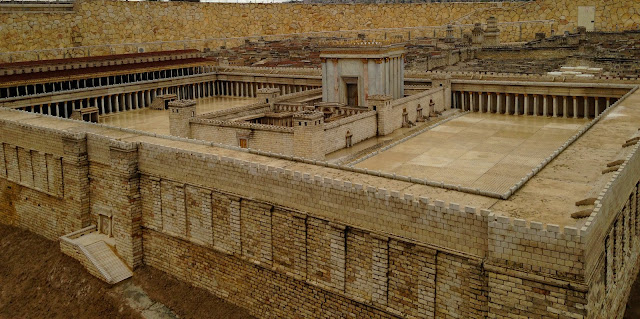

It was AD 70, 40 years after the crucifixion of Jesus Christ, and the walls of Jerusalem, the capital of Israel were surrounded by Roman soldiers numbering over 60,000. The walls were crumbling, the Romans were advancing, thousands had already died when various cities in the north and eastern regions had been destroyed by the Romans.
Four years early several different Jewish sects had led radical rebellions against the occupying romans, and scored several victories, overthrowing the Romans and restoring Jewish control over the nation of Israel. But as soon as the news had reached the ears of Nero the emperor of Rome, he dispatched a Roman army to retake the hotly disputed territory.
The Roman force defeated an army of 10,000 Jewish troops which fled in the face of their overwhelming numbers. Now the Roman army had surrounded Jerusalem itself, the holy city, defended by three layers of walls. The Jews made the Romans pay dearly, attacking their soldiers building the siege works. And they made them pay dearly for every inch of ground. When the Roman army attacked through the second level of defenses, the Jews built a tunnel under their siege ramps and set them on fire, bringing them tumbling down.
But finally the Romans had breached all 3 walls, and attacked the last fortress of Jerusalem, the Antonia fortress, built by Herod to protect and control the temple. They breached the Antonia, and they surrounded the Jew’s sacred temple. At this moment Jews, not just soldiers, but men, women, and child, took anything they could use as weapons, and defended the temple, the most sacred symbol of Judaism. But the Romans could not be stopped. They slaughtered the mobs, and burned the temple to the ground, smashing it to pieces.
And ever since then the Jews had lived as exiles among the nations.
All of this chaos and destruction, Jesus knew about long before, 40 years earlier, in a conversation from Luke 21, 5 and 6 which says, “5 Some of his disciples were remarking about how the temple was adorned with beautiful stones and with gifts dedicated to God. But Jesus said, 6 ‘As for what you see here, the time will come when not one stone will be left on another; every one of them will be thrown down.’”
Jesus the son of God, knew 40 years ahead of time, that the nation of Israel would reject Him as their messiah. He knew what they really wanted, when he came, they wanted a political leader to help them overthrow the roman empire. But that wasn’t the reason that Jesus came. Jesus came to save us not from political powers, but from our own sins, and the penalty for them. The Jews did not recognize the coming of their messiah. Which is why Jesus when he saw Jerusalem, he wept for the city, because they did not recognize his coming.
All of this today, connects with our parable today, from the book of Luke, chapter 21, the parable of the budding fig tree.
It’s a very brief parable, only 3 verses. Yet it’s important enough to be included in Mark, Matthew, and Luke’s gospel. But before we get into it, let’s take a look at the context of the parable, from Luke 21.
So Jesus tells his disciples that the temple will be destroyed, so don’t be too impressed by it’s beauty. Then it says, “ ‘Teacher,’ they asked, ‘when will these things happen? And what will be the sign that they are about to take place?
8 He replied: ‘Watch out that you are not deceived. For many will come in my name, claiming, “I am he,” and, “The time is near.” Do not follow them. 9 When you hear of wars and uprisings, do not be frightened. These things must happen first, but the end will not come right away.’”
Here we see Jesus beginning to teach about events that will take place after he is crucified and the early church will face persecution and false teachers. This is also a teaching about the last days of Christians. Then Jesus addresses what will take place for the disciples…
Then he said to them: ‘Nation will rise against nation, and kingdom against kingdom. 11 There will be great earthquakes, famines and pestilences in various places, and fearful events and great signs from heaven.
12 ‘But before all this, they will seize you and persecute you. They will hand you over to synagogues and put you in prison, and you will be brought before kings and governors, and all on account of my name. 13 And so you will bear testimony to me. 14 But make up your mind not to worry beforehand how you will defend yourselves. 15 For I will give you words and wisdom that none of your adversaries will be able to resist or contradict. 16 You will be betrayed even by parents, brothers and sisters, relatives and friends, and they will put some of you to death. 17 Everyone will hate you because of me. 18 But not a hair of your head will perish. 19 Stand firm, and you will win life.
Notice he says, “before this” they will persecute you. Notice that all of these things being described by Jesus are things that happened to people like Peter and Paul in the book of Acts, which documents the activities of the early church.
And he reminds them, I will protect you, to the point that not a hair on your head will perish, yet, God will also make it clear when it’s your time, and some of you will be put to death. Are those two statements in contradiction?
No, I don’t think so. He’s saying that not a hair on your head will perish. Yet he also says some will be put to death. That is how it works in the kingdom of God. Not a single hair on my head can be touched until it’s the appropriate time for me to go. Only until then. Not before. Only when God says.
Next we see Jesus talking about the destruction of Jerusalem, when he says, “When you see Jerusalem being surrounded by armies, you will know that its desolation is near. 21 Then let those who are in Judea flee to the mountains, let those in the city get out, and let those in the country not enter the city. 22 For this is the time of punishment in fulfilment of all that has been written. 23 How dreadful it will be in those days for pregnant women and nursing mothers! There will be great distress in the land and wrath against this people. 24 They will fall by the sword and will be taken as prisoners to all the nations. Jerusalem will be trampled on by the Gentiles until the times of the Gentiles are fulfilled."
Stop at verse 24, and that is speaking about the destruction of the temple in 70 AD. Then, the times of the gentiles would begin, that us. From AD 70 until now, the gospel has spread through the gentile nations.
Then in verses 25-28 Jesus talks about the last days, which are times still ahead of us. He says, ‘There will be signs in the sun, moon and stars. On the earth, nations will be in anguish and perplexity at the roaring and tossing of the sea. 26 People will faint from terror, apprehensive of what is coming on the world, for the heavenly bodies will be shaken. 27 At that time they will see the Son of Man coming in a cloud with power and great glory. 28 When these things begin to take place, stand up and lift up your heads, because your redemption is drawing near.’
So Jesus tells us there will be all these things happening in the last days, in a time we call the great tribulation during the end times. There will be hurricanes, people will be full of terror. The heavenly bodies will be shaken, so stays in the sky, constellations will change and shift and people will be terrified. During those times, then Jesus will come with power and glory.
Then, Jesus tells our parable today, fitting it into the context of observing the seasons and times that we’re in carefully, and he says, “He told them this parable: ‘Look at the fig-tree and all the trees. 30 When they sprout leaves, you can see for yourselves and know that summer is near. 31 Even so, when you see these things happening, you know that the kingdom of God is near.”
It’s a very simple, and brief parable. What does it look like on the trees after winter? They are completely bare. They look very empty. You just see cold, wet branches. Every year it shocks me and I think, look at how barren those trees look. They could never sprout green leaves again, look at them, they’re dead. And then to our surprise every year they produce leaves, and grow thick and green and weighed down again. And we know then that spring has come. And we’re excited.
In the same way, we should observe the times we’re in and watch carefully for the signs of the times. Just like back when Jesus told this parable, they could remember the words of Jesus, and say oh yes, Jesus said Jerusalem would be surrounded by armies. And we should try to escape.
Pretty simple, know the times your in. Have discernment in regard to things going on in the world. I can watch for certain indications that Christ is returning soon. I’ll give you a few examples.
1. Knowledge has increased, in the book of Daniel we’re told that knowledge would increase across the planet before the end times. Today we have the internet and knowledge is available at our fingertips 24/7
2. Stirrings of one world government. According to Revelation the anti-Christ will have power over the entire world, so it’s wise to watch for stirrings of one world government. We see certain alliances, like European Union, the United Nations, and other alliances. We’re not there yet though
3. We’re told in Revelation that in the tribulation people will be forced to take a ‘mark’ to show their submission to the anti-Christ. We see increasing ways for people to be marked, whether by a tattoo or a microchip implant
4. Israel became a nation again after WWII, the Bible prophesied that this would happen and in the 1950s it did.
These are just some examples of things to watch for in the world, to discern the times and seasons we’re in.
Jesus then tells his disciples, “‘Truly I tell you, this generation will certainly not pass away until all these things have happened. 33 Heaven and earth will pass away, but my words will never pass away.”
And all the things he mentions there, that he says will happen, did happen. The temple was destroyed, Israel was taken prisoner and spread to the nations, historians call that the diaspora. That’s why the Nazi’s were so easily able to target and exterminate Jews. They were spread throughout Germany, Poland, Austria, France, Belgium, and all the European nations, and were also viewed with distrust, because though they lived in foreign nations they always held onto their Jewish identity.
Many get confused and say “Jesus said all these things will take place before this generation passes.” Doesn’t that mean he should’ve returned? But Jesus was talking about the things he said would happen in their time, he also talked about the future there, about after the times of the gentiles were over. So no, he was only referring to those things he said would happen presently, not the things mentioned for the distant future.
Then we get one final warning from Jesus here, he says, “34 ‘Be careful, or your hearts will be weighed down with carousing, drunkenness and the anxieties of life, and that day will close on you suddenly like a trap. 35 For it will come on all those who live on the face of the whole earth. 36 Be always on the watch, and pray that you may be able to escape all that is about to happen, and that you may be able to stand before the Son of Man.’”
This was probably mainly a warning for the Jews living at this time, that they should be prepared for very difficult times after he left them.
But I think it’s also an important warning for us as well.
Be careful, each of us here, be careful that we don’t become complacent, lazy, weighed down with “carousing” that sexually acting out, or drunkenness, where we’re always eating and getting drunk, and not focused or sober, and of course the anxieties of life can weigh us down, and then we get focused on worldly things instead of focused on Jesus.
Make sure you’re ready and on watch.
Because he says in verse 35 difficult times will come to all residents of the Earth, not just us, not just the Jews, but to everyone, difficult times come. Make sure you’re on watch, and praying.
Make sure you’re ready for Christ’s return. It will happen sooner than you think. It could be in your life time.
And I’m worried that many in the body of Christ don’t really fear God. They don’t really reverence him. And they won’t be ready. They won’t be ready to stand before Jesus without shame. Because they’re doing shameful things in the shadows and thinking well I have plenty of time to repent later. And then Jesus may just come, and they’ll be ashamed on that day, because Christ will find them in sin, and assign them a place with the unbelievers, where there is weeping and gnashing of teeth. We think well that couldn’t happen to me. Well, we better be wise and cautious and sober, and praying, fearing and loving God, so we’re ready and able to stand without shame before Christ on the last day. Because he may come sooner than we think.