
Sunday, May 28, 2023

Jesus rejected in His Hometown: Are you Offended or Faithful?


“Three elements of personality are involved in making a decision to become a Christian, or in making any significant decision for that matter. They are the emotions, the intellect, and the will.

For example, a young man meets a young woman. They are immediately attracted to one another. They both say to themselves, "Now there is someone I'd like to marry." At that point, if the emotions had their way, there would be a wedding. But the intellect intervenes, questioning the impulsive emotional response. Would we be compatible? What is she really like? Can I afford to support her? Both conclude it would be better to take some more time and answer a few questions before they proceed. So the two begin spending more time with each other. He eventually concludes that she is as beautiful on the inside as she is on the outside. Now his intellect has sided with the emotions on the idea of marriage.

But the final and heaviest vote remains to be cast -- that of the will. It stops the march toward the altar with the questions, "Am I willing to give up this lifestyle for another? What about my freedom -- is it worth the trade? Am I willing to assume the added responsibility?" The marriage will occur only when the will finally agrees with the emotions and the intellect. And so it is in coming to Christ.”
-Jim Peterson, Living Proof, NavPress, 1989, p. 170.

We’ll be looking at two key moments in the life of Jesus, first the moment when Jesus visits his hometown and is rejected by them. Secondly, we’ll look at a moment when Jesus sent out his disciples to do ministry.

Mark 6:1-2 says this: “Jesus left there and went to his hometown, accompanied by his disciples. 2 When the Sabbath came, he began to teach in the synagogue, and many who heard him were amazed.”

Their first reaction is a good thing, they were amazed at the teaching of Jesus. We should also be amazed at the teaching of Jesus. Are you amazed by the Lord? There are days when I’m honestly amazed by the Lord and what he’s doing in my life and in the world. Aren’t you? When were you last amazed by God?

I think it’s really, the cream of the crop of life, when we are honestly amazed by God. But that implies something. It means we’re actively watching what God is doing in our lives and in the world.

If you aren’t watching God, you won’t be amazed. If you are watching God. You will be amazed. Point number one today, observe what God is doing, and you’ll be amazed. More so, be in relationship with God and you’ll be amazed.

And when we are amazed, it changes us. Being amazed by God gets us excited. When we get excited, we get more active in our faith.

But next, the people question him. They start struggling. They doubt.

It says this: (2-3) “Where did this man get these things?” they asked. “What’s this wisdom that has been given him? What are these remarkable miracles he is performing? 3 Isn’t this the carpenter? Isn’t this Mary’s son and the brother of James, Joseph, Judas and Simon? Aren’t his sisters here with us?” And they took offense at him.”

They were offended by Him. They rejected his wisdom. They say, hey we saw this guy when he was a kid. He can’t be anything special. They saw Jesus grow up as just an average kid in their hometown. So they refuse him. They get upset.

I recall after I got saved people in my hometown were offended at me. We know this guy, he’s nobody special, he doesn’t have our permission to do anything special.

People almost try to keep you in the box that they’re used to seeing you in. I bet many of you can relate to that! If you try to do something special with your life, and begin to change, people may get offended. But keep following God. Watch the miracle. But people may come against you.

But they were offended at Him. Sometimes we get offended at the truth too. We come across a particular scripture that we don’t like. Something in the Bible convicts us. And we get offended at that scripture. We reject that scripture. We come into unbelief. We get angry and upset. That’s happened a few times at our life group, or at church, people get upset at the truth. But the truth stands firm.

Sometimes when we get right down to the truth, it gets harder to accept. But wrestle through. Wrestle with God through it. Don’t reject it. But enter into it, engage with God on it, pray about it, and wrestle, and then, God will help you to embrace some very hard truths. Like struggle, like pain, like divine judgment, like hell, like sin, and the harder parts of God’s word.

One of the hardest things to do, is to set aside what we think, and embrace what God says. But I challenge you, dare to believe. Don’t take offense at the truth. Don’t take offense at your savior Jesus Christ, like his hometown did.

Sometimes as a Christian, it means God corners us with the truth, and we get a bit stressed out, and a bit prideful, and we get upset, and then we either embrace God’s truth, as a hard pill to swallow, or we reject God’s truth, and we begin to live in lies. Truth or lies is the choice, which will you choose?

Next in verses 4-6: “Jesus said to them, “A prophet is not without honor except in his own town, among his relatives and in his own home.” 5 He could not do any miracles there, except lay his hands on a few sick people and heal them. 6 He was amazed at their lack of faith.”

They key phrase of this entire first half of our sermon is “their lack of faith.” To be saved, we must have faith. For someone to be healed, they had to have faith for Jesus to heal them.

Faith is the key that opens the doors of God’s kingdom. Faith in Jesus Christ. Faith in God’s system. Faith in God’s word the Bible.

There are times throughout the new testament where it says Jesus was amazed by their faith. But in this moment Jesus was amazed in a different way, he was amazed at their lack of faith. They were almost entirely faithless.

How is your faith? Again, this is a reoccurring theme in the gospel of Mark, your level of faith.

Let’s do a little check up on your faith.

Do you have faith in God’s word the Bible? It’s easy to say Yes. But do you read it everyday? Do you hunger and thirst for it intensely? As you read it are you amazed because it’s God’s word? Or are you amazed at how bored you are when you read it? That’s a measure of your faith.

And the Lord corrected me on that recently. Why don’t you have a higher regard for my word? Every single letter is incredibly important. Yet, it often takes a back seat to TV and movies and entertainment. Where is your faith?

Second question, do you have faith in Jesus Christ as your savior? It’s easy to say Yes. But, do you keep Jesus first in your life? Do you focus on Jesus every single day? Do you pray for hours every week? Or does Jesus seem to take back seat to your wants and desires and your work and your other relationships? Again, is Jesus really first? It’s a question of faith!

Do I really believe Jesus is my only hope of salvation and life and the very meaning of life itself? Or do I kind of treat it like one of many things in my life

Third question, do you have faith that the family of God, the church, is your first priority for service and connection? It’s easy to say Yes. But, then why do you miss church so much? Why don’t you attend bible study? Why don’t you volunteer and use your gifts and talents to bless the body? Why don’t you share your faith more?

This is a challenging message today, but it goes down to faith. Faith is at the base of what choices we make in our lives. If we are struggling in reading the Bible, look at your faith, if we’re struggling to pray, look to your faith, if we’re not active in our practice, look to your faith.

Bible study, Prayer, Church, these are showing the evidence or lack of evidence of faith. Ask God, every day, increase my faith. We’re surrounded by a Babylon society that is trying to disrupt our faith with pleasures. So you will have to fight for your faith to be strong. Fight the good fight of the faith!

So this first section verses 1-6 show us the power of Jesus contrasted with the lack of faith of his hometown. This is all contrasted with verses 6-13, which says:

“Then Jesus went around teaching from village to village. 7 Calling the Twelve to him, he began to send them out two by two and gave them authority over impure spirits.

8 These were his instructions: “Take nothing for the journey except a staff—no bread, no bag, no money in your belts. 9 Wear sandals but not an extra shirt. 10 Whenever you enter a house, stay there until you leave that town. 11 And if any place will not welcome you or listen to you, leave that place and shake the dust off your feet as a testimony against them.”

12 They went out and preached that people should repent. 13 They drove out many demons and anointed many sick people with oil and healed them.”

The lack of faith of Jesus’ hometown people is contrasted with the great faith of his disciples.

Jesus gathers his disciples and sends them out on a temporary mission, maybe for a few weeks, maybe less, to go and begin to do the things he is doing. He is training them to one day become Christians, who do the work of Jesus in the world. He sends them out in groups of two.

They go out taking very little with them, only a staff, no extra food. He is teaching them to walk by faith. To trust God to provide for them as they spread the gospel.

They are learning to do what their master Jesus does. What did Jesus do in his ministry? He preached for people to repent because the kingdom of God was at hand! And he healed people and cast out demons. Jesus has his disciples do the very same thing, by faith in Him, trusting God, and just as they hoped, lives were changed, people repented, some didn’t, they had to shake the dust from their feet, and move on to a new area, but the word went out, people were healed, and demons were cast out.

By faith. How is your faith? How strong is your faith? Do you go about your life living for Jesus, serving Him day and night? Are you about your master’s work? That is the challenge.

Our reaction to Jesus Christ and his message can go one of two ways, it can either go the way of his hometown, they were offended at Jesus words, and rejected him. They refused to have faith.

Or, our reaction to Jesus Christ and his message can be to go out and do his will. To preach the message to others. To serve others in love. To follow God in relationship.

And it starts with faith. Can you trust Jesus even when you don’t understand? Even when you’ve been hurt by religious people in the past? Can you have rock solid faith even when things seem crazy?

So I thought to myself, again, this whole chapter is about faith. How do we have faith? The disciples once asked Jesus a question.

It’s from the gospel of Luke, it says this: 5 The apostles said to the Lord, “Increase our faith!” 6 And the Lord said, “If you had faith like a grain of mustard seed, you could say to this mulberry tree, ‘Be uprooted and planted in the sea,’ and it would obey you.

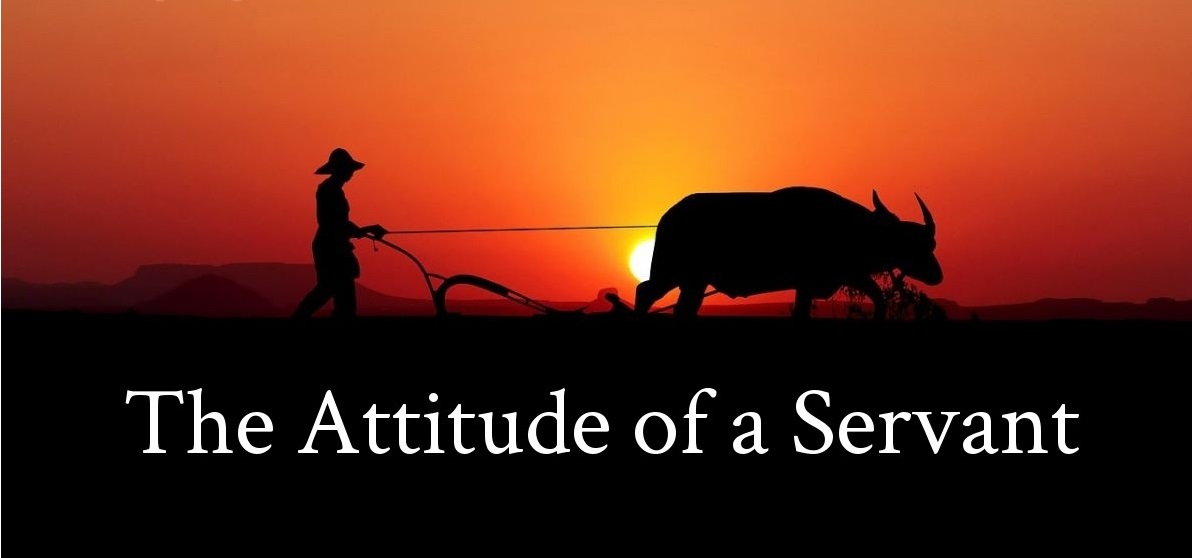
7 “Will any one of you who has a servant plowing or keeping sheep say to him when he has come in from the field, ‘Come at once and recline at table’? 8 Will he not rather say to him, ‘Prepare supper for me, and dress properly, and serve me while I eat and drink, and afterward you will eat and drink’? 9 Does he thank the servant because he did what was commanded? 10 So you also, when you have done all that you were commanded, say, ‘We are unworthy servants; we have only done what was our duty.’” -Luke 17:5-10

That is the key to having strong faith: We must regard ourselves as servants of God, like a servant in a house, waiting to serve His master. Basically always listening for the voice of the master, to do His will at any moment. And to regard ourselves as servants who are simply doing our duty. That’s humility. That’s seeing ourselves as humble servants of God. There seems to be this link between humility and faith.

If we know that we’re completely dependent on God, and that humbles us, we will have strong faith. If we think we can do it on our own and don’t really need God that much, we’ll have weak faith.

Pull it all together now, first, Be amazed by God, and let God be amazed by your faith.

Secondly, don’t be offended at God. Wrestle with the harder truths. Wrestle, and humble yourself, and embrace the harder truth, don’t push it away.

Thirdly, have a strong mighty faith, a faith that accepts Jesus words humbly, and puts them into action in your life.

Fourthly, humble yourself at Gods’ feet, and as a result your faith will grow, as you sit at the feet of Jesus, and wash the feet of his people.

In response to all this, I want you to come to humble yourself on your knees, declare yourself to God as his humble servant, ask him to humble you, and ask him to increase your faith. God bless you today.

Saturday, May 27, 2023

Can a Genuine Believer lose their Salvation?


Once an unbeliever has given their life to Christ, been regenerated by the Holy Spirit, reborn of Christ, and placed into the kingdom of God, can such a person fall away, and lose their salvation? 

This question is so incredibly important. It goes to the very core of the gospel: How does it work?

Some say this isn't really that important. It is actually very important. If I can lose my salvation, does that mean I should live in perpetual fear of losing it? And if I can't lose my salvation, should I live however I want, and do whatever I want, because hey, I'm already good? 

Here we find two extremes on the position. First, more commonly in evangelical Christianity, many say you can never lose it. In fact, even if you renounce Christ, turn away from God completely and go back to a life of sin, you're still saved no matter what. That seems to be the height of theological insanity, to assume that one can do anything, anything at all, including renouncing faith in Christ, and still remain saved.

Then there is the other extreme, the Christian plucking the flower saying, "he loves me, he loves me not, he loves me, he loves me not." They've lost their salvation five times today, and tomorrow isn't looking any better. That is an absolutely absurd theological position as well.

Here is the theological balance found in the scriptures: Nothing can separate us from the love of God in Christ. We can be assured of our salvation. We can consider ourselves safe in Christ. Along with these things: Remain in Christ, if you do not, you will wither, and be removed from the vine. Do not make a habit of sinning, because one who sins deliberately can be cut off. Stand firm to the end, finish the race, otherwise it is possible to have believed in vain. Do not disqualify yourself after having preached to others.

This is the concept of remaining in faith. Abiding in Christ. We must hold fast to our faith, not drifting away, while also knowing that Christ holds us firm, and we do not need to fear the Father losing his hold on us. This sacred balance is a difficult one. 

We're tempted to shift toward either theological extreme, I can never lose it, or I already lost it. But we must find a theological balance: Christ holds me fast, so I must remain in Him. 

So, can a genuine believer lose their salvation? The answer to that question is yes. 

Some would say well, if someone falls away it's because they were never saved in the first place. But let us not be deceived by this theological slight of hand. 

If we are "falling away" from something, we must already have it. If we "fall off" a horse, we must've already been on the horse and riding it. If we didn't ever really have it, then we couldn't fall away from it.

As it says in Romans 11:19-22, one who has been grafted in, can also be grafted out: 

"Then you will say, “Branches were broken off so that I might be grafted in.” That is true. They were broken off because of their unbelief, but you stand fast through faith. So do not become proud, but fear. For if God did not spare the natural branches, neither will he spare you. Note then the kindness and the severity of God: severity toward those who have fallen, but God's kindness to you, provided you continue in his kindness. Otherwise you too will be cut off."

Is it possible for one who is genuinely a branch in the vine to be cut off? According to Paul in Romans, the answer is yes. 

And again, it says in 1st Corinthians 15:1-2: "Now, brothers and sisters, I want to remind you of the gospel I preached to you, which you received and on which you have taken your stand. By this gospel you are saved, if you hold firmly to the word I preached to you. Otherwise, you have believed in vain." 

Here Paul writes to believers who have taken their stand. They are in faith. They are in Christ. They've taken their stand on the rock of Christ. But Paul warns them to "hold firmly" to the word. "Otherwise" he says, you have believed in vain. Plain and simple meaning: If you don't "hold firmly" you can lose your salvation. 

As Jesus said to his disciples, "remain in me, and I will remain in you." (John 15:4)

The command is: remain in me

The promise is: then I will remain in you.

That is the sacred balance. Our part is to remain in Him. His part is to remain in us. 

John 15:5-6 “I am the vine; you are the branches. If you remain in me and I in you, you will bear much fruit; apart from me you can do nothing. If you do not remain in me, you are like a branch that is thrown away and withers; such branches are picked up, thrown into the fire and burned."

Man-made theology of our day and age says you can never lose your salvation. It's therapeutic. It's meant to be helpful. But unfortunately it's had devastating consequences. A generation was told they couldn't lose it, so ironically enough they left. They left the church, went back to the world and said things like, well, I've been baptized so I'm ok. I'm saved forever no matter what. We've done great harm to people by telling them that. So we need to repent and teach a biblical soteriology, of abiding in Christ to the end. 

1st Corinthians 15:58, "Therefore, my dear brothers and sisters, stand firm. Let nothing move you. Always give yourselves fully to the work of the Lord, because you know that your labor in the Lord is not in vain."

Friday, May 26, 2023

King Saul dies in battle with the Philistines


Have you ever had a loved one in your family pass away? Can anyone relate? I think we've all probably had someone pass. And for some of us, it was someone we loved dearly. That's so incredibly hard. 

Then again maybe we don't have a good relationship with our parents or with our moms. God loves you, remember that. And he is going to speak to you, I think through this message. But God bless you all today. And this is kind of a sad story, a sad part of First Samuel 31. And it's about how Saul finally came to his end. 

So Saul has been persecuting David, David and his men have been fleeing from Saul for so many years now. And King Saul has been persecuting them, chasing after them trying to harm them. And David keeps refusing to harm Saul back, he very much is a man of humility and honor. 

He keeps saying, "Who am I to harm the Lord's anointed?" But finally, it comes to its final point here. It says that the Philistines, this enemy nation, right near Israel, they are attacking Israel. There's there's a huge battle going on. And many were slaughtered. It says on the slopes of Mount Gilboa they fought.

Mount Gilboa, it's actually a place that a friend of mine visited. She visited Israel a few years ago and stood in that place. It's beautiful, it overlooks a city today. See when we look at the scriptures, this is real stuff. You can go to Israel and see these places, these things really happened. So there's a battle going on here between the Philistines and Israel at this Mount Gilboa.

And it says, The Philistines were defeating Israel, they're a very powerful nation, they had powerful weapons, they had more advanced weapons than Israel, they had learned advanced metallurgy. And so their weapons were more advanced. 

And the Philistines are closing in on King Saul and his sons. They're in the battle themselves. And it says this, they killed three of his sons right there. 

The battle is fierce. The Philistines are now basically right near Saul himself. I mean, all his men are in battle around him. He's in battle and it's growing very fierce right around Saul and he's already watched his three sons die in the battle and he must be distraught, devastated. Saul takes an arrow from archers nearby. He's hit. Saul quickly realizes it's a mortal wound. So Saul turns to his servant whose with him, and says, "Hey, take your sword and run me through before these taken Philistines run me through and humiliate me." 

But the armor bearer was afraid and would not do it. So Saul took his own sword and fell on it. He kills himself right there. This is bad stuff, it's a dark moment! But he took his sword and fell on it. When his armor bearer realized that Saul was dead, he fell in his own sword too, and died beside the king. 

So Saul, his armor bearer and his sons died that day. When the Israelites on the other side of the desert Valley and beyond the Jordan saw that their army had been routed, and that Saul and his sons were dead, they abandoned their towns and fled. So the Philistines moved in and occupied those cities. So the Philistines have a total victory.

Here they are, they've won this battle. The next day, when the Philistines went out to strip the dead, they found the bodies of Saul and his three sons on Mount Gilboa. So they cut off Saul's head and stripped off his armor. And they proclaimed the news of Saul's death in their pagan temples, and to the people throughout the land of Philistia. 

"They cut off his head and stripped off his armor, and they sent messengers throughout the land of the Philistines to proclaim the news in the temple of their idols and among their people. They put his armor in the temple of the Ashtoreths and fastened his body to the wall of Beth Shan." -1st Samuel 31:9-10

When the people of Jabesh-Gilead heard what the Philistines had done, their warriors traveled all night to Beth Shan and took the bodies of Saul and his sons down from the wall. They brought them to Jabesh, where they burned the bodies, and they took their remains and buried them beneath the tamarisk tree at Jabesh. And they fasted for seven days. So this is the end of Saul and his family, a very sad moment.

And then mocked by his enemies. But thankfully, a nearby people in Jabesh-Gilead brought his body and gave him a proper burial. That was good thing they did that day. Then they fasted and mourned for seven days.

This is a very sad moment, but Saul has been sowing the wind for his whole life. He's been embracing a course of evil. 

Unfortunately, that when we make those choices, or hurt people, it's a lot of the innocent and will come back to harm us in the end. And that is how 

First Samuel 31, that's it. That's how the book of First Samuel ends, with the great defeat of King Saul and Israel by the Philistines. 

And then the book of Second Samuel starts. First Samuel goes all the way back to even before David was born, and then it goes through the life of David, as he's persecuted by Saul to the moment that Saul dies. And then second Samuel really begins the journey of King David, beginning to ascend to the throne of Israel. 

So David, after being harmed by Saul all these years, finally, his enemy is gone. And David begins to replace him as King of the nation of Israel. And these will begin to be much better days for Israel. Thankfully, a wicked ruler has passed away, a new, better King is about to take the throne. And things are about to get better for an entire nation. Because David has been through all the bad stuff, and it's kept him humble. He is a humble leader now. 

And what if he had taken the throne without any difficulty? Do you think he would have been as great of a leader? Probably not. Because sometimes we have to go through hard stuff. Sometimes we have to go through difficulties that keep us humble. And remind us that we need to rely on God completely. Sometimes we have to go through the wringer. And then when we're given authority, we won't abuse it. When we're given authority, and then we'll use it properly. 

So that's the first big point I want you to notice today is that it often takes going down to a dark place, a rock bottom, to be able to handle a better future where you're going to need to stay humble. 

Maybe that's the greater challenges after the struggles, to stay humble as God gives you many good gifts along the way. That may be the challenge for your future, is as God blesses you and builds you and grows you, you're gonna have to stay humble. Otherwise pride will destroy you. That's always a danger for any human on a path of victory: Pride starts to seep in. 

So let's see, we saw what happened to Saul here tragic and now let's see what happens with David. 

It says in Second Samuel 1:1-9, "After the death of Saul, David returned from striking down the Amalekites and stayed in Ziklag two days. 2 On the third day a man arrived from Saul’s camp with his clothes torn and dust on his head. When he came to David, he fell to the ground to pay him honor.

3 “Where have you come from?” David asked him.

He answered, “I have escaped from the Israelite camp.”

4 “What happened?” David asked. “Tell me.”

“The men fled from the battle,” he replied. “Many of them fell and died. And Saul and his son Jonathan are dead.”

5 Then David said to the young man who brought him the report, “How do you know that Saul and his son Jonathan are dead?”

6 “I happened to be on Mount Gilboa,” the young man said, “and there was Saul, leaning on his spear, with the chariots and their drivers in hot pursuit. 7 When he turned around and saw me, he called out to me, and I said, ‘What can I do?’

8 “He asked me, ‘Who are you?’

“‘An Amalekite,’ I answered.

9 “Then he said to me, ‘Stand here by me and kill me! I’m in the throes of death, but I’m still alive.’

So apparently Saul had attempted suicide, but it didn't work. So he calls to this man and says, "Hey, come finish me off. I'm dying here and I feel terrible." 

In verses 10-12: “So I stood beside him and killed him, because I knew that after he had fallen he could not survive. And I took the crown that was on his head and the band on his arm and have brought them here to my lord.”

11 Then David and all the men with him took hold of their clothes and tore them. 12 They mourned and wept and fasted till evening for Saul and his son Jonathan, and for the army of the Lord and for the nation of Israel, because they had fallen by the sword."

This is something that they would do in ancient times. Clothing was obviously very, very valuable in ancient times. And to show you were super upset, you would rip your clothes. I mean, you're doing the damage to something very valuable to express your grief. 

It says in verse 12, they mourned and wept and fasted all day for Saul and his son, Jonathan, and for the Lord's Army and the nation of Israel, because so many had died that day. So here we see them mourning this loss. 

I mean, David has been harassed and pursued by Saul and Israel, but yet he's mourning the loss of the army. He's mourning, this great defeat, because he's a godly man. He knows that this is a horrible tragedy. So he mourns. And it's okay in your life to mourn as well when you're sad. It's okay to mourn, to weep, to be upset, to simply allow yourself to be in that spot for a while. It's okay to feel grief. And sometimes when we're in grief, we may fast as well. 

Have you ever been so upset that you couldn't eat? That's a dark place to be. So at the same time, I'm sure David is thinking, well, this is my time to ascend to the throne. But that's not his approach to the situation. Instead he mourns. 

Then in verses 13-16, "David said to the young man who brought him the report, “Where are you from?”

“I am the son of a foreigner, an Amalekite,” he answered.

14 David asked him, “Why weren’t you afraid to lift your hand to destroy the Lord’s anointed?”

15 Then David called one of his men and said, “Go, strike him down!” So he struck him down, and he died. 16 For David had said to him, “Your blood be on your own head. Your own mouth testified against you when you said, ‘I killed the Lord’s anointed.’”

This man was a murderer. He killed Saul. David has him executed. Wow, that's intense. Was this the wrong decision? I don't really know. My first reaction is to think, well, that doesn't seem quite right. But I guess he did strike down Saul. Then it says this... (verses 17-27)

17 David took up this lament concerning Saul and his son Jonathan, 18 and he ordered that the people of Judah be taught this lament of the bow (it is written in the Book of Jashar):

19 “A gazelle lies slain on your heights, Israel.
    How the mighty have fallen!

20 “Tell it not in Gath,
    proclaim it not in the streets of Ashkelon,
lest the daughters of the Philistines be glad,
    lest the daughters of the uncircumcised rejoice.

21 “Mountains of Gilboa,
    may you have neither dew nor rain,
    may no showers fall on your terraced fields.
For there the shield of the mighty was despised,
    the shield of Saul—no longer rubbed with oil.

22 “From the blood of the slain,
    from the flesh of the mighty,
the bow of Jonathan did not turn back,
    the sword of Saul did not return unsatisfied.
23 Saul and Jonathan—
    in life they were loved and admired,
    and in death they were not parted.
They were swifter than eagles,
    they were stronger than lions.

24 “Daughters of Israel,
    weep for Saul,
who clothed you in scarlet and finery,
    who adorned your garments with ornaments of gold.

25 “How the mighty have fallen in battle!
    Jonathan lies slain on your heights.
26 I grieve for you, Jonathan my brother;
    you were very dear to me.
Your love for me was wonderful,
    more wonderful than that of women.

27 “How the mighty have fallen!
    The weapons of war have perished!”

How the mighty heroes have fallen! Stripped of their weapons they lay dead! Wow. He is mourning, mourning for the loss of his friend Jonathan, mourning for the loss of someone he loved, King Saul. Even though Saul persecuted him and harassed him he loved him. 

He mourns their loss. But history is changing, their things are moving and adjusting. The story is shifting. History is shifting. One King is passing away, and another is rising up. This is the way of all life. Things change over time, don't they? Nothing is permanent. Except for Jesus Christ, who is the same yesterday, today and forever. But human life changes. 

We were talking about that at Sunday school this morning. Pastor Chan said in the study on Job, "What were you feeling in 1923? Nothing. You weren't there." We're just a tiny blip in the spread of history.

We live 70, 80, 90 years, maybe 100? If we're lucky? We're just a tiny blip on history, we think we're so important that history revolves around us. 

Yet it does matter. David will perhaps be the greatest king that Israel has ever seen. Because he is a man after God's own heart. And at last, we've seen David chased, harassed, mocked, ridiculed, miserable, alone, living in caves, living empty, wondering when are things going to change. 

And finally he has his victory, where Saul is gone, and he's going to become king, and he can't even enjoy it. He is mourning for the loss of Saul. What a strange moment, don't you think? It's finally happened, his persecutor is defeated. And he can't enjoy it. 

He had mourned, cried, and ripped his clothes. Because he lost someone closer than a brother Jonathan is friend, someone who protected him from Saul. Frankly, David loved Saul. And I've experienced that too, with leaders, politicians, people in the Salvation Army that maybe I didn't agree with it, I still loved them, you know, still, I still cared about them and their soul, you know, you care. You can't help but care. So it's a strange and a sad moment. 

But it's also a hopeful moment, right? It's a hopeful moment, because David doesn't have to live in caves anymore. And it is God's will for David to be king. And David will be a great king. But it's sometimes it takes sorrow, to break through to victory. I'll tell you that. And oftentimes, it's a very mixed feeling, isn't it? 

When things change, it's like, Man, I'm happy. And I'm sad, and I'm hurt. And I'm blessed. And it's all just kind of together in this bowl of emotions. 

Like when you get saved in Jesus Christ, it's very much a mixed thing. Because at one point, you're so excited because you're a new person, you're born again, got the Holy Spirit, at the same time, you're mourning, because all of your sins were so ugly, and Jesus had to pay for them with his own blood. That's how bad my sin was. And you regret what you did. But then you're moved forward, past them.  

You're also a little nervous as well, looking toward a future that seems difficult, as a Christian, to begin to live by a different standard. So there's all these kinds of conflicting emotions, you feel sad yet excited, nervous yet confidence, mourning yet rejoicing. 

So welcome to the Christian life. It's kind of a balancing act between different feelings and thoughts. But fundamentally, we have a good thing here. And that's being a Christian. We have a wonderful, beautiful life walking in the grace of God every day.

Our sins have been washed away and we're new. We have the Holy Spirit, this rope hanging down from heaven that plugs into us and we light up with God's presence. We have this new power source that we're plugged into in heaven through the Holy Spirit. 

And yet life is kind of challenging because at the same time you look at the world and you see everyone who needs Jesus and you feel a little overwhelmed, like, "I want all these people to know the Lord!" And yet, it seems just out of reach a lot of times, so it's kind of tough. So, let's get used to that, used to an awkward balance of competing emotions. 

But I want to end on this note: This is a great moment because David is going to be a great king. This is a moment that the entire nation prayed and hoped for. God, please, grant us a Godly leader! And Israel now had a godly leader.

And imagine if in our country, Jesus appeared and said, "I'm the new president." That would be the day! Marantha! (Come Lord Jesus)

Prayer for Today: Heavenly Father, we've experienced a lot of these emotions, and it's tough. We walk in Your Grace, God, our sins have been forgiven by Your precious blood, Lord Jesus. Help us to walk in that sometimes awkward path. Help us to mourn those we've lost, but also to see the hope and the future that we have. Thank you, God, In Jesus Name, Amen. 

Tuesday, May 23, 2023

The Salvation Army: Do not Show Favoritism, a vital theological concept

This is a personal blog. The views on this blog do not necessarily represent the views or opinions of the Salvation Army, it's employees, or partners. The views on this blog are solely of those making them, based on the teachings of the Bible, in the Spirit.

"I charge you, in the sight of God and Christ Jesus and the elect angels, to keep these instructions without partiality, and to do nothing out of favoritism." -1 Timothy 5:21

The concept of giving special benefits or special assistance or deference to a particular group is on it's face a tempting proposition. We feel, we're going to help people who are hurting. There is a legitimate desire behind it, to help and do good. We feel, we're going to right historic wrongs. We're going to stand up for the little guy. We're going to make a difference.

These are generally good ideas. Jesus our Lord himself was very focused on helping those in need, meeting needs, healing the outcast, and reaching out to the lowly. 

Yet we also find a vital concept in scripture, old and new testament alike, it's the concept of "do not show favoritism." 

Showing favoritism in the old testament is worded like this: Don't show favor to the poor man or to the rich man in court, but do justice. In the new testament, we're told showing favoritism is legitimately considered a sin.  

It says in James, James 2:9 "But if you show partiality, you are committing sin and are convicted by the law as transgressors."

My ears perk up when the word of God so clearly indicates: This is not right. I'm listening, because, after preaching to others, I don't want to disqualify myself. I want to make sure I'm doing justice rightly. 

We in The Salvation Army need to be very careful that we fulfill our mission statement of "meeting human needs in His name without discrimination."

We must never show favoritism or disregard based on someone's standing, if they're related to someone we know, if they hold a particular ideology, or if they're financially wealthy, or very poor, if we like their personality or not. Do not show favoritism. That's so vital.

We can't favor someone because of the color of their skin either. In either direction. We should never favor someone for a position because they are Caucasian and that's what we're comfortable with. We should also never show favoritism to someone who is African American or Asian or Middle-Eastern because we want to show how inclusive we are. 

Be certain of this: Either approach is equally sinful before God.


Leviticus 19:15 “You shall do no injustice in court. You shall not be partial to the poor or defer to the great, but in righteousness shall you judge your neighbor."

And when I see us doing either of those things, I tremble for the leaders making those decisions. Because it is a deadly sin, one singled out in the New Testament numerous times. 

We must return to a basic concept: equality under God. Simple, yet profound. Do not treat people differently based on any particular difference. Even gender. Even race. Even class. Even wealth. Even criminal history. Even philosophy. Even social media posts. But treat all people equally under the law of God. 

If we show favoritism in attempts to correct perceived historic wrongs, we may find ourselves condemned as law breakers as it says in James. If we show favoritism based on preference to a particular race, gender, or class, we equally find ourselves condemned as law breakers according to James. 

Do not judge with deference. Do not accept a bribe. Do not show favoritism based on familial connection, nepotism is sin just as much as favor based around race or class or gender. 

Instead, keep a stubborn sense in your eyes and heart, of giving position based on ability, but only in the leading of the will of God, by the Spirit of God. Who is most qualified? That is the standard that God gave to Moses, when Moses was to select certain leaders to judge cases over the different groups and tribes. 

“But select capable men from all the people—men who fear God, trustworthy men who hate dishonest gain—and appoint them as officials over thousands, hundreds, fifties and tens” (Exodus 18:21).

What are the requirements? They must be capable. That's meritocracy. Appointed based on merit. They must fear God and be trustworthy as well. They must refuse bribes and dishonest gain. And there you have it. In leadership, capability, merit is the key stock to consider when making the choice. 

In providing help and service to those in need, we should help everyone, and the word says, particularly, fellow Christians. That's a principle from Galatians 6:10, "So then, as we have opportunity, let us do good to all people, and especially to those who belong to the household of faith."