Sunday, July 10, 2022

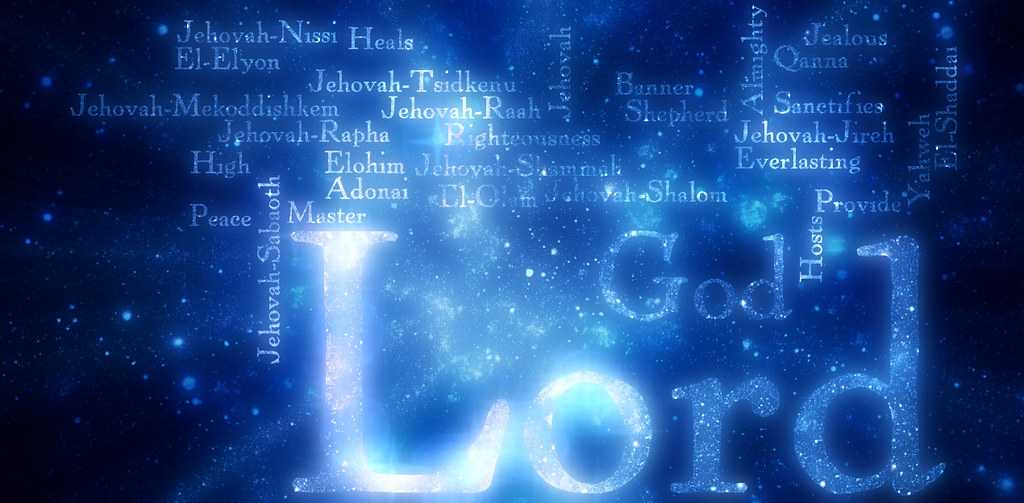
Elohim: The God of DNA, Galaxies, Nature, & the Higgs-Boson Particle


Throughout the scriptures God invites us to inquire of Him and learn about Him. That is really the main goal of God on Earth, is that we would turn to Him, and be curious about Him, and seek to know Him, and then understand how to know Him, then to enter into His presence, and receive a new identity in the Christ he provided to make us ready for heaven. And He invites us to enter into that covenant marriage with Him, and become one with Him, and begin to live differently, proceed down a road of trials and triumphs, challenges and victories, dark nights of the soul and high mountain top experiences, as he prepares us for heaven. The end goal being, after we physically die, we are resurrected, with new bodies, as new people, to dwell with God for all eternity on a new perfect Earth, to always delight in Him and follow Him wherever he leads us, into a future so bright we can’t possibly imagine.

We grow into maturity, as we seek God more and more deeply. That is the goal with this new series, is that you would wonder at who God is. The goal is that you would come to know the unimaginably powerful God of all the universe intimately. That you would have a deep, rich daily intimacy with God, and that you would live as a set apart, special chosen possession of God, in a fallen world, where you will shine ever more brightly in the increasing darkness of these difficult last days.

There are twelve names of God we will address over this series. Today we address the name of God most commonly used in the first two chapters of Genesis, Elohim. This is the name God gives to himself throughout his creative works in Genesis 1 and into Genesis 2. The name Elohim is used 35 times in those opening chapters of the Bible.

In the beginning Elohim created the heavens and the earth. 2 Now the earth was formless and empty, darkness was over the surface of the deep, and the Spirit of Elohim was hovering over the waters.

3 And Elohim said, “Let there be light,” and there was light. 4 Elohim saw that the light was good, and he separated the light from the darkness. 5 Elohim called the light “day,” and the darkness he called “night.” And there was evening, and there was morning—the first day.”

Elohim tells us God is infinitely creative. In our Elohim, we find an infinitely complex creative genius mind. He is infinitely creative. We can see this from the planet Earth. And the our solar system. The sun. The asteroid belt. The sun shining through the trees. Waters rushing along a river bed. Lake Michigan, Lake Superior, and all the great lakes.

Elohim implies God’s glorious creative majesty. Nathan Stone, author of “Names of God” says it this way: “It is most appropriate that by this name God should reveal Himself- bringing cosmos out of chaos, light out of darkness, habitation out of desolation, and life in His image.”

It’s just so much to even fathom. There was nothing there 6000 years ago when God made the universe. There was nothing. There was no human race. There were no planets, no stars, no galaxies. Nothing existed. Nothing aside from God, in a heavenly reality he created, along with his creations, this creatures called angels who serve Him and worship Him. Then Elohim declared, and His power being infinite, piece by piece the universe came into being, all calculated perfectly mathematically, every equation setup just right, endless streams of data, and information, universal constants, and equations like gravity, mass, and particles like the higgs boson that hold the universe together. Higgs boson fields exist all around us. They are tiny particles that appear and disappear, and they literally hold reality together. And if they didn’t exist, all reality would disintegrate and we would no longer exist. They were nicknamed the God particle, because they hold reality together.

He calculated it all out in his infinite mind, using the coding system of DNA to program and establish all the animals, plants, and creatures across the planet. Did you know all living creatures from animals to plants are programmed with the same DNA code? One might think that implies that God used a unique code, DNA, to program all life by one system.

It's kind of like how humans created binary code for computers. Binary code is simply a 0 or a 1. Everything in a computer as far as coding can all be broken down to ones and zeros.

In the DNA coding system, Each gene's code uses four nucleotide bases of DNA: adenine (A), cytosine (C), guanine (G) and thymine (T). And they are arranged in DNA into 3 letter codons, which are arranged into 64 different codons to write human, animal, and plant DNA. It’s a complex coding system. But much, much more complex than binary.

The most sophisticated system we could come up with for coding was binary. But inside our bodies is a system infinitely more complex.

I parked by the river yesterday morning eating my breakfast that I got from the fast food drive through and looked at the beautiful trees, the sun shining into the river, the ducks and Canadian geese by the water, the food, the roads, the music playing, and it is just astonishing all that God has made on planet Earth. He is truly Elohim, God the creator.

Even in my mind at those moments I knew he was putting the thoughts in my mind, or at least inspiring those thoughts and emotions, so that I would later write them down and share them with you. This happens frequently as a pastor. Life becomes a living parable through which he has me share things with others. It’s fascinating and also sometimes terrifying.

Our respond to God’s creative genius is important. That’s one thing I want to emphasize in this series. Let’s take it always like this: Here is God’s name, here is what it means first, then second, how do we respond? The point is that we respond. That is God’s desire that we should reach out for Him, as we learn about Him. If not, why even bother studying it?

Our response should be awe, wonder, and amazement. We should let the amazement fill us up inside. We should see nature with different eyes. We should see animals with different eyes. We should see ourselves with different eyes. We should see these things as special, as made by God, as gifts from God, as something that overwhelms us with joy, excitement, wonder, and amazement. And our response should be worship, to say wow God, look at this, you made it and it’s wonderful, this must mean you are wonderful God.

So our respond is to declare God you are amazing. Say it with me: God you are amazing! That is worship. So when you enjoy nature, when you enjoy fellowship with friends, when you enjoy time with your pets or you see a wild animal, take a moment to be amazed. And to thank God.

Yet though we see how beautiful nature is, we also see reality is fundamentally fallen. It’s dangerous. Wild animals can be dangerous. Storms and tornadoes and hurricanes can destroy and harm people and their property. Humans spread trash around the city, landfills form, human bodies become old and frail, we see the carcass of a dead animal on the side of the road and we’re horrified.

What God has made is so beautiful, sublime, pristine, yet it’s also horribly mangled.

It says in Romans 8, “19 For all creation is waiting eagerly for that future day when God will reveal who his children really are. 20 Against its will, all creation was subjected to God’s curse. But with eager hope, 21 the creation looks forward to the day when it will join God’s children in glorious freedom from death and decay. 22 For we know that all creation has been groaning as in the pains of childbirth right up to the present time.”

All the Earth, and the universe was cursed when Adam and Eve sinned against God. They were deceived and turned away from God, and hid from him. And as a result of this, all reality became cursed with sin. Sin is so destructive isn’t it? It destroys everything. Sin spreads through people, sin spreads everywhere. So we see a fallen natural world. We see how animals feed on each other, we see storms and earthquakes, and diseases, and cold winters, and swarms of mosquitos, and we see our planet is fallen. We see loved ones grow old and die. In fact we see every person ever born will one day die.

Our response to this should be fearful reverence for God. To be tremble before a holy God. And to receive Jesus Christ as our savior, so that we do not remain cursed like the rest of the world is. We want to make sure we believe in Jesus, everyday, and we repent of our sins, and live the most pure and set apart life in the power of the Holy Spirit who helps us.

Then we will be fit and ready, pure, holy, spotless, and blameless on the day that Jesus Christ returns to establish his millennial reign upon the Earth. We will become part of the New Earth, in a new universe, in which all the stains of the curse are removed, and every calculation of the universe is set right.

There will be no more decay or death in human DNA, or animal or plants. There will be no more destructive variances in the equations that govern gravity, time, space, matter, energy, the atmospheric systems of Earth, and so on. There will be no more limits on systems of food, water, wealth, and shelter. God will rewrite all these systems to conform to a new perfect system of reality, a paradigm shift he calls the New Heavens and New Earth, and in particular a city called the New Jerusalem where the redeemed and cleaned humanity will dwell with or king Jesus Christ, and our Lord God Elohim forever and ever.

That’s my goal on this fallen, yet beautiful Earth. To love, honor, and fear the Lord Elohim, and to respond to His creative genius with shouting joy, reverence, praise, amazement, and worship. Make that your goal as well. See reality through new eyes, see it as the glorious design of an infinite God, who loves you, yet also calls you to holiness in Christ. Amen.


Are you using your time, talents, and treasure toward God's Kingdom? The Parable of the Shrewd Manager


"Charles Francis Adams, 19th century political figure and diplomat, kept a diary. One day he entered: "Went fishing with my son today--a day wasted." His son, Brook Adams, also kept a diary, which is still in existence. On that same day, Brook Adams made this entry: "Went fishing with my father--the most wonderful day of my life!" The father thought he was wasting his time while fishing with his son, but his son saw it as an investment of time. The only way to tell the difference between wasting and investing is to know one's ultimate purpose in life and to judge accordingly." -Silas Shotwell, Homemade, September, 1987.

How do you invest your time? How do you invest your money? What is of value to you? What do you consider pointless? What is your goal? What is the mission statement of your life?

In our illustration today Charles Francis Adams, son to John Quincy Adams, and grandson to John Adams spends a day with his son fishing. And he regarded it as a waste.

But his son Brook Adams considered it the greatest day of his life.

Charles was a famous diplomat, a historian, he served in the military, he wrote important works. Yet for his son, the most important day of his life was when dad went fishing with him.

Sometimes we can get so focused on big concepts, big ideas, big missions, that we may miss the details. We may miss the moments that individual people will never forget, because we spent time with them.

Or we can so focused on details, on fun trips, on quality time, on cards, and gifts, and fun things, that we lose focus on kingdom matters, big things, the gospel, discipleship, salvation and spiritual growth.

Growing up I was surrounded by people living out modernism, living the American good life. Working long hours, working on the car, attending public school, watching television, attending concerts, going on family trips, the latest toys, reading the newspaper, buying a nice house, marriage and children, picnics and cookouts, sports games, and videogames, family outings, and music recitals, and Disneyworld and doctors appointments, vitamins and proper exercise, politics and finance, business building, winning friends and influencing people, fine cooking, lavish meals, shopping trips, wine tasting, touring old buildings, visiting museums, and in all that, there was little room for God. But we even went to Catholic mass on Sundays, almost always, and we even attended Wednesday CCD classes. But during the week we didn’t practically make it part of our lives. We weren’t at work for the things of God, our money, our time, and our talents went to worldly pursuits. And in so doing, we were destroying ourselves with smiles on our faces.

Keep this in mind today: “Am I using my wealth, time & talents toward Kingdom pursuits?” Or are you living the American good life?

Which brings us to our parable today, the Parable of the Unjust Steward, or also commonly referred to as the Parable of the Shrewd Manager.

This parable is located in Luke chapter 16, and just prior to this parable in Luke 15, Jesus told the parables of the lost sheep, the lost coin, and the prodigal son. Particularly, the context in the prodigal son is that the son has taken his father’s wealth and squandered it on wild living, but when the son returns the Father welcomes him with open arms.

Then right after the unjust steward parable in Luke 16 we see the parable of the rich man and Lazarus. So we see Jesus outlining several different themes in regard to the kingdom of God that we’ll compare later. First, let’s look at our parable today, from Luke 16:1-13 says, “Jesus told his disciples: “There was a rich man whose manager was accused of wasting his possessions. 2 So he called him in and asked him, ‘What is this I hear about you? Give an account of your management, because you cannot be manager any longer.’”

3 “The manager said to himself, ‘What shall I do now? My master is taking away my job. I’m not strong enough to dig, and I’m ashamed to beg— 4 I know what I’ll do so that, when I lose my job here, people will welcome me into their houses.’

The manager has been dishonest and he’s in trouble. The master is done with him, he’s out of here. So he’s going to hatch a plan to improve his future prospects. He’s already going to be fired. So he’s got a plan. It continues…

5 “So he called in each one of his master’s debtors. He asked the first, ‘How much do you owe my master?’

6 “‘Nine hundred gallons of olive oil,’ he replied.

“The manager told him, ‘Take your bill, sit down quickly, and make it four hundred and fifty.’

7 “Then he asked the second, ‘And how much do you owe?’

“‘A thousand bushels of wheat,’ he replied.

“He told him, ‘Take your bill and make it eight hundred.’”

So we see the dishonest manager is making friends for himself by cutting people’s debts and making them better deals. Then he’ll have some friends later when he’s on the streets and in need of money. This is what troubles many theologians who are confused by what happens next. Let’s take a look:

8 “The master commended the dishonest manager because he had acted shrewdly. For the people of this world are more shrewd in dealing with their own kind than are the people of the light. 9 I tell you, use worldly wealth to gain friends for yourselves, so that when it is gone, you will be welcomed into eternal dwellings.”

The master in this parable represents God, and the shrewd manager represents you and me. And the master actually commends the dishonest manager. It’s surprising, because the manager basically cheated him out of money he was owed. Some theologians have tried to explain this by indicating that in ancient times, a manager or a tax collector would add on an amount above the cost the master was charging, and that’s how they made money. Like a tax collector would see that you owe $3,000 in taxes and would make it $3,500 so he could keep the extra $500. That’s why tax collectors were almost universally hated. I’m a bit skeptical of this explanation because you can see from the amounts that the manager is cutting off the bills, especially for the first, he cuts the bill from 900 gallons to 450. Some theologians think well, the manager was just removing his own markup on the products so he wasn’t actually stealing from the master. That’s how they resolve it ethically. I’m skeptical of that, are you telling me his mark up was 100%? He’s charging twice what the master wants? Hard to say, I suppose it’s possible. But I don’t think we necessarily need to resolve that aspect of the parable. The parable is really teaching us what comes next in verses 10-13.

It says, 10 “Whoever can be trusted with very little can also be trusted with much, and whoever is dishonest with very little will also be dishonest with much. 11 So if you have not been trustworthy in handling worldly wealth, who will trust you with true riches? 12 And if you have not been trustworthy with someone else’s property, who will give you property of your own?

13 “No one can serve two masters. Either you will hate the one and love the other, or you will be devoted to the one and despise the other. You cannot serve both God and money.”

So in the conclusion of the parable, we see that the shrewd manager is commended, because he was wise in planning for his future prospects. And this points us toward an interesting truth: people of the world are very clever in amassing wealth and shrewd in their business deals, and so they win many friends and influence many people, and get their products and services around the world. And the Lord Jesus is telling us through this, that people of the light, he says, aren’t even as shrewd or interesting in using their wealth to build the kingdom of God, as worldly people are in building their own influence.

And isn’t that true even today? We see many billions and millionaires who influence millions with their products and services, but do we see many Christians with that kind of power and influence? Not as many as we’d like I think.

So, several take-aways here.

First, even if you have very little in this life, be trustworthy with it before God. Because if God sees that you’re trustworthy with a little, he’s going to entrust more to you. But if he sees he can’t even trust you with a little bit, well, then why should he give you more responsibility, or more wealth, or more influence?

Second, it’s interesting that Jesus notes here that we can’t serve two masters. We can’t serve both God and money. One will become dominant always. So use your wealth to serve and honor God. Don’t let your devotion to God become secondary to your worldly wealth. It won’t ever work that way.

So think again about our question for today: Am I using my wealth, time & talents toward Kingdom pursuits? Who do you serve?

Are you taking everything in your life, your finances, your abilities, your family, your time, your creative abilities, and applying it all to winning people to Christ? Then when you arrive in paradise, you’ll have many friends surrounding you there.

I always imagine one day when I get there. It’ll be a big celebration, because another saint made it home safely. And I think to myself, maybe all the people who I helped win to Christ will be there. And they’ll come up to me and say hey, thank you for giving me that gospel tract, thank you for posting that sermon online, thank you for talking to me at the store that day, and I’ll realize that all those little things I did actually did make a difference for God’s kingdom. And we’ll give all the glory to God. But I wonder, will they be there, when we arrive in paradise, the people we helped win to Christ? That would be a really special moment.

Imagine if every person here today, was as shrewd as the dishonest manager in winning friends to Christ? Imagine if they worked with the kind of effort that people in the business world do, working day and night 40, 50, 60 hours a week, putting every effort they possibly can into gaining wealth for their company, and setting up good deals, and cornering the market, and developing new products, imagine if we took all that effort and zeal and drive and passion and applied it spreading the word of God.

We could spread the gospel around the world in no time. But too many Christians set their desires before the kingdom of God. They are shrewd in trying to get what they want, trying to get money, trying to get pleasure, trying to get entertainment, trying to get romance, but the goals of God’s kingdom always seem to come in a distant second.

Well it shouldn’t be that way. So let’s make some changes in our lives. Let’s be like the shrewd manager who the master commended because he used his wealth to develop connections.

But this parable is interesting, isn’t it, because it fits right in with several other parables in Luke. First in Luke 15, the parables of the lost sheep, the lost coin and the prodigal son. The value of the person to God, God seeking after the lost and rescuing them. Then the parable of the shrewd manager. Be shrewd about God’s kingdom, but don’t love money either. Then the parable of the rich man and Lazarus, the people of God often find themselves outcast and in sorrows in this life, and no amount of evidence seems enough to convince certain people, like the wealthy.

A lot of these parables actually connect to money and the love of money. Think of the prodigal son, what led him out and into trouble, getting his inheritance and then spending it. The rich man and Lazarus, contrasting a wealthy person with a poor sickly man. And this parable about a shrewd manager that threw away a lot of money to gain friends for himself. A lot of it deals with money,

And to conclude the parable of the shrewd manager, it says in verses 14-15, “14 The Pharisees, who loved money, heard all this and were sneering at Jesus. 15 He said to them, “You are the ones who justify yourselves in the eyes of others, but God knows your hearts. What people value highly is detestable in God’s sight.”

That explains a lot, the Pharisees, the religious leaders had a high value of money. I think a fair amount of preachers in America today also have a high regard for money, unfortunately. So a lot of this was for the Pharisees, and the people, who were being led astray from the Pharisees. The Pharisees sneared, but Jesus says, hey, you’re the ones who are always trying to show the people that your special and holy and godly, but God knows your heart.

A lot of the things we value in our lives, very highly, God doesn’t value at all. Ever think of that?

Think of the illustration of the day of fishing with dad. To the father it was a waste, to the son it was the most important day of his life.

What in your life is mixed up? What do you value highly? What do you value lowly? That’s a good question isn’t it. I wonder if I checked in your homes, would I find you reading your Bible daily, would I find you spending quiet time with God everyday? What are you valuing? God? Or television? God or money? God or social media? God or work? That is the question. Analyze yourself. Judge yourself. The body of Christ are told to judge themselves in these days, so that we don’t fall under God’s judgment on the day of the Lord. 

“But if we would examine ourselves, we would not be judged by God in this way.” -1st Cor 11:31

In any case, as we conclude today, how can we put this into practice today?

Let’s take a look.

1. Examine yourself – Am I building God’s kingdom with my life?

2. Write up a mission statement for your life

3. Write down some goals prayerfully, of ways you can help bring Christ to people in unique ways, using your gifts and talents

4. Budget your money carefully and make sure you are setting aside money to tithe, give offerings and to provide for those in need

5. Analyze how you use your free time – What takes priority?

6. Make a plan – new ways to share the gospel in your life

7. Develop intentional friendships and relationships in which you guide people to Jesus Christ and the word of God


In conclusion, this really comes down to your heart. It’s a heart issue. In the depths of your heart, what choices do you make? Are you using your worldly wealth gifts and talents shrewdly for God’s kingdom? Or are you self focused? Selfishness must die in us as Christians, plain and simple. And God does that in the process of sanctification. Can you surrender self seeking and selfishness to him today? Analyze yourself. Who are you really? What is your goal in life? What is your mission statement? Maybe it’s time to reflect on what you’re using your sacred time, talents, and wealth for.

Sunday, July 3, 2022

The Parable of the Wise & Foolish Builders: What's the difference? Put it into Practice


In 1912 a particular cruise liner called the HMS Titanic was making it’s first voyage through the northern seas and struck an iceberg. Though the ship had been particularly designed to stay afloat with more than half of the ships compartments filled with water, the cut the iceberg made across the hull of the Titanic caused too many of the compartments to be filled with sea water, and the ship sank, with a loss of over 1500 lives.

Most of us have heard of this historical event, but how many of us have heard of this one?

There was another ship about 20 years earlier, called the HMS Calliope. It was guarding British interests in Samoa, with 6 other ships when a tropical cyclone began to form.

According to an Encyclopedia resource, “The 1889 Apia cyclone increased in ferocity over the next two days. Rain fell in sheets, cutting visibility. Winds of 80-115 mph blew directly into the anchorage, trapping the ships in the V-shaped harbor. Operating their engines at full speed to resist the wind and waves, ships nevertheless dragged their anchors and were inexorably driven landward. Vessels collided and were thrown on the reefs or ashore, and some sank. By 09:00 on the 16th, Calliope, although still riding at anchor, had been hit by one ship and narrowly missed by another, and Captain Kane decided to attempt to escape. To relieve the strain on the five anchor cables, Calliope's boilers were producing maximum pressure; the engines were being worked "red hot", and the propeller was making 74 revolutions per minute, sufficient for 15 knots (28 km/h) in calmer waters. In spite of this titanic effort, the ship was barely able to make headway against the winds and the seas in the harbor, and anchor cables began to part.

To port and only 20 feet (6 m) away was the coral reef. Ahead were the US ships USS Vandalia and USS Trenton; to starboard were other warships. There was only a narrow opening between the vessels to one side and the ground to the other. Hemmed in by these obstacles and with the rudder at times within 6 feet (2 m) of the reef, Calliope maneuvered while still attached to the anchor cables, which began to give way. When Captain Kane saw an opening, he slipped the anchors and drove forward. Avoiding the helpless Vandalia, he approached the sinking Trenton, coming so close that Calliope's fore yard-arm passed over the American's deck. As Calliope rolled to port, the yard lifted over Trenton. The crew of the helpless and doomed American ship cheered Calliope as the corvette slipped past. The British ship's drive for the open sea was called by the American commander on the scene "one of the grandest sights a seaman or anyone else ever saw; the lives of 250 souls depended on the hazardous adventure."

The storm kept Calliope at sea the next two days. Re-entering the harbor on 19 March to search for the missing anchors, the crew discovered that all the other ships—twelve in all—had been wrecked or sunk, only the HMS Calliope had survived.”

Similarly, we are each like a ship on the high seas, and we are journeying our way home to paradise. The goal is to make sure that we proceed through the storms and heat and cold and icebergs and cyclones and hurricanes and various dangers that face us in the Christian life, to arrive safely at the shores of the celestial city.

Which ship will you be like in your walk with Christ? Will you be like the Titanic, that though it was strong and powerful it struck the iceberg and sank into the depths? Or will you be like the Calliope, though it was struck by a great storm, and threatened to be thrown into the coral reefs, through wisdom, and steadfastness, and faithfulness, Captain Henry Kane brought the ship safely through the dangers to harbor.

And along these lines, today we will be examining the parable of the wise and foolish builders. The parable of the wise and foolish builders is one of the most famous of the parables of Jesus. It appears in both the gospels of Matthew and Luke. And I think we’ll see how this parable is really about putting the words of Christ into practice.

So that is the main question to consider today, for each of us, during the sermon: Am I putting into practice the teachings of Christ?

The context of our parable today, is that in both Matthew and Luke we see that this particular parable was included at the end of the sermon on the mount, the greatest sermon ever preached. And doesn’t that make sense? What do we always talk about at the end of a message, or at the end of Bible study? We talk about how to take what we’ve learned and apply it to our lives. That is the main point.

But in any case, let’s take a look at the teachings that are shared by Jesus just before this parable, and I want to look at both Matthew and Luke, and see what scriptures are shared right before this parable.

First we see the Context from Matthew: 21 “Not everyone who says to Me, ‘Lord, Lord!’ will enter the kingdom of heaven, but only the one who does the will of My Father in heaven. 22 On that day many will say to Me, ‘Lord, Lord, didn’t we prophesy in Your name, drive out demons in Your name, and do many miracles in Your name?’ 23 Then I will announce to them, ‘I never knew you! Depart from Me, you lawbreakers!” -Matthew 7:21-23

One of the more severe and firm teaching of Christ, in fact, one time for dinner church for the sermon I simply read the text of the sermon on the mount word for word. And it was one of the harshest and most intense sermons I’d ever preached. And I felt convicted afterward, and I thought to myself, am I sugarcoating compared to Jesus? That’s a good reminder for us today. Jesus’ sermon was tough and firm. Maybe we need to be more tough and firm as Christians, but always keeping it in the context of love and concern for the lost.

Jesus says, look, you can call me Lord all you want, but you need to be practically living out the will of my Father in heaven. It’s not enough to say “Lord, Lord” and just live in sin and do whatever we want. They call that antinomianism, an ancient heresy of the early church. The Antinomians taught people just believe in Jesus and receive grace, don’t worry about not sinning, don’t worry about repentance just believe in Jesus and do whatever you want. Of course we know that’s wrong.

Jesus says, I will say to such people, even people who did great deeds like cast out demons, did miracles, and give words of prophesy to people, and yet they lived in sin, he will say to them: depart from me, and the charge is “you lawbreakers.” Some translations say “you sinful” or “you wicked ones.” It’s a good reminder for us, that as Christians, we can say “believe in Jesus” all we want, but are we teaching repentance from sin, and living a life of sanctification where we’re progressively becoming more and more like Jesus. In the lukewarm watered down church of today, we see a lot of grace heavy teaching, just believe in your heart, and now your saved forever, and that’s all. That’s not Christianity. That’s not truth. That’s not what the Bible teaches. We’re to lived radically poured out lives, living out the will of God, and living holy as he is holy, putting to death the misdeeds of the flesh.

Then we see the context from Luke chapter 6:43-45

Context: 43 “No good tree bears bad fruit, nor does a bad tree bear good fruit. 44 Each tree is recognized by its own fruit. People do not pick figs from thornbushes, or grapes from briers. 45 A good man brings good things out of the good stored up in his heart, and an evil man brings evil things out of the evil stored up in his heart. For the mouth speaks what the heart is full of. -Luke 6:43-45

Here we see that someone who puts into practice the teachings of Christ, will bear good fruit. It’s going to happen that way. And someone who doesn’t will bear bad fruit. And that is a good way to tell, look at your life, are you bearing good fruit, or are you bearing thorns and thistles and poisonous fruit that harms others? It’s a good way to tell where we’re at.

But there we see the context, now we view the parable itself, from Matthew 7:24-27 “Therefore, everyone who hears these words of Mine and acts on them will be like a sensible man who built his house on the rock. 25 The rain fell, the rivers rose, and the winds blew and pounded that house. Yet it didn’t collapse, because its foundation was on the rock. 26 But everyone who hears these words of Mine and doesn’t act on them will be like a foolish man who built his house on the sand. 27 The rain fell, the rivers rose, the winds blew and pounded that house, and it collapsed. And its collapse was great!”

We all here want to be on the ones who build their houses on the rock, correct? Anyone want to build on sand? No, not at all.

There are two qualifiers here, to be on the list of the rock builders: We must hear the words of Jesus and act on the words of Jesus. Hear + Act = Sensible Man who built on the Rock.

His house was battered by the storms and winds and rising rivers, yet it didn’t collapse, because it’s foundation was on the rock.

Now, if you do want to be the sand builder, here’s what you do, Hear + doesn’t apply them = foolish man whose house collapsed

Many say about this parable, well the rock is Christ. Yes. That’s true. But our response to Christ dictates how we build. If we sit in church and hear a lot of good things, and think wow, that was nice, and then we go home during the week and live our same old lives, we’re building on sand. Some of you here I’m worried are doing that. You just come to church, you don’t take notes during the sermon, you don’t think about how to apply the message during the week, and you don’t pray too much and you don’t read your bible more, and you’re building on sand. Really you are. Make some changes if that’s you.

It's not enough to just hear it. We have to, have to, have to put it into practice. We have take what we’re learning here and apply it to our lives in tangible ways. Otherwise it’s just theory. It has to become practice.

But, if you sit in church, and hear a lot of good things, and then during the week you think about, how do I apply this, you read your Bible, you pray everyday, you attend life group and bible study, and you sit down and try to think about how to apply the Bible to your life, then you’re building on the rock. That I think my friends is the fundamental divide in every church on the planet.

There is a basic divide in the church between those who are actively putting into practice what they’re learning, and those who are just hearing it and then leaving and living the way they always did. Which side of that are you on?

Build on the rock. Put it into practice the words of Christ. That’s my challenge too. It’s easy to talk about. It’s harder to live it. That’s usually the hardest thing for us as humans. How do we live what the bible teaches?

I really like what the ancient church father John Chrysostom wrote about this parable. He lived from 347 AD to 407 AD. He was a great leader and teacher. He wrote of this parable: “By "rain" here, and "floods," and "winds," He is expressing metaphorically the calamities and afflictions that befall men; such as false accusations, plots, bereavements, deaths, loss of friends, vexations from strangers, all the ills in our life that any one could mention. "But to none of these," says He, "does such a soul give way; and the cause is, it is founded on the rock." He calls the steadfastness of His doctrine a rock; because in truth His commands are stronger than any rock, setting one above all the waves of human affairs. For he who keeps these things strictly, will not have the advantage of men only when they are vexing him, but even of the very devils plotting against him. And that it is not vain boasting so to speak, Job is our witness, who received all the assaults of the devil, and stood unmovable; and the apostles too are our witnesses, for that when the waves of the whole world were beating against them, when both nations and princes, both their own people and strangers, both the evil spirits, and the devil, and every engine was set in motion, they stood firmer than a rock, and dispersed it all.”

Job is our witness John says. That Job trusted God, and we see in Job how Job really did practice what he preached. He prayed, he fasted, he loved his wife, and so on and so forth. Job went through the storm. And each of us in this church have gone through many storms over the past few years.

But guess what? Just like the HMS Calliope, if you’re putting into practice what you’re learning about Christ, then you will survive, because your foundation is firm and strong.

But for those of us who are not putting it into practice, when the storms hit, we’ll be like a house built on sand, and it will collapse it times of difficulty. So put it into practice. Find a group of believers, or a Christian friend to sit down with and ask those tough questions: Hey, how do we do this? How do we live this out? That is the challenge friends.

This parable has inspired beautiful hymns like, “Built on the rock” N. F. S. Grundtvig, the first stanza reads, “Built on the Rock the Church shall stand

even when steeples are falling. Crumbled have spires in ev'ry land;

bells still are chiming and calling, calling the young and old to rest,

but above all the soul distressed, longing for rest everlasting.”

And of course, “"My Hope Is Built on Nothing Less" (Edward Mote, c. 1834), which says, “My hope is built on nothing less, Than Jesus' blood and righteousness. I dare not trust the sweetest frame, But wholly trust in Jesus' Name.

On Christ the solid Rock I stand, All other ground is sinking sand; All other ground is sinking sand.”

So in conclusion today, what are some action steps for this parable? Well, this parable is all about action steps. It’s all about putting into practice what we’ve learned in Christ, and thus building our lives, our ministries, our hopes, our futures, our families, our finances, our businesses, and our good deeds on the rock of Jesus Christ.

So really, to live out the parable means to take the teachings of Jesus on the page, and put them into action in our lives.

Some action steps include:

1. Take notes during the sermon and during bible study

2. Keep a journal of your growth as a Christian

3. Pray for God’s help to put into practice what he’s teaching you, God will help you

4. Join a small group or meet one on one with a friend who is excited about putting into practice the Christian faith

5. Observe your daily life for the good fruit Christ talks about

6. Make new plans for evangelism, for giving to the poor, for tithing, for volunteering at the corps, and for personal growth

7. Repent quickly of any sins in your life, and trust in Jesus Christ to break every chain of sin

So, as you consider your life carefully, examine yourself: Are you putting into practice the teachings of Christ? Are you building on the solid rock of Christ? Or are you building on a separate area next to the rock, while claiming you stand on the rock?

Let us all be able to say today: I belong completely to Christ. My life is indeed built on Him. I don’t live for myself. I don’t live for sin or half in and half out. I’m all in for Christ, and the fruit of my life reveals it. And if it doesn’t, you can make a change right now. And begin to put into practice what Christ teaches. It is not too hard. Anyone who commits their life to Christ honestly, can and will be able to put into practice what Jesus taught. It’s not beyond anyone here to do so. But please do so, immediately. Because the time is short, and Jesus Christ will return one day soon. God bless you today.

Saturday, July 2, 2022

The Trope of "Christian Nationalism" is a Fraud


As the United States in the 1950s began to codify a uniquely Judaeo-Christian interdenominational pluralistic religious mindset through various expressions of prayer and public valuation of religious content and structure, increasingly a counter-push began to form, and had its day in the 1960s, as secular forces began to rally around sexual liberation, drug culture, consciousness expansion, and anti-government violence (Soper & Fetzer, 2018). So, the struggle began, around the question of what America was in respect to religious expression and government activity. Was the United States a country that ought to build a wall of separation from religion, was the United States a nation that would mandate hostility toward religion? Or was the United States instead a fundamentally Christian nation? Did Christianity deserve a pre-eminence in public life and a pre-eminence in government policy and activity? Or could there be a happy balance, could there be an American civil-religious nationalism, in which government did not enforce one particular religion, but also did not outlaw or separate religion from public life? Was there a way religion could be valued by government without being mandated by government? The United States was fundamentally formed on civil religious nationalism, the idea of no particular religion as the state religion, while the state also allowed for free expression of religion, and a general unity around religiousness in general.

Yet today in the United States we see two hotly contested viewpoints of the future of the nation, pushing in two very different directions. Increasingly we see Christians gathering around the republican party to promote a pro-Christian agenda, and increasingly we see secular progressive non-religious forces gathering around the democratic party, promoting a pro-secular agenda. This polarization tends to push in the directions of a pseudo-religious nationalism, often referred to as “Christian nationalism.” This polarization also tends to push in the direction of secular nationalism, a perspective in which religion is minimized, shunned, or even persecuted in a sovereign nation. Think of something similar to the French revolution, a radically secular revolution that was hostile toward religion.

What are the differences then, between civil religious nationalism and pseudo-religious nationalism? And what are the differences between civil religious nationalism and secular nationalism? It is a difficult path to walk for the United States, expressing itself as a successful civil religious nation. The tendency is for nations to swing to either a one religion dominated structure or a secular state driven structure. In a one religion structure, such as in Poland or Greece today, one religion is dominate and affirmed by government, with assigned rituals, prayers, religious festivals, and laws inspired by the religion (Soper & Fetzer, 2018, p. 12). It’s interesting that both Greece and Poland tend to be fairly stable expressions of a one religion dominated government system (Soper & Fetzer, 2018, p. 12). Other nations where one religion is dominate in government could include nations like Saudi Arabia, Iran, Brunei, Afghanistan, Indonesia, Sudan, Pakistan, Nigeria and Qatar, where the dominate religion is Islam, and the governments of such nations actively enforce tenants of sharia law (Mathur, 2021).

In the United States the conversation has been around the concept of Christian nationalism, or what one might call a Christian supremacy, or as I’ve stated it, pseudo-religious nationalism. In this ideology we see that conservative politics takes center stage, as if lugging some form of Christianity along with it but perverting it along the way to make it subservient to political goals. Paul D. Miller (2021) defines Christian nationalism this way, “Christian nationalism is the belief that the American nation is defined by Christianity, and that the government should take active steps to keep it that way. Popularly, Christian nationalists assert that America is and must remain a “Christian nation”—not merely as an observation about American history, but as a prescriptive program for what America must continue to be in the future. Scholars like Samuel Huntington have made a similar argument: that America is defined by its “Anglo-Protestant” past and that we will lose our identity and our freedom if we do not preserve our cultural inheritance. Christian nationalists do not reject the First Amendment and do not advocate for theocracy, but they do believe that Christianity should enjoy a privileged position in the public square. The term “Christian nationalism,” is relatively new, and its advocates generally do not use it of themselves, but it accurately describes American nationalists who believe American identity is inextricable from Christianity” (Miller, 2021). 

The definitions given for Christian nationalism seem so vague and nebulous that they are virtually indistinguishable from dutiful Christian activity in the sphere of politics, which is something Christians ought to do as they preserve society by being “salt and light” to the societies in which they reside. But we see such definitions as those given by Miller (2021) to center on the fact that pseudo-religious nationalism is defined by violence, extremism, and one-religion supremacy in government and culture.

The best response to this danger of pseudo-religious nationalism, is to make sure that we always maintain God’s great gift of free will. We must always make sure we preserve the freedom of self determination for each person. Every single human ever born has the sacred right to either embrace God or reject God. Government and society must never enforce a decision on the people of any nation.

Ye we know that there will one day be a world government controlled by one, the Lord and creator of the universe Jesus Christ. But that time is not yet. And any attempt by Christians to create a theocracy on the Earth tends to end in power abuse, corruption, and violence. So, we must always guard against pseudo-religious nationalism, in which political operators and extremists attempt to exert undue control over a nation.

Yet I honestly find myself deeply conflicted with this concept of Christian nationalism. Because many of the tenants of Christian nationalism, according to the official website, seem fundamentally sound. Some of these tenants include the idea of affirming, as the Supreme Court did in 1892, that the United States is a Christian nation. To affirm this fact as a historical truth seems like a net positive. To value life in the womb, reasonable borders around a nation, to encourage Christian expression in the public square, to affirm male and female as God’s design, to affirm the value of the nuclear family, and to affirm self-defense and capitalism as successful models for society all seem to me to be good things for Christians to do (About Christian Nationalism, 2017). Of course, we must always guard against extreme expressions of these perspectives that would encourage violence or violent overthrow of government as a solution to these issues. So, the challenge for us as Christians today is to continue to affirm civil religious nationalism, which is expressed in religious liberty, while guarding against a one religion nationalism that might lead back toward the type of religious persecution that our ancestors fled to America to escape from in Europe.

Secular nationalism by contrast is quite different, one might think of a nation like France where the “separation of church and state” is taken to an extreme. For example, when The Salvation Army does work in most sovereign nations it does not need to divorce itself from it’s religious Christian context to receive government funds to provide services to those in need. However, in France for example, the Salvation Army had to split services between Christian and secular, to meet government requirements for separation of church and state. Another example of a secular nation would be China, in which the government of the nation is hostile toward religion and in particular persecutes Christians and Uyghur Muslims (Abbas, 2022). 

There is a broad spectrum of various expressions of secular nationalism, but in general there is some level of religion-state separation (Soper & Fetzer, 2018, p. 17). According to Soper & Fetzer (2018), “This model can manifest itself in a benign separation that preserves religious liberty but keeps the state at arm’s length from religion, or as an assertive separation where the state seeks to diminish or to control the political role and power of key religious groups” (p. 17). 

India and Uruguay are examples of different types of secular nationalism as well (Soper & Fetzer, 2018, p. 17). One interesting consideration of secular nationalism is that one could also say that it is not really irreligious, because in these models the state often takes on a role of being religiously reverenced, as the solution to problems, and the guide for virtue (Soper & Fetzer, 2018, p. 17). Often to depart from religion in once sense simply means it return to it in another (Soper & Fetzer 2018, p. 16).

So, in contrast with pseudo-religious nationalism in one sense and secular nationalism in another, is the current successful model of the United States which is civil-religious nationalism. In the model of civil religious nationalism, we see a government which does not mandate a particular religion, but instead tolerates and affirms various different religions as legitimate. In the United States at one time this civil religious model was seen in a protestant dominate society in which various denominations tolerated and supported one another, and over time that protestant religious pluralism also affirmed and tolerated Catholicism and Judaism, and even today tolerates certain non-extreme forms of the Islamic religion. In this model government is not controlled by a particular religion or religions but affirms and encourages religious practice in general. Various things like a National Day of Prayer, or encouragements to pray by government leaders, religious holidays, and “In God We Trust” written on money all express an encouragement of a general religiousness in society, without naming one particular religion. In this model government laws are sometimes influenced or indirectly influenced by the various expressions of religious virtue in the society. In general, in a civil religious nation, all religions are seen as valid, all persons are seen as equal under the law, religious expression is encouraged in the public square, not silenced, but the government avoids mandating any particular religion as required for practice in public life.

In the United States today, due to increasing political polarization, news media polarization, social media activity on the rise, and access to many new forms of information, we see certain present-day threats to civil-religious nationalism. I’d like to discuss four main threats along the political spectrum that are of concern for the preservation of civil-religious nationalism, they are: Violent secular activists, religious extremism, attacks on religious liberty, and the cultural climate of the USA.

First of all, we have to discuss the dual threats of left- and right-wing extremism. Both of these movements reared their ugly heads in the 2020. Racial riots occurred centered around the death of George Floyd and police violence as an issue of concern. In 2021 the Capital riot centered around the hotly contested 2020 presidential election, which showed some irregularities and statistical anomalies. 

Let us compare and contrast these events. At the capital riot 140 police officers were assaulted or injured, at the summer riots 2,037 police officers were assaulted or injured (RealClearInvestigations, 2021). The estimated damage from the capital riot was approximately $2.7 million (RealClearInvestigations, 2021). The estimated damage from the Floyd riots was somewhere between $1-2 billion dollars (RealClearInvestigations, 2021). Rioters at the capital identified with groups such as the proud boys, three percenters, and oath keepers. At the race riots the groups involved included antifa, BLM, and other radical groups. Both riots involved attacks on state and federal government facilities. Given these statistics, we ought to consider both of these anti-government, violent activities as threats to civil-religious nationalism. One group aimed to invade the capital building to attempt to stop a vote on legitimating the 2020 presidential election, the other sought to seek racial retribution by tearing down statues, taking control of parts of cities, and tearing down government facilities as well as police structures. Both of these groups pose a threat to civil religious nationalism because their ideologies have become so extreme, they resort to violence.

But I would like to make this important point, given the data, we ought to consider at this moment in history left wing groups as a greater danger to civil religious nationalism than anything being done on the right. Secular left-wing groups pose a clear and present danger through rampant violence which greatly exceeds the limited affects of the capital riot. It is also interesting to note that the capital riot was universally condemned by both sides along the political aisle, while the summer racial riots were encouraged and supported by many politicians, and blanketly supported by dozens of corporations which flooded funds and showered support on radical activist groups. Even now, the summer riots in media coverage are carefully swept under the rug, while in early 2022 two years after the capital riot, Jan 6th hearings were held that were blanket covered in prime time by key networks like ABC, NBC, CBS, PBS, and Fox News (Stelter, 2022). So, we see that secular activists like antifa, BLM, and other secular activist groups find generous support from public, business, social, and political spheres, and thus must be viewed as the prime and central threat to civil religious nationalism. When considering Christian nationalism, statistics seem to indicate that most Americans and even most Evangelical Americans do not hold Christian nationalist viewpoints (Jaradat, 2021). According to polls run by Pew Research Center (2021) to gage the impact of Christian Nationalism, “One of the biggest surprises in the survey came from the data on white evangelical Christians. Although this faith group is commonly associated with Christian nationalism and did show the highest levels of support for church-state integration, Pew found most white evangelicals believe the government should be secular. Just one-third of members of this group want officials to “stop enforcing separation of church and state” (34%) or declare the U.S. to be a Christian nation (35%).” But we should still consider insurrectionist forces in the country as a real threat, as well as the various expressions of the alt-right which were involved in the Charlotte, North Carolina riot, as well as conspiracy theorist groups like Q-Anon. These threats, predominantly from the secular left, but also from the conservative right find increasingly large megaphones for discussion and gathering on social media and internet websites, and other forms of online community.

Next, we consider attacks levied against religious liberty in contemporary society. According to The Christian Post, citing a 2017 report from The First Liberty Institute, attacks on religious liberty in the United States rose by 133% from 2012 to 2017 (Smith, 2017). Threats to religious liberty include events like mass shooting attacks on Christian churches (Denison, 2017), LGBTQ activists harassing Christian bakery owners (Justice, 2021) the case of a Houston mayor demanding pastors in the area turn over sermons for inspection (Starnes, 2015), the Obama administration’s legal actions against the Little Sisters of the Poor (Frohnen, 2015), and hundreds of other examples. Recently, the Equality Act has been proposed, but not successfully passed in the US Senate and House. This bill, many believe, would cause further damage to religious liberty in the United States, subordinating religious freedom to the demands of LGBTQ ideology (LoCoco, 2021). There seems to be a precipitous increase in religious liberty attacks in the United States, and we should keep a careful eye on these attacks, though they rarely appear in popular television news or secular newspapers, they are becoming more and more frequent in the United States. These attacks on religious liberty are a clear and present threat, well documented by various organizations, that show a danger of secular nationalism pushing religion and Christianity out of the public square gradually over time. And it’s important to note that Christianity remains the number one most persecuted religion in the world today (Bandow, 2022). These threats to religious freedom are not only local to the USA, but also present across the world.

Lastly, we consider the cultural climate of the United States. One of the chief threats to civil religious nationalism is the cultural climate of the United States at this point in history. We see an increasingly polarized culture in which we have two sides vying for power. And within that nexus of reality, we see disturbing trends like riots and violence. But we can’t ignore the secondary threats that exist as well, though not violent, they show trends toward that direction. We should consider well the concerns of cancel culture on social media, political correctness in public discourse, increasingly vicious news media hits on members of the opposing party/worldview, and the woke critical race theory-based agenda being promoted in Hollywood, the corporate world, public education, and social media.

The phenomenon of cancel culture has been brought to the forefront in the mob mentality of doxing ideological opponents on social media platforms like Twitter and Tik-Tok. It has happened hundreds of times, with the tweet history of various celebrities and politicians across the spectrum being scrutinized. Tweets are found that seem to proport racism or prejudice or illiberal viewpoints, and the person is harassed and mobbed, until they make a public apology (Mooney & Sherman, 2020). This sort of mob mentality that seeks to ruin the lives of those who disagree with them is certainly a danger to civil religious nationalism, should it seek to target religions or were religions to begin to practice cancelling those they disagree with.

Political correctness goes along with cancel culture in that a sort of central list of concepts and ideas is considered OK to talk about or have opinions on, but other topics and opinions are not acceptable, and people who bring up such opinions are viciously verbally assaulted and driven from public life. Often these attacks come in the news media from either side, one host on CNN lambasting one person for saying one thing, and another host on Fox News lambasting another person for saying something else. It goes back and forth in news media. This, like cancel culture, is a danger for the stability of civil religious nationalism where free thought, free ideas, and open practice of religion are central. Thankfully, we are seeing some limits imposed to these verbal lashings in the news media. For example, Nick Sandmann successfully sued The Washington Post for libel when they mocked Nick’s appearance in news coverage during a political protest. Nicole Eramo successfully sued Rolling Stone for libel over their coverage of her actions in regard to a sexual assault case. Also, Beef Products Inc successfully sued ABC News over their “Pink Slime” story about their products (Lucas, 2019).

Then we have also seen a slew of attacks upon the civil religious structure of the USA by a group of commentators and academics commonly considered “woke” claiming the USA is a fundamentally racist country, and the only solution to these ills is to tear down the structures of the nation and start over. These views are espoused by cultural commentators like Robin DiAngelo, Ibram X. Kendi, Nikole Hannah-Jones, and Austin Channing Brown among others. We see these viewpoints increasingly making their way through culture and society, through the secular university system, and even into K-12 public education and the corporate business world. So the question must be asked: Can civil religious nationalism survive the new woke narrative about the country? Can civil religious nationalism survive concepts like the idea that the United States is fundamentally racist? Can civil religious nationalism survive the idea that all white people are racist? Can a civil religious nationalism survive the divisions inherent in telling all other races that they are being systematically oppressed by white people? These are the questions we may need to wrestle with in coming decades.

To conclude let us reflect on the best ways to preserve civil religious nationalism in the future. In the past civil religious nationalism survived and prospered in the United States because there was a fundamental unity found in a general religiousness of the population. In the present times, we see the various threats we have discussed rearing their ugly heads toward what little unity remains in the country. For civil religious nationalism to survive the future, secularists and the religious community will have to come together once again to affirm some level of shared vision for the future of the nation. If one side believes that the United States must be fundamentally transformed into something new, and the other side believes the United States must be fundamentally restored to its original traditional values, there can be little middle ground in those positions. But, with prayer, reconciliation, love, encouragement, hope, and finding a shared vision for the future, perhaps a new course can be plotted, of religious pluralism, robust civil liberties, responsible government, and a new cultural mindset of a shared vision of American religious and secular prosperity. Given the current climate, the American people will be hard pressed to find a way forward that merges religious liberty and secular progress into a common set of values, and a future vision congruous with both sides.


References

Abbas, R. (2022, January 24). The Brown Journal of World Affairs. The Brown Journal of World Affairs - Volume XXIV Issue 1 Fall–Winter 2017-2018. Retrieved June 18, 2022, from https://bjwa.brown.edu/28-1/the-rise-of-global-islamophobia-and-the-uyghur-genocide/

About Christian nationalism. Christian Nationalism. (2017, January 29). Retrieved June 18, 2022, from https://www.christiannationalism.com/about-christian-nationalism/

Bandow, D. (2022, March 7). Christianity Is the World’s Most Persecuted Religion, Confirms New Report. Cato.org. Retrieved June 18, 2022, from https://www.cato.org/commentary/christianity-worlds-most-persecuted-religion-confirms-new-report

Berger, J. M. (2018). Extremism. The MIT Press.

Denison, J. (2017, November 6). The worst mass shooting at church in US history. The Christian Post. Retrieved June 18, 2022, from https://www.christianpost.com/news/the-worst-mass-shooting-at-church-in-us-history.html

Editors, T. (2021, September 9). RealClearInvestigations' Jan. 6-BLM riots comparison. RealClearInvestigations. Retrieved June 18, 2022, from https://www.realclearinvestigations.com/articles/2021/09/09/realclearinvestigations_jan_6-blm_comparison_database_791370.html

Frohnen, B. (2015, September 18). Obama vs. Little Sisters of the poor. Crisis Magazine. Retrieved June 18, 2022, from https://www.crisismagazine.com/2015/obama-vs-little-sisters-of-the-poor

Jaradat, M. (2021, October 29). What the latest data tells us about Christian nationalism. Deseret News. Retrieved June 18, 2022, from https://www.deseret.com/faith/2021/10/28/22750589/what-the-latest-data-tells-us-about-christian-nationalism-pew-research-center-andrew-whitehead

Justice, T. (2021, March 23). LGBT activists haul Jack Phillips into Court again over Trans cake. The Federalist. Retrieved June 18, 2022, from https://thefederalist.com/2021/03/23/lgbt-activists-haul-jack-phillips-into-court-again-this-time-over-transgender-and-satan-cakes/

LoCoco, A. (2021, April 16). The Equality Act is a threat to religious liberty. Wisconsin Institute for Law and Liberty. Retrieved June 18, 2022, from https://will-law.org/the-equality-act-is-a-threat-to-religious-liberty/

Lucas, F. (2019, February 22). 3 recent libel suit outcomes. The Daily Signal. Retrieved June 18, 2022, from https://www.dailysignal.com/2019/02/21/3-recent-libel-suit-outcomes/

Mathur, A. (2021, August 20). What is the Sharia law and why the Taliban enforcing it has everyone worried. India Today. Retrieved June 18, 2022, from https://www.indiatoday.in/world/story/what-is-the-sharia-law-and-why-taliban-version-worries-1843196-2021-08-20#:~:text=Only%20a%20few%20countries%20at,be%20carried%20out%20in%20public.

Miller, P. D. (2021, February 3). What is Christian nationalism? ChristianityToday.com. Retrieved June 18, 2022, from https://www.christianitytoday.com/ct/2021/february-web-only/what-is-christian-nationalism.html

Mooney, T., & Sherman, J. (2020, August 13). How "cancel culture" changed these three lives forever. CBS News. Retrieved June 18, 2022, from https://www.cbsnews.com/news/cancel-culture-changed-lives-forever-cbsn-originals/

Sekulow, J. A. (2012, October 1). Religious liberty and expression under attack: Restoring America's first freedoms. The Heritage Foundation. Retrieved June 18, 2022, from https://www.heritage.org/civil-society/report/religious-liberty-and-expression-under-attack-restoring-americas-first

Soper, J. C., & Fetzer, J. S. (2018). Religion and nationalism in global perspective. Cambridge University Press.

Starnes, T. (2015, February 1). City of Houston demands pastors turn over sermons. Fox News. Retrieved June 18, 2022, from https://www.foxnews.com/opinion/city-of-houston-demands-pastors-turn-over-sermons

Stelter, B. (2022, June 13). Major TV networks, including Fox News, plan to televise Monday's hearing of the January 6 Committee. CNN. Retrieved June 18, 2022, from https://www.cnn.com/2022/06/12/media/january-6-hearing-reliable-sources/index.html